

Optimizing Titanium Component Fabrication: A 2026 DFM Guide for Manufacturing Success
Designing and manufacturing components from advanced materials like titanium presents a unique set of challenges that can often lead to unexpected costs and production delays. The inherent properties of titanium, while offering exceptional performance, simultaneously complicate its transformation from raw material to a finished, high-precision part. Without a strategic approach, even a perfectly engineered design might prove incredibly difficult or prohibitively expensive to produce. This is where Design for Manufacturability (DFM) becomes indispensable, particularly when optimizing DFM titanium components fabrication processes. DFM integrates manufacturing considerations directly into the design phase, ensuring that components are not just functional, but also efficient and economical to produce.
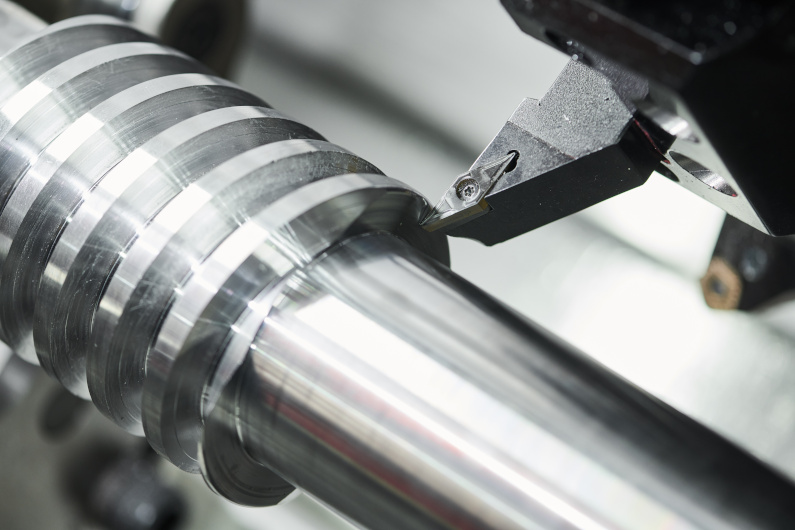
The Imperative of Design for Manufacturability (DFM) in Titanium Production
Titanium is revered for its extraordinary strength-to-weight ratio, excellent corrosion resistance, and biocompatibility, making it a material of choice for demanding applications in aerospace, medical devices, automotive, and marine industries. However, these very advantages introduce significant complexities during fabrication. Titanium's high strength makes it difficult to machine, leading to increased tool wear and slower material removal rates compared to more conventional metals like various grades of Alloy Steel. Furthermore, its low thermal conductivity causes heat to concentrate at the cutting edge, exacerbating tool degradation and potentially inducing stress and distortion in the workpiece.
Design for Manufacturability (DFM) acts as a critical bridge, connecting the theoretical design specifications with the practical realities of the manufacturing floor. For titanium components, DFM is not merely an option but a necessity to address potential issues such as high machining complexity, escalating costs, and project delays before they materialize. By considering manufacturing limitations and capabilities early in the design process, engineers can proactively modify designs to simplify production, reduce the number of manufacturing steps, and ultimately lower overall costs without compromising performance. This proactive approach is fundamental to unlocking the full potential of titanium while maintaining competitive production efficiency.
Precision Design: DFM Guidelines for Titanium Machining
Effective DFM titanium components fabrication hinges on meticulous design decisions tailored to the material's properties and the chosen manufacturing processes, especially for CNC machining. Precision is often paramount, but over-specifying tolerances for non-critical features can dramatically inflate costs without adding any functional value.
Tolerance Optimization: Balancing Precision with Practicality
A core DFM principle involves scrutinizing tolerance specifications. While titanium parts can achieve extremely tight tolerances—as fine as ±0.005 mm (or even ±0.0002″ for critical features)—it's crucial to distinguish between features that genuinely require such extreme precision and those where a standard tolerance is sufficient. For instance, a mating surface or a bore for a precision bearing might necessitate ultra-tight control, whereas a mounting hole or a cosmetic surface may perform perfectly well with a more relaxed tolerance. Unnecessarily tight tolerances increase machining time, tool wear, and the need for specialized equipment and inspection, directly impacting manufacturing expenses. Engineers should rigorously evaluate each feature, asking whether a tighter tolerance truly contributes to the component's performance, assembly, or lifespan.
Geometric Feature Design for Manufacturability
The geometry of titanium components plays a significant role in their ease of fabrication. Adhering to specific DFM guidelines for features like wall thickness, internal radii, and hole dimensions can prevent common manufacturing pitfalls:
- Wall Thickness: Due to titanium's stiffness and propensity to spring back, very thin walls can be prone to deflection during machining, leading to chatter, poor surface finish, and dimensional inaccuracies. Recommended minimum wall thicknesses are often ≥0.8 mm to maintain structural integrity during machining and minimize distortion.
- Internal Corner Radii: Sharp internal corners require tools with very small radii, which are fragile and prone to breakage. Specifying generous internal radii (typically larger than the tool radius) allows for the use of stronger, more efficient tools, reducing machining time and cost.
- Deep Hole L/D Ratios: Drilling deep holes in titanium is challenging because of chip evacuation difficulties and heat buildup. The maximum recommended length-to-diameter (L/D) ratio for deep holes in titanium is typically 12:1. Exceeding this ratio increases the risk of tool breakage, bore runout, and requires specialized drilling techniques.
- Thread Depths: Similarly, blind thread depths should be designed with manufacturability in mind. For titanium, blind thread depths are often limited to ≤2 × D (where D is the nominal diameter of the thread) to allow sufficient tool engagement without bottoming out and to facilitate chip removal.
These geometric considerations directly influence tool selection, cutting speeds, and overall machining strategy, making their early incorporation into the design paramount for efficient DFM titanium components fabrication.
Surface Finish Considerations
Specifying surface finishes beyond what is functionally necessary can also drive up costs. Achieving smoother finishes often requires additional machining passes, specialized tools, and slower feed rates. Designers should specify the roughest acceptable surface finish to optimize machining time and expenditure, reserving finer finishes for critical functional surfaces.
Material Selection, Processing, and Post-Fabrication Best Practices
Beyond geometric design, strategic material selection and appropriate processing techniques are fundamental to successful DFM titanium components fabrication. Titanium exists in several grades and alloys, each with slightly different mechanical properties, machinability, and weldability.
Choosing the Right Titanium Grade
Selecting the optimal titanium grade is a critical DFM decision. For example, commercially pure titanium (Grades 1-4) is generally softer and easier to machine than titanium alloys like Ti-6Al-4V (Grade 5), which offers superior strength but is significantly more challenging to work with. The choice depends entirely on the application's performance requirements, but understanding the manufacturing implications of each grade can lead to cost-effective design solutions. A balance must be struck between the performance required for the end-use and the cost and effort involved in its fabrication.
The Importance of Thermal Stability and Stress Relief
Titanium's thermal properties require careful attention. When designing multi-material assemblies, differences in thermal expansion coefficients between titanium and other materials (e.g., Steel 1018) must be considered to prevent warping, misalignment, or residual stresses that could compromise the assembly's integrity over time.
Post-machining stress-relieving heat treatments are often essential for titanium components, especially those that have undergone extensive material removal or welding. These treatments stabilize the metal, alleviate internal stresses introduced during fabrication, and ensure dimensional integrity and stability throughout the component's operational lifespan. A common recommendation for vacuum stress relief of titanium components is at 650 °C. This process is crucial for preventing premature fatigue failure and maintaining precise dimensions under service conditions.
Other Fabrication Methods and DFM Considerations
While CNC machining is a primary fabrication method, titanium can also be processed using additive manufacturing (3D printing like Selective Laser Melting/Direct Metal Laser Sintering), welding, forging, laser cutting, waterjet cutting, and sheet metal processes. Each method has its own DFM principles:
- Additive Manufacturing (AM): DFM for AM focuses on minimizing support structures, optimizing build orientation to reduce anisotropy, and designing for efficient powder removal. The design freedom of AM can be leveraged to create complex geometries that are impractical with traditional machining, but this must be balanced against build time, material waste, and post-processing requirements.
- Welding: DFM for titanium welding involves designing for accessibility, minimizing joint complexity, and ensuring appropriate tolerances to control distortion. Titanium requires inert gas shielding during welding to prevent contamination.
- Forging: Forging titanium benefits from designs that allow for straightforward die designs, minimal material waste, and features that accommodate grain flow for enhanced strength.
Streamlining Workflows with Advanced Manufacturing Technologies
Modern manufacturing technologies play a pivotal role in optimizing DFM titanium components fabrication. The integration of advanced machinery and collaborative practices can significantly improve efficiency and reduce costs.
Leveraging 5-axis CNC Machining
One of the most impactful advancements for titanium fabrication is 5-axis CNC machining. This technology allows for the simultaneous movement of a cutting tool along five different axes, enabling complex geometries to be machined in a single setup. This capability minimizes part handling, significantly reduces the potential for errors due to re-fixturing, and ensures superior feature alignment. For intricate titanium parts, 5-axis machining can drastically cut down lead times and improve overall precision, delivering a more streamlined production workflow compared to conventional 3-axis machining. Businesses specializing in Cnc Machining Service often highlight this capability for complex material processing.
Automated Inspection and Quality Control
Implementing real-time automated inspection systems helps maintain consistent quality and detect deviations early in the production process. Integrating inline measurement and feedback loops into the machining process ensures that components meet specifications from the outset, reducing scrap rates and the need for costly rework. This proactive quality assurance is particularly valuable for titanium, where material costs and machining times are higher.
The Role of Early Collaboration
The most successful DFM strategies stem from early and continuous collaboration between design engineers and manufacturing specialists. Engaging manufacturing expertise during the prototyping phase allows for potential production hurdles to be identified and resolved when designs are still flexible. This proactive exchange of knowledge ensures that parts are optimized for both their intended performance and efficient manufacturability, ultimately shortening project lead times. Standard project lead times for titanium components can range from 10-12 weeks, but highly complex builds requiring specialized processing may extend to 20+ weeks. Early collaboration can help keep even complex projects within reasonable timelines.
Achieving Cost Reduction and Performance Excellence with Titanium DFM
The ultimate goal of DFM for titanium components is to achieve a harmonious balance between performance excellence and cost-effective production. By simplifying part geometry, optimizing tolerance specifications, and implementing efficient machining strategies, manufacturers can significantly reduce material waste and optimize production timelines.
DFM ensures that titanium components are not only robust and high-performing but also designed for efficient processing, leading to reduced overall project costs and enhanced long-term reliability. Through thoughtful design and a deep understanding of manufacturing processes, companies can leverage the exceptional properties of titanium without incurring prohibitive expenses, ultimately delivering superior products to the market. For more information on optimizing manufacturing processes, visit www.bingzhen-sh.com.
Frequently Asked Questions
Can titanium be fabricated?
Yes, titanium can be fabricated using a wide array of methods suitable for its unique properties. These include traditional techniques like CNC machining (milling, turning, and wire EDM), laser cutting, waterjet cutting, welding, forging, and sheet metal processes. Additionally, advanced methods such as additive manufacturing (3D printing like Selective Laser Melting and Direct Metal Laser Sintering) are increasingly utilized for complex titanium components. Each fabrication method requires specific DFM considerations to achieve optimal results.
