

Precision Metal Components for Robotics & Automation: Design, Manufacturing, and Materials in 2026
The complexity and precision required in modern robotics and automation systems often obscure the fundamental elements that make their sophisticated movements and reliable operations possible. Few realize the intricate world of specialized metal components beneath the sleek exteriors and dynamic motions. These hidden workhorses, meticulously designed and manufactured, are the unsung heroes defining a robot's strength, durability, and operational longevity. Understanding the critical role of precision metal components – from material selection to the advanced manufacturing processes – is key to grasping the advancements that drive this rapidly evolving sector. This article aims to demystify the essential aspects of robotics metal components manufacturing, exploring the methods, materials, and stringent quality demands that shape the industry as of 2026.
The Critical Role of Precision Metal Components in Modern Robotics
Robots are not just circuits and code; they are complex electro-mechanical systems where mechanical integrity is paramount. Every joint, linkage, gear, housing, and structural frame must withstand immense stress, vibration, and repeated cycles, often in challenging environments. The performance of a robotic arm, the accuracy of an automated assembly line, or the stability of an autonomous vehicle hinges directly on the quality and design of its physical components.
Precision metal components serve several vital functions. They provide structural rigidity, ensuring that robotic systems maintain their intended geometry under load. They facilitate precise motion through tight tolerances and smooth surface finishes, minimizing friction and backlash in critical joints. Furthermore, selected metals offer crucial properties such as thermal stability, electrical conductivity, magnetic shielding, or corrosion resistance, depending on the application. A slight deviation in a single component's dimension or material property can lead to cumulative errors, reduced efficiency, premature wear, or even catastrophic failure in a high-speed, high-precision robotic system. This foundational reliance on physical excellence underpins every stage of robotics metal components manufacturing.
Key Manufacturing Processes for Robotics Metal Components
The diverse requirements of robotic applications necessitate an equally diverse array of manufacturing processes. No single method can produce every component efficiently or effectively; instead, a strategic selection of techniques is employed, each chosen for its ability to meet specific design, material, and volume requirements.
CNC Machining: Precision and Versatility
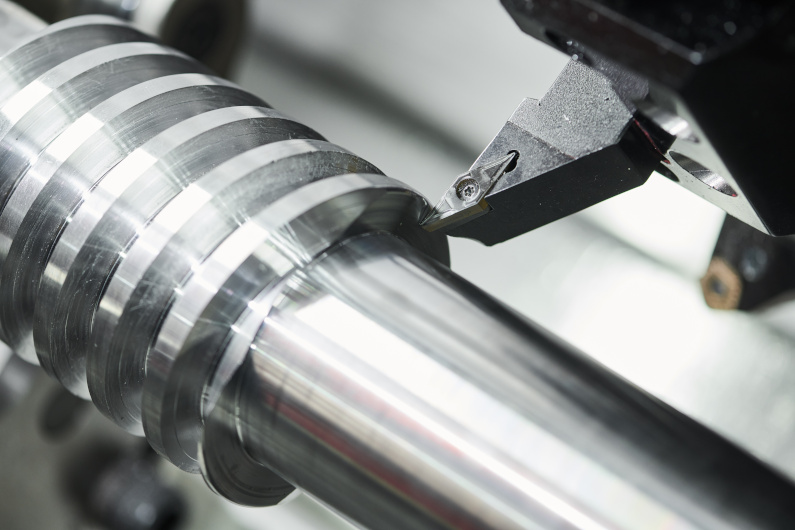
Computer Numerical Control (CNC) machining stands as a cornerstone in the production of high-precision robotic components. Processes like CNC milling, turning, and 5-axis machining allow for the creation of intricate geometries with extremely tight tolerances from solid blocks of material. This method is particularly valued for components requiring high accuracy, excellent surface finish, and complex internal features, such as actuator housings, gearboxes, and custom brackets. Wire EDM (Electrical Discharge Machining) offers another layer of precision, capable of cutting complex shapes in hard metals with minimal material stress.
Metal Casting: Shaping Complex Forms
For components with complex internal structures or those requiring specific weight distribution, various metal casting techniques are invaluable.
- Die Casting: Ideal for high-volume production of intricate, thin-walled parts with good surface finishes, typically using aluminum, zinc, or magnesium alloys.
- Investment Casting (Lost-Wax Casting): Suitable for highly complex shapes and fine details in a wide range of alloys, often chosen for components that are difficult to machine.
- Sand Casting: More economical for larger parts and lower production volumes, offering flexibility in design for structural elements.
- Permanent Mold Casting: Produces denser, stronger parts than sand casting, often used for repetitive production runs.
Metal Forging: Strength and Durability
Forging involves shaping metal through localized compressive forces, resulting in components with superior strength and improved grain structure. This process is critical for parts subjected to high stresses, such as robotic links, shafts, and connecting rods. Open-die, closed-die, and upset forging techniques are employed depending on the desired shape, material, and production volume, primarily for steel and aluminum alloys.
Sheet Metal Fabrication and Stamping: Lightweight Structures
For enclosures, chassis, and other structural components where weight and rigidity are crucial, sheet metal fabrication and stamping are essential.
- Sheet Metal Fabrication: Involves bending, cutting (laser, plasma, waterjet), and welding to create custom forms from metal sheets. This method offers excellent strength-to-weight ratios for robotic bodies and internal structures.
- Metal Stamping: A high-speed, high-volume process that uses dies to cut and form sheet metal into specific shapes. This is commonly used for producing brackets, covers, and connectors efficiently.
Metal Extrusion and 3D Printing: Specialized Applications
Metal extrusions are excellent for creating uniform cross-sectional shapes over long lengths, such as structural rails or linear guide components.
Metal 3D printing (Additive Manufacturing), particularly for metals, offers unparalleled design freedom for creating highly complex, optimized geometries that are impossible with traditional manufacturing methods. While often more expensive for high volumes, it excels in prototyping, low-volume production of specialized parts, and creating lightweight lattice structures for advanced robotics metal components manufacturing.
Essential Materials for Robotic Construction: Properties and Selection
The choice of material is as critical as the manufacturing process itself. Robotic components demand metals with specific properties to perform reliably under dynamic and often demanding conditions. Engineers meticulously select materials based on a combination of factors, including strength-to-weight ratio, durability, corrosion resistance, thermal stability, and specific electrical or magnetic characteristics.
Common metals used in robotics include:
- Aluminum Alloys: Widely favored for their excellent strength-to-weight ratio and corrosion resistance. They are typically used for structural frames, robotic arms, and housing components where weight reduction is crucial for energy efficiency and dynamic performance.
- Stainless Steel: Valued for its high strength, exceptional corrosion resistance, and aesthetic appeal. It's often specified for components operating in harsh or sterile environments, such as medical robotics or food processing automation.
- Alloy Steel: Offers superior strength, hardness, and wear resistance compared to plain carbon steels, often achieved through specific heat treatments. These steels are used for gears, shafts, and fasteners that endure high stress and friction. For applications requiring specific hardness and machinability, examining options like Steel 1018 might be a starting point, while more demanding tasks often call for specialized Alloy Steel formulations.
- Titanium: Known for its outstanding strength-to-weight ratio and exceptional corrosion resistance, titanium is employed in high-performance or specialized robotic systems where weight savings are critical and environmental exposure is severe, though its cost can be a limiting factor.
- Brass and Bronze: These copper alloys offer good electrical conductivity, wear resistance, and machinability. Brass is often used for connectors, bushings, and decorative elements, while bronze is chosen for bearings and gears due to its superior wear properties.
- Zinc and Magnesium Alloys: Lighter than aluminum, these alloys are used in applications where extreme weight reduction is paramount, often through die casting for intricate parts.
- Specialty Alloys (e.g., Inconel, Invar 36): Inconel alloys are high-strength, corrosion-resistant materials suitable for high-temperature applications. Invar 36 is an iron-nickel alloy known for its extremely low coefficient of thermal expansion, making it ideal for precision instruments and components sensitive to temperature fluctuations.
Beyond Fabrication: Finishing, Prototyping, and Quality Assurance
The journey of a precision metal component doesn't end with its primary fabrication. Several crucial steps ensure its readiness for integration into a robotic system, guaranteeing optimal performance and longevity.
Surface Finishing: Enhancing Performance and Protection
Surface treatments are applied to metal components to improve their wear resistance, corrosion protection, aesthetic appeal, and specific functional properties. Common finishes for robotic parts include:
- Aluminum Anodizing: Creates a durable, corrosion-resistant, and aesthetically pleasing oxide layer on aluminum parts, often available in various colors.
- Powder Coating: A robust and durable finish that offers excellent protection against corrosion, impacts, and chemicals, commonly applied to structural frames and enclosures.
- Bead Blasting: Provides a matte, uniform finish, often used for aesthetic purposes or to prepare surfaces for subsequent coatings.
- Black Oxide: A chemical conversion coating that offers mild corrosion resistance and a non-reflective black finish, often used for internal components or fasteners.
- Polishing: Achieves a smooth, reflective surface, reducing friction and enhancing visual appearance.
- Vapor Smoothing: Primarily used for 3D printed parts, it enhances surface finish and mechanical properties.
These finishes are selected not just for looks, but for their contribution to the component's functional lifespan and reliability within its operating environment.
Prototyping: Validating Design Before Production
Rapid prototyping plays a vital role in the development cycle of robotic systems. Before committing to full-scale production, engineers utilize prototyping to validate designs, test functionality, and identify potential issues. This iterative process allows for quick modifications and optimizations, significantly reducing the risk and cost associated with complex component development. Manufacturing services that support both rapid prototyping and full-scale production runs offer valuable flexibility for robotics innovators.
Rigorous Quality Assurance: The Cornerstone of Reliability
Given the high stakes in robotics and automation, quality assurance is not merely a step but an overarching philosophy in component manufacturing. Manufacturers of robotics metal components manufacturing employ stringent quality control measures at every stage, from raw material inspection to final dimensional verification. This includes:
- Dimensional Inspection: Using CMMs (Coordinate Measuring Machines), optical comparators, and other metrology tools to ensure parts meet precise tolerance specifications.
- Material Testing: Verifying chemical composition, mechanical properties (e.g., hardness, tensile strength), and absence of defects.
- Non-Destructive Testing (NDT): Techniques like X-ray, ultrasonic, or dye penetrant inspection are used to detect internal flaws without damaging the component.
These processes are critical for ensuring consistency, reliability, and ultimately, the safe operation of robotic systems.
Navigating the Manufacturing Landscape: Companies and Sourcing Strategies
Identifying the right manufacturing partner is a strategic decision for any robotics company. The landscape of robotics metal components manufacturing is populated by a diverse range of companies, from specialized job shops to large-scale contract manufacturers. When selecting a partner, factors such as technical capabilities, quality certifications (e.g., ISO 9001), capacity, lead times, and experience with specific materials or processes are paramount.
Many providers offer comprehensive manufacturing services, covering the spectrum from initial design consultation to finished component delivery. Companies like Protolabs Network, Compass-Anvil, Xometry, and Noble are examples of entities that offer relevant manufacturing services, often with local and global sourcing options. This flexibility allows clients to optimize for factors such as cost, lead times, and supply chain resilience, whether sourcing domestically in the US or through international networks. A thorough evaluation of a manufacturer's proven track record in precision components for demanding industries is essential. Readers seeking more general information about capabilities and services can explore resources like www.bingzhen-sh.com.
The Future of Robotic Components: Innovations, Design Considerations, and Trends for 2026
The field of robotics is in constant evolution, pushing the boundaries of what's possible and, in turn, driving innovation in component design and manufacturing. As of 2026, several key trends and design considerations are shaping the future of precision metal components.
Design-for-Manufacturability (DFM)
An increasingly critical approach is Design-for-Manufacturability (DFM). This involves optimizing a product's design to make it easier, more efficient, and more cost-effective to manufacture, without compromising performance. For robotic components, DFM considerations include:
- Tolerance Stacking: Minimizing the accumulation of deviations across multiple parts in an assembly to maintain overall precision.
- Feature Geometry: Designing features that are easily machined or cast, avoiding complex undercuts or extremely thin walls where possible.
- Stress Concentration: Engineering shapes to distribute loads evenly and prevent localized stress points that could lead to fatigue failure.
- Material Economy: Designing parts to minimize material waste during manufacturing.
Early collaboration between design engineers and manufacturing specialists is crucial for successful DFM implementation, balancing performance with production practicalities.
Advancements in Materials and Processes
Future trends point towards the greater adoption of advanced materials and manufacturing techniques.
- Lightweighting: The continuous drive for lighter, more agile robots fuels research into advanced aluminum alloys, magnesium alloys, and composites. Hybrid components, combining different materials, will become more prevalent to optimize strength, weight, and cost.
- Smart Materials: While still emerging, "smart" materials with integrated sensors or actuators could eventually be incorporated into component designs, allowing parts to self-monitor or dynamically adapt to their environment.
- Additive Manufacturing Integration: As metal 3D printing technologies mature and become more cost-effective, their role in creating highly optimized, lightweight, and custom robotic components will expand beyond prototyping to functional end-use parts. This includes exploration into multi-material printing and tailored microstructures.
Cost Optimization and Value Engineering
Balancing high performance with cost-effectiveness is an ongoing challenge. Value engineering efforts will focus on achieving desired functional requirements at the lowest possible lifecycle cost. This involves careful material selection, process optimization, and design choices that reduce manufacturing complexity or improve material utilization without sacrificing critical performance metrics.
The future of robotics depends profoundly on the continued innovation in the design and robotics metal components manufacturing sectors. Engineers, designers, and manufacturers must remain at the forefront of material science and production technology to meet the ever-increasing demands for precision, reliability, and performance in automated systems. Exploring these evolving fields is vital for anyone engaged with the cutting edge of automation.
