
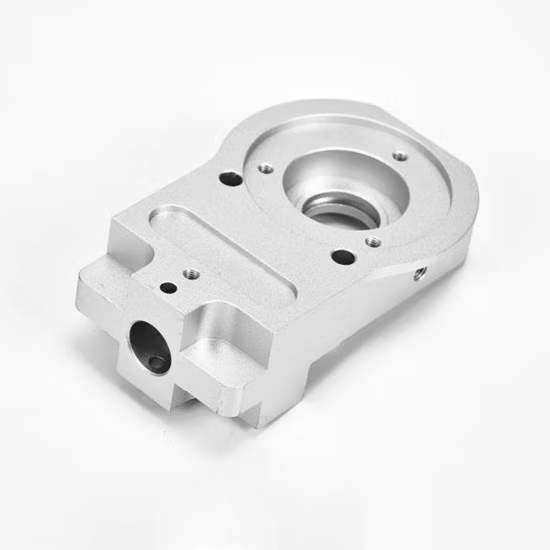
Precision Machining Medical Device Housings: Materials, Tolerances, and Sterilization Compatibility in 2026
The integrity of a medical device often hinges on the quality of its housing. Far from being a mere enclosure, the housing is a critical component that shields delicate internal electronics, ensures patient and user safety, and withstands rigorous operational demands. However, navigating the complexities of precision machining medical device housings—from selecting appropriate materials to meeting micron-level tolerances and ensuring sterilization compatibility—can present significant challenges. Without a clear understanding of these interdependent factors, manufacturers risk compromising device performance, patient safety, and regulatory compliance.

This article delves into the essential considerations for machining medical device housings, exploring the critical role of material science, the pursuit of ultra-tight tolerances, and the non-negotiable requirement for sterilization compatibility.
The Critical Role of Precision Machining in Medical Device Manufacturing
In the medical industry, there is no room for error. Every component, especially the housing of a medical device, must meet exceptionally high standards for performance, reliability, and safety. Precision machining stands as the cornerstone of achieving these exacting requirements, transforming raw materials into components with specific geometries and finishes.
Why Accuracy and Repeatability are Non-Negotiable
Medical devices, whether they are implants, surgical instruments, or sophisticated diagnostic equipment, depend on the accurate fit and function of their constituent parts. Precision machining delivers unparalleled accuracy, often reaching micron-level tolerances. This level of precision ensures that device components assemble correctly, operate as intended, and perform consistently across an entire production run. Repeatability is equally vital; once a design is validated, every subsequent housing produced must replicate the original with identical characteristics, guaranteeing uniformity and predictable performance for patient care. The consistency afforded by processes like CNC machining service is paramount in this sector.
Addressing Regulatory Compliance and Patient Safety
The ultimate goal of stringent manufacturing processes in the medical field is patient safety. A poorly manufactured medical device housing could fail, expose internal components to contaminants, or introduce biocompatibility issues, leading to adverse patient outcomes. Regulatory bodies worldwide, such as the FDA (Food and Drug Administration) and organizations like the International Organization for Standardization (ISO), establish strict guidelines for the design and manufacture of medical devices. Adherence to these standards, including ISO 9001 for quality management and ISO 13485 specifically for medical devices, is non-negotiable. Precision machining facilitates compliance by enabling manufacturers to consistently produce parts that meet these strict specifications, thereby mitigating risks and ensuring device efficacy. The entire lifecycle of a medical product, including its housing, falls under this rigorous scrutiny, highlighting why companies involved in medical device manufacturing must prioritize precision and quality at every stage.
Essential Materials for Medical Device Housings: Selection and Properties
The selection of material for a medical device housing is not a superficial choice; it is a foundational decision that impacts nearly every aspect of the device's function, durability, and safety. Factors such as biocompatibility, strength-to-weight ratio, corrosion resistance, and thermal properties must be carefully evaluated to ensure optimal performance. For a comprehensive overview of various material properties, you might explore the site's dedicated materials section.
High-Performance Metals (Aluminum, Stainless Steel, Titanium)
- Aluminum: Often chosen for its excellent strength-to-weight ratio and good thermal conductivity. Aluminum alloys are lightweight, making them suitable for portable or handheld devices where weight is a concern. While not inherently biocompatible in all forms, specific alloys can be anodized or coated to enhance surface properties, making them suitable for external housings where direct tissue contact is limited.
- Stainless Steel: Particularly 304 and 316L grades, are widely utilized due to their exceptional corrosion resistance, strength, and durability. 316L stainless steel, known for its low carbon content, offers superior resistance to corrosion, especially in chloride-rich environments, making it highly suitable for surgical instruments and implantable components. Its robustness allows it to withstand repeated sterilization cycles without degradation.
- Titanium: Valued for its outstanding biocompatibility, high strength-to-weight ratio, and excellent corrosion resistance. Titanium and its alloys (like Ti-6Al-4V) are often the material of choice for implantable devices, orthopedic components, and prosthetics. While more challenging and expensive to machine, its properties make it indispensable for critical applications where patient safety and long-term integration are paramount.
Medical-Grade Plastics (PEEK, Polycarbonate, ABS, Delrin)
- PEEK (Polyether Ether Ketone): A high-performance thermoplastic known for its excellent strength, stiffness, chemical resistance, and biocompatibility. PEEK can withstand high temperatures and repeated sterilization, making it ideal for devices that require rigorous cleaning protocols. Its radiolucency also makes it useful in imaging applications.
- Polycarbonate (PC): Offers transparency, impact resistance, and good dimensional stability. It is often used for housings that require visual inspection of internal components or light transmission. While strong, its resistance to certain chemicals and repeated high-temperature sterilization methods might be less than PEEK, requiring careful consideration of sterilization protocols.
- ABS (Acrylonitrile Butadiene Styrene): A common engineering thermoplastic offering good strength, rigidity, and impact resistance at a lower cost. ABS is often used for non-critical, external housings of diagnostic or therapeutic devices. Its sterilization compatibility is generally limited to chemical or low-temperature methods.
- Delrin (POM – Polyoxymethylene): Known for its high stiffness, low friction, and excellent dimensional stability. Delrin is often used for intricate components requiring precise movements or as a housing for internal mechanisms. It offers good chemical resistance but similar to ABS, its sterilization compatibility typically favors chemical or gas methods over high-temperature autoclaving.
Key Considerations: Biocompatibility, Strength, and Weight
Beyond the individual properties of each material, manufacturers must weigh several overarching factors. Biocompatibility is non-negotiable for any material that comes into contact with human tissue or bodily fluids, ensuring it does not elicit an adverse biological response. Strength and rigidity are crucial for protecting internal components from external forces and maintaining structural integrity throughout the device's lifespan. Lastly, weight is a significant consideration for handheld or portable devices, impacting user comfort and ease of use. The chosen material must strike a balance, fulfilling all functional, safety, and regulatory requirements.
Achieving Ultra-Precise Tolerances and Flawless Surface Finishes in Medical Device Housing Machining
The effectiveness and safety of a medical device housing are directly linked to the precision with which it is manufactured. Achieving ultra-tight tolerances and a flawless surface finish is not merely about aesthetics; it's about functionality, biocompatibility, and sterilization effectiveness.
Understanding Micron-Level Precision in Medical Machining
Medical device components often require precision measured in microns, where even the slightest deviation can impact performance. This level of accuracy is critical for ensuring that mating parts fit perfectly, seals are watertight, and internal components are securely housed. For instance, diagnostic equipment housings may require precise alignment for optical sensors, while housings for drug delivery systems need exacting dimensions to prevent leakage or ensure consistent dosage. The demand for such intricate geometries and precise dimensions is a hallmark of medical device housing machining.
CNC Machining Technologies for Intricate Geometries
Computer Numerical Control (CNC) machining has become the industry standard for achieving the complex geometries and tight tolerances demanded by medical device housings. Multi-axis CNC milling machines (e.g., 3-axis, 5-axis) and mill-turn centers can produce highly intricate features, complex curves, and precise boreholes with exceptional accuracy and repeatability. This technology allows for the creation of sophisticated internal structures within the housing that optimize space, facilitate component integration, and enhance device functionality. The ability of CNC machines to handle diverse materials, from rigid metals to engineering plastics, further solidifies their role as the gold standard in this sector.
The Importance of Surface Quality for Function and Aesthetics
Surface finish is more than just how a part looks; it profoundly impacts its performance, especially in medical applications. A smooth, burr-free surface is essential for:
- Biocompatibility: Rough surfaces can harbor bacteria, promote protein adhesion, and increase the risk of infection. A polished, inert surface is less likely to trigger adverse biological reactions.
- Sterilization Effectiveness: Smooth surfaces are easier to clean and sterilize, reducing the hiding places for microorganisms.
- Corrosion Resistance: Surface imperfections can act as initiation sites for corrosion, particularly in harsh environments or during repeated sterilization cycles.
- Fit and Function: A precise surface finish ensures proper sealing, reduces friction between moving parts, and contributes to the overall durability and reliability of the device.
- Aesthetics: While secondary to function, a high-quality finish contributes to a professional and trustworthy appearance, important for user perception.
Post-machining processes like electropolishing, passivation (for stainless steels), and specialized coatings are often employed to achieve the required surface quality and enhance functional properties.
Sterilization Compatibility and Biocompatibility Requirements
Once a medical device housing is precisely machined, its journey is far from over. It must be prepared to withstand repeated sterilization cycles without degradation, compromising its structural integrity, or introducing harmful contaminants. This necessitates careful consideration of both sterilization compatibility and inherent biocompatibility.
Materials Compatible with Common Sterilization Methods
Medical device housings must tolerate common sterilization methods, each with its own set of challenges:
- Autoclaving (Steam Sterilization): High-temperature (e.g., 121°C or 132°C) steam under pressure. Metals like stainless steel and titanium, and high-performance plastics like PEEK, generally withstand autoclaving well. Many standard plastics, however, can deform or degrade under these conditions.
- Ethylene Oxide (EtO) Sterilization: A low-temperature chemical gas sterilization process suitable for heat-sensitive materials. Most metals and plastics are compatible with EtO, though aeration cycles are crucial to remove residual EtO.
- Radiation Sterilization (Gamma or E-beam): Utilizes ionizing radiation. Some plastics can become brittle or discolored under radiation exposure, while others, like certain grades of polycarbonate, are designed to withstand it. Metals are generally unaffected.
- Chemical Sterilization/Disinfection: Involves immersion in or wiping with strong chemical solutions (e.g., glutaraldehyde, hydrogen peroxide plasma). Materials must resist chemical attack and not absorb or leach substances.
Choosing a material with inherent compatibility reduces the need for extensive post-treatment or design compromises.
Preventing Degradation and Contamination
Regardless of the sterilization method chosen, the housing must maintain its structural and chemical integrity. Degradation could manifest as cracking, warping, discoloration, or a change in material properties, all of which compromise the device's function and safety. Furthermore, materials must not leach any cytotoxic or harmful substances, either from their original composition or as byproducts of the sterilization process. This is where the concept of biocompatibility extends beyond initial tissue contact to include the entire lifecycle of the device.
Post-Machining Treatments for Sterilization Readiness
Often, raw machined components require additional treatments to ensure sterilization readiness:
- Passivation: For stainless steel parts, passivation involves treating the surface with an acid (e.g., nitric acid) to remove free iron and create a passive chromium oxide layer. This enhances corrosion resistance and prevents the formation of rust, which could lead to contamination.
- Electropolishing: This electrochemical process smooths the surface of metal parts, removing microscopic burrs and improving corrosion resistance and cleanability, making sterilization more effective.
- Surface Coatings: In some cases, biocompatible coatings (e.g., thin-film ceramics, polymers) may be applied to enhance a housing's chemical resistance, reduce friction, or improve its antimicrobial properties, further contributing to its sterilization compatibility.
Navigating Regulatory Compliance and Quality Assurance
The stringent environment of medical device manufacturing means that regulatory compliance and robust quality assurance are not just best practices, but legal necessities. For precision machining medical device housings, every step from material sourcing to final inspection is scrutinized.
Adhering to FDA and ISO Standards
Manufacturers of medical devices must navigate a complex web of regulations. In the United States, the FDA dictates requirements for medical device approval and manufacturing processes. Globally, ISO standards provide a framework for quality management. Specifically, ISO 9001 sets out general quality management system requirements, while ISO 13485 is tailored specifically to medical devices, detailing comprehensive requirements for quality management systems in their design, development, production, installation, and servicing. Adherence to these standards demonstrates a commitment to quality and patient safety, crucial for market access and credibility.
Importance of Traceability and Documentation
Full traceability is paramount in medical device manufacturing. Every batch of raw material, every machining operation, every inspection point, and every final assembly step must be meticulously documented. This ensures that if a component issue arises, its origin can be traced back through the entire supply chain and manufacturing process. Comprehensive documentation supports regulatory audits, facilitates root cause analysis in case of a recall, and provides a historical record of the device's production journey.
Rigorous Inspection and Validation Processes
Quality assurance in medical device housing machining involves rigorous inspection and validation at multiple stages. This includes:
- Incoming Material Inspection: Verifying that raw materials meet specified certifications and properties.
- In-Process Inspection: Monitoring dimensions, surface finishes, and other critical parameters during machining.
- First Article Inspection (FAI): A detailed inspection of the first part produced in a run to ensure all specifications are met before full production commences.
- Final Inspection: A comprehensive check of the finished housing against all design specifications, including dimensional accuracy, surface finish, and cleanliness.
- Validation: Ensuring that the manufacturing process consistently produces parts that meet predetermined specifications and that the finished device performs as intended in its real-world application.
These steps, often employing advanced metrology equipment, are essential for identifying and correcting deviations, ensuring that only compliant, high-quality housings reach the market.
Choosing the Right Manufacturing Process for Your Medical Device Housing
The selection of a manufacturing process is as critical as material choice. The ideal process for a medical device housing balances precision, cost-effectiveness, production volume, and the complexity of the design.
CNC Machining: The Gold Standard
As discussed, CNC machining is widely considered the gold standard for producing medical device housings. Its ability to achieve micron-level precision, high repeatability, and handle a diverse range of materials makes it uniquely suited for the medical sector's stringent demands. Modern CNC equipment, including 5-axis machines, allows for the creation of incredibly complex and organic shapes in a single setup, minimizing repositioning errors and maximizing efficiency. This process is particularly advantageous for producing housings that require tight tolerances for mating components, internal features for electronics, or specific surface finishes.
Rapid Prototyping for Development Cycles
Before committing to full-scale production, rapid prototyping methods play a crucial role in accelerating the development cycle of medical device housings. Techniques like rapid CNC milling allow designers and engineers to quickly produce functional prototypes from the intended production material. This enables early testing of fit, form, and function, identifying potential design flaws or manufacturing challenges before significant investment in tooling or production runs. This iterative process is invaluable for optimizing designs, reducing time to market, and ensuring that the final housing meets all requirements.
Specialized Techniques: Wire EDM and Other Methods
Beyond conventional CNC milling and turning, specialized machining techniques offer solutions for unique medical device housing challenges:
- Wire EDM (Electrical Discharge Machining): Ideal for cutting intricate shapes, sharp internal corners, and extremely fine features in electrically conductive materials, regardless of their hardness. Wire EDM produces burr-free parts, which is a significant advantage for medical components where burrs could pose contamination or safety risks. It's particularly useful for creating precise slots, holes, or complex profiles within a housing.
- Laser Machining: Used for very fine detailing, drilling small holes, or engraving on a wide range of materials.
- Grinding: Employed for achieving extremely smooth surfaces and very tight dimensional tolerances, especially on hard materials.
The choice of these specialized methods depends on the specific geometry, material, and tolerance requirements of the medical device housing.
Conclusion
The precision machining of medical device housings is a multifaceted discipline demanding meticulous attention to materials, tolerances, and sterilization compatibility. It is a field where the slightest compromise can have significant consequences, directly impacting device functionality and patient safety. Understanding the critical interplay between material properties, the capabilities of advanced machining technologies like CNC, the non-negotiable requirements for sterilization compatibility, and rigorous regulatory compliance is essential for any manufacturer in this sector.
Moving forward, continuous research into novel materials and advanced manufacturing processes will further enhance the capabilities of medical device housing production. Exploring the detailed specifications of materials like medical-grade plastics for specific chemical resistance, or investigating the nuances of different surface treatments for enhanced biocompatibility, represents the next frontier in optimizing these crucial components.
