

Understanding Progressive Die Stamping Explained for High-Volume Precision Parts (as of 2026-11-17)
Manufacturing precision metal components in vast quantities presents a significant engineering challenge. Achieving consistent quality, tight tolerances, and cost-effectiveness at high production rates requires specialized processes. One such method, fundamental to modern industry, is progressive die stamping. For many, the term "progressive die stamping explained" might evoke images of complex machinery, but its underlying principles are elegant in their simplicity and efficacy. This process is the silent workhorse behind countless everyday items, from the intricate connectors inside your smartphone to critical automotive parts.
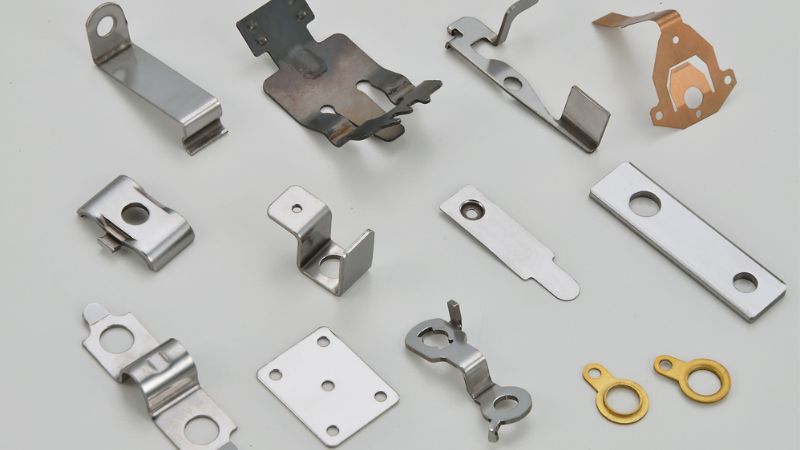
At its core, progressive die stamping continuously transforms a raw strip of metal into a finished, complex part through a sequence of discrete operations, all performed within a single, highly engineered tool called a progressive die. Unlike simpler stamping methods where each operation might require a separate setup or machine, progressive die stamping integrates multiple steps into one streamlined workflow, making it indispensable for high-volume manufacturing where precision cannot be compromised.
What is Progressive Die Stamping?
Progressive die stamping is a sophisticated metal forming technique where a coiled strip of raw material, typically metal, is fed incrementally through a series of workstations within a single die assembly. As the strip advances with each stroke of the stamping press, different operations are performed sequentially at each station. The material remains attached to a "carrier strip" throughout most of the process, ensuring its precise alignment and stability as it moves from one operation to the next.
Imagine a production line compressed into a single, compact die. The metal strip enters the first station, where perhaps a small pilot hole is punched. It then moves to the second station for an initial bend, followed by a third for a complex cut, and so on. Only at the very last station is the completed part separated from the carrier strip, ready for collection. This continuous, multi-stage process is what gives progressive die stamping its name – the part "progresses" through various stages until it's finished. This method is particularly adept at handling intricate designs and features that would be cumbersome or impossible to produce efficiently with single-stage dies.
How Progressive Die Stamping Works: The Sequential Process
Understanding how progressive die stamping works reveals its genius in automation and precision. The process begins with a large coil of sheet metal, which is fed automatically into the stamping press. This metal strip, often made of materials like various grades of steel, including common Steel 1018 or specialized Alloy Steel, passes through a straightener and then an automatic feeder that pushes it forward by a precise amount with each press cycle.
Within the progressive die, several distinct stations are arranged in a specific sequence. As the press ram descends, all operations at all active stations occur simultaneously. For instance:
- Piercing and Punching: Early stations often create pilot holes, which are small, precise holes used by guide pins (pilots) to accurately position the strip for subsequent operations. Other punching operations might remove sections of material to form internal features or openings.
- Forming and Bending: Subsequent stations perform bending, coining (creating detailed impressions), extruding, or other forming operations that shape the metal into its desired three-dimensional configuration.
- Lancing and Notching: These operations partially cut or remove material along the edges or within the part, preparing it for later bends or creating specific features.
- Blanking: The final station, known as the blanking station, cuts the completely formed part free from the carrier strip. This is where the finished component is ejected.
Throughout this process, alignment is critical. Conical pilots, or guide pins, engage with the pre-punched pilot holes in the metal strip to ensure exact positioning before each press stroke. This precise guidance guarantees that every operation aligns perfectly with the preceding ones, maintaining consistency and accuracy across millions of parts. The leftover carrier strip, often a latticework of metal, is then chopped into scrap and collected for recycling, minimizing material waste.
The Precision and Efficiency of Progressive Die Stamping
The primary drivers for utilizing progressive die stamping are its exceptional precision and remarkable efficiency, particularly for high-volume production. When industries require millions of identical parts with extremely tight dimensional tolerances, this method often stands out.
The integrated nature of the progressive die means that once the die is engineered and validated, subsequent parts are produced with high repeatability. Every component passing through the same stations, guided by the same pilots, will consistently meet stringent quality requirements. While specific numerical tolerances vary based on material, part geometry, and die complexity, progressive dies are renowned for achieving exceptional precision, often measured in thousandths of an inch.
From an efficiency standpoint, progressive die stamping is unparalleled for mass production. Presses can operate at very high speeds, cycling rapidly to produce components at rates that can reach hundreds or even thousands per minute. This rapid throughput significantly reduces the per-part cost associated with labor and handling. Because the material remains continuous throughout the process, there's no need for manual loading or repositioning of individual workpieces between operations, further streamlining production and minimizing human error. The speed and continuous operation make it a highly cost-effective solution for producing large quantities of identical, complex parts.
Key Components of a Progressive Die
A progressive die is a marvel of mechanical engineering, a complex assembly of hardened tool steel designed for extreme durability and precision. Understanding its key components helps demystify how it functions:
- Die Set: This forms the fundamental structure, comprising a top shoe (attached to the press ram) and a bottom shoe (mounted to the press bolster). It houses all other die components and ensures their precise alignment.
- Punches: These are the cutting or forming tools attached to the top shoe. They descend with the ram to perform operations like piercing, punching, or forming. Punches are typically made from hardened tool steel to withstand repetitive force.
- Die Sections (or Die Buttons): These are stationary components, mounted in the bottom shoe, that work in conjunction with the punches. They provide the cavity or edge against which the punch performs its operation.
- Stripper Plate: Positioned above the die sections, the stripper plate serves two crucial functions: it holds the metal strip flat during the punching/forming operations and, as the ram retracts, it strips the material off the ascending punches.
- Guide Pins and Bushings: These precision components ensure that the top and bottom die shoes align perfectly during every stroke, preventing misalignment that could damage the die or produce inaccurate parts.
- Pilots: As mentioned, these small, conical pins extend from the top shoe and engage with previously punched holes in the strip to ensure accurate advancement and alignment at each station.
- Feeders and Stops: While not strictly part of the die itself, these external mechanisms control the precise incremental movement of the metal strip through the die.
- Ejectors: Mechanisms that push finished parts or scrap material out of the die after operations are complete.
The design and manufacturing of these components demand specialized expertise, often incorporating advanced techniques such as Cnc Machining Service to achieve the necessary accuracy and surface finish. The longevity and reliability of a progressive die depend heavily on the quality of its components and the precision of its assembly.
Industries and Applications Driving Progressive Die Stamping
The versatility of progressive die stamping makes it a cornerstone technology across a wide array of manufacturing sectors, particularly where compact, high-precision metal parts are essential. Its ability to produce intricate geometries at high speed makes it indispensable.
Some of the most prominent industries relying on progressive die stamping include:
- Automotive: From engine components, brackets, and electrical connectors to complex safety system parts and interior mechanisms, the automotive industry consumes vast quantities of precision stamped metal.
- Electronics: The miniature and often complex internal components of electronic devices—such as battery contacts, shielding, terminals, and circuit board connectors—are frequently produced using progressive dies. The demand for smaller, more powerful electronics drives continuous innovation in die design.
- Medical Devices: Precision and reliability are paramount in medical applications. Progressive die stamping is used to produce small, critical components for surgical instruments, implantable devices, and diagnostic equipment where tight tolerances are non-negotiable.
These industries, among others, leverage the unique capabilities of progressive die stamping to meet stringent quality standards, manage high production demands, and control manufacturing costs effectively.
Considering Progressive Die Stamping for Production
Deciding whether progressive die stamping is the right manufacturing approach for a given component involves evaluating several factors, primarily related to production volume, part complexity, and material characteristics.
Progressive die stamping truly excels when:
- High Production Volumes are Required: The initial investment in designing and building a progressive die can be substantial due to its complexity and precision. However, this cost is amortized over a very large number of parts, making the per-unit cost extremely low for mass production. For low-volume runs, simpler tooling or alternative processes might be more economical.
- Complex Parts with Multiple Features: If a part requires multiple operations—such as piercing, bending, forming, and blanking—that need to be precisely aligned relative to each other, a progressive die is often the most efficient solution.
- Consistent Quality and Tight Tolerances are Essential: Industries where part failure can have severe consequences (e.g., automotive, medical) benefit from the repeatable precision inherent in progressive die stamping.
While the initial tooling cost can be high, the long-term cost efficiencies gained from reduced labor, high speed, and minimal material waste in large production runs often make progressive die stamping the most economical and effective choice. It's an investment in a highly optimized and automated production future for precision components.
Frequently Asked Questions
What is progressive stamping die?
A progressive stamping die is a sophisticated tooling system used in metal forming to create complex parts from a continuous strip of material. It features multiple workstations within a single die set, each performing a distinct operation such as punching, bending, or forming. The metal strip advances incrementally through these stations, progressively taking shape until the finished part is separated at the final stage.
