

Custom Metal Fabrication with 1018 Steel: Design Considerations and Best Practices [2026-11-13]
Navigating the vast array of available materials for custom metal fabrication can be complex, especially when seeking a balance between performance, processability, and cost. Among the most frequently specified materials is 1018 steel, a workhorse in various industries. While its ubiquity suggests straightforward use, understanding the specific properties, design considerations, and best practices for working with 1018 steel metal fabrication is crucial for successful outcomes. This article delves into the nuances of using 1018 steel, clarifying its strengths and limitations to guide informed design and manufacturing decisions.
Understanding 1018 Steel: Properties and Composition
1018 steel stands as a prime example of a plain low-carbon steel, a classification that immediately signals certain characteristics. Its widespread use stems from an advantageous combination of properties that make it highly adaptable for numerous applications, particularly where high strength from heat treatment is not the primary requirement.
At its core, 1018 steel is composed primarily of iron. Its specific mechanical and processing attributes are influenced by carefully controlled amounts of other elements. For an in-depth look at this material, you can explore the dedicated page on Steel 1018.
Chemical Composition
The precise chemical makeup of AISI 1018 steel is fundamental to its behavior during fabrication. As of 2026-11-13, the typical composition is:
- Carbon (C): 0.14 – 0.20 %
- Manganese (Mn): 0.60 – 0.90 %
- Phosphorus (P): ≤ 0.040 %
- Sulfur (S): ≤ 0.050 %
- Iron (Fe): 98.81 – 99.26 % (remainder)
This low carbon content is the primary reason for its excellent weldability and formability, but also limits its ability to achieve significant bulk hardening through conventional heat treatment processes. The manganese content contributes to strength and hardness, while phosphorus and sulfur are kept low to prevent brittleness.
Key Mechanical Properties
Understanding the mechanical properties provides insight into how 1018 steel will perform under stress and strain in various applications. These values are typical for hot-rolled 1018 steel, as of 2026-11-13:
- Density: 7.87 g/cc (0.284 lb/in³)
- Hardness, Brinell: 126
- Hardness, Rockwell B: 71
- Tensile Strength, Ultimate: 440 MPa (63800 psi)
- Tensile Strength, Yield: 370 MPa (53700 psi)
- Elongation at Break (in 50 mm): 15.0 %
- Reduction of Area: 40.0 %
- Modulus of Elasticity: 205 GPa (29700 ksi)
These properties indicate a material that is relatively soft, ductile, and possesses moderate strength, making it ideal for processes requiring significant deformation without fracture. Its ductility and toughness contribute to its workability and resistance to sudden failure.
Hot-Rolled vs. Cold-Drawn 1018: What's the Difference for Fabrication?
When specifying 1018 steel for custom fabrication, manufacturers often encounter both hot-rolled and cold-drawn variations. The distinction lies in the manufacturing process and significantly impacts the material's properties:
- Hot-rolled 1018 is processed at high temperatures, which allows for easier shaping and reduces residual stresses. It typically has a rougher surface finish and slightly lower mechanical properties compared to its cold-drawn counterpart. Hot-rolled 1018 is generally more cost-effective and suitable for applications where dimensional accuracy and surface finish are not paramount.
- Cold-drawn 1018 undergoes additional processing at room temperature, which involves drawing the hot-rolled steel through dies. This process work-hardens the steel, resulting in improved machinability, higher tensile strength, and increased yield strength. Cold-drawn 1018 also exhibits a smoother surface finish and tighter dimensional tolerances. When higher precision, better surface quality, and enhanced strength are critical for custom 1018 steel metal fabrication, cold-drawn versions are often preferred.
Machinability and Fabrication Processes for 1018 Steel
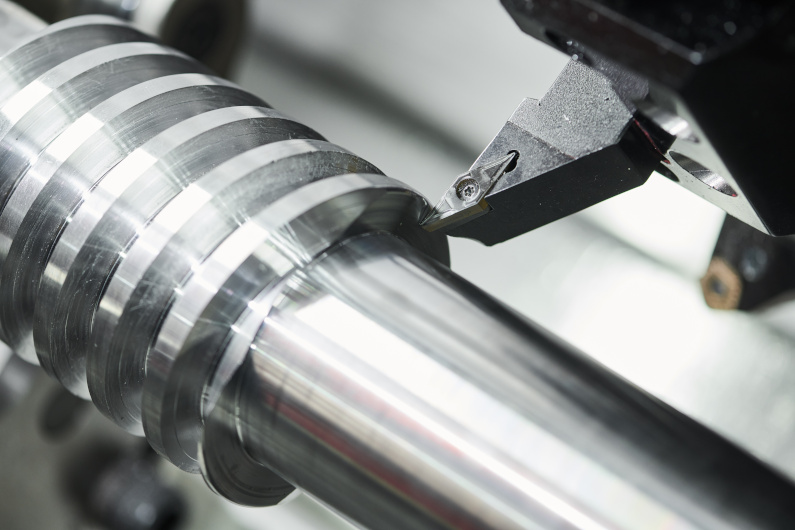
The ease with which a material can be cut and shaped is a critical factor in custom fabrication. 1018 steel is widely recognized for its good machinability, simplifying many manufacturing operations.
1018 Steel Machinability: Performance and Ratings
1018 steel generally offers good machinability, a key advantage for custom part production. Its machinability rating is often cited in comparison to other steel grades, typically around 70-78% of AISI 1212 steel. This rating suggests that it can be machined at a relatively high speed, contributing to efficient production times.
While its softness aids in chip formation, specific strategies can optimize results. Using appropriate cutting parameters, such as feed rate and cutting speed, helps in managing chip evacuation and achieving desired surface finishes. Tools designed for machining mild steels, like those belonging to the Mild Steel category, are typically effective.
Common Fabrication Processes
Beyond machining, 1018 steel is amenable to a broad spectrum of fabrication techniques, making it a versatile choice for custom components:
- Drilling: Its soft nature allows for efficient drilling with standard tools.
- Forging: 1018 steel is suitable for forging, typically heated to temperatures between 1150°C and 1280°C. Forging enhances mechanical properties by refining grain structure.
- Cold Drawing: As discussed, cold drawing improves its mechanical properties and surface finish. This is a common process for producing bars and wires from 1018 steel.
- Bending, Crimping, and Swaging: Its high ductility makes it highly formable, allowing for various shaping operations without the risk of cracking.
These processes underscore why 1018 steel is a preferred material for complex geometries and designs requiring significant shaping.
Welding 1018 Steel: Techniques and Best Practices
One of the standout advantages of 1018 steel in custom metal fabrication is its exceptional weldability. This characteristic allows for easy and reliable joining of components, expanding its utility across countless applications.
Excellent Weldability: Why 1018 is a Fabricator's Friend
The low carbon content of 1018 steel is the primary reason for its excellent weldability. Steels with higher carbon content are more prone to hydrogen-induced cracking and require more stringent pre-heating and post-weld heat treatments to prevent issues. 1018 steel's composition mitigates these risks, making it readily weldable with all conventional methods. This inherent ease of welding reduces fabrication complexity and cost.
Recommended Welding Processes and Electrodes
Due to its composition, 1018 steel can be joined using nearly any welding process. Common choices include:
- Shielded Metal Arc Welding (SMAW): Often referred to as "stick welding," it's versatile and widely used.
- Gas Metal Arc Welding (GMAW): Also known as "MIG welding," it offers high deposition rates and is excellent for automated or semi-automated processes.
- Gas Tungsten Arc Welding (GTAW): "TIG welding" provides precise control and high-quality welds, particularly for thinner materials or where aesthetics are critical.
- Submerged Arc Welding (SAW): Suitable for heavy section welding and high productivity.
For optimal results, low carbon welding electrodes are typically recommended. These electrodes match the base metal's composition, ensuring homogeneous welds and minimizing the risk of issues associated with dissimilar metal joining.
Pre- and Post-Weld Considerations for Quality Joints
While 1018 steel is forgiving, certain considerations can further enhance weld quality, especially for critical applications:
- Pre-heating: For smaller or standard sections, pre-heating is not strictly necessary. However, for larger sections (over 50 mm) or when welding in cold environments, a mild pre-heat can reduce thermal gradients and prevent cracking.
- Post-weld Stress-Relieving: Similar to pre-heating, post-weld stress-relieving is not always required for 1018 steel. When applied, it can help alleviate residual stresses introduced during the welding process, which can be beneficial for parts subjected to dynamic loading or to improve case toughness after welding. Stress-relieving temperatures typically range from 500°C to 700°C.
Proper surface preparation, including cleaning the joint area of contaminants, also plays a vital role in achieving sound welds.
Heat Treatment of 1018 Steel: Surface Hardening vs. Bulk Properties
The heat treatment capabilities of 1018 steel are often misunderstood. While it is highly amenable to certain heat treatment processes, its low carbon content inherently limits others, particularly those aimed at increasing bulk hardness and strength.
The Limitations of 1018 for Through-Hardening
One of the most important considerations for 1018 steel metal fabrication is its limited hardenability. Due to its low carbon content and the absence of significant alloying elements like chromium, nickel, or molybdenum (which are found in Alloy Steel), 1018 steel cannot be effectively through-hardened. This means it cannot achieve a high, uniform hardness throughout its cross-section via conventional quenching and tempering. For applications requiring high bulk strength or hardness, other steel grades, such as 8620 or 1117, are more appropriate.
Leveraging Carburizing and Case Hardening for Wear Resistance
Despite its limitations for through-hardening, 1018 steel is exceptionally well-suited for surface hardening processes, making it ideal for components that require a hard, wear-resistant surface while retaining a tough, ductile core.
- Carburizing: This process involves introducing carbon into the surface of the steel at high temperatures (typically 880°C – 920°C), followed by quenching (often in water or oil) and tempering. The increased carbon content in the surface layer allows it to harden significantly during quenching, creating a high-hardness "case."
- Case Hardening: This broader term encompasses carburizing and other surface hardening methods. For 1018 steel, these processes are frequently applied to components that need excellent surface wear resistance but do not require high core strength. Carburizing 1018 steel effectively produces a uniform and harder surface case while maintaining a soft, tough core. Components like pins, rods, worms, and various other machined parts often benefit from this treatment.
- Case Hardening Temperature: 780°C – 820°C (quenched in water)
- Core Refining (optional): 880°C – 920°C (moistened in oil or water)
Other Heat Treatment Processes
1018 steel also responds well to other standard heat treatment procedures aimed at modifying its microstructure and relieving stresses, rather than increasing bulk hardness:
- Normalizing: Heating the steel to 890°C – 940°C and air cooling. This process refines the grain structure, improves uniformity, and enhances mechanical properties.
- Annealing: Heating to 870°C – 910°C, holding, and then slow cooling. Annealing softens the steel, improves ductility, and relieves internal stresses, making it easier to machine or form.
- Stress Relieving: Heating to 500°C – 700°C, holding, and slow cooling. This process reduces residual stresses from previous manufacturing steps (like welding or cold working) without significantly altering the microstructure or mechanical properties.
- Tempering: Post-hardening or post-carburizing, tempering at 150°C – 200°C reduces brittleness and improves toughness, though it will also slightly reduce hardness.
Design Considerations for Custom 1018 Steel Parts
Effective design for custom 1018 steel parts hinges on aligning the material's inherent properties with the application's functional demands. Overlooking these considerations can lead to suboptimal performance or unnecessary fabrication challenges.
Matching 1018 Properties to Application Requirements
When designing with 1018 steel, it is essential to leverage its strengths:
- Ductility and Formability: Ideal for parts requiring bending, drawing, or stamping. Designs that incorporate complex shapes or require significant cold working can benefit from 1018 steel's high ductility.
- Weldability: Design components for easy assembly through welding. Complex structures or assemblies with multiple joined parts can be efficiently fabricated with 1018 steel.
- Machinability: Optimize designs for efficient machining. While its machinability is good, considering tool access and chip clearance can further reduce machining time and cost.
- Surface Hardening: For parts requiring high surface wear resistance (e.g., shafts, gears, pins), design them to accommodate carburizing or other case hardening processes. This allows the core to remain tough, preventing brittle fracture, while the surface resists abrasion.
Conversely, avoid specifying 1018 steel for applications demanding high bulk hardness, high tensile strength in its core, or extreme resistance to highly corrosive environments (where materials like Stainless Steel would be more suitable).
Factors Influencing Part Design: Formability, Weldability, and Strength Needs
The design process should directly account for 1018 steel's characteristics:
- Geometry for Formability: For components that will be formed, ensure bend radii are appropriate for the material's ductility to prevent cracking. Designs should minimize sharp corners where stress concentrations could lead to failure during forming or in service.
- Joint Design for Weldability: Design weld joints to take advantage of 1018's excellent weldability. This includes specifying appropriate joint types (e.g., butt, lap, corner) and ensuring accessibility for welding operations.
- Stress Management and Strength: For parts under moderate stress, 1018 steel performs well. However, for heavily loaded components where through-hardening is critical, consider alternative materials. If only surface hardness is needed, design for effective case hardening, ensuring sufficient case depth for expected wear.
Cost-Effectiveness and Availability in Material Selection
One of the compelling reasons for choosing 1018 steel is its cost-effectiveness and widespread availability. It is one of the more affordable low-carbon steel grades and is offered in various shapes, including bars, plates, and sheets, making it a common choice for general-purpose applications where high alloy steel strength is not essential. This economic advantage often plays a significant role in material selection for custom fabrication projects where performance requirements fall within 1018's capabilities.
When to Choose 1018 Steel for Your Custom Fabrication Project
Deciding whether 1018 steel is the right material for a custom fabrication project involves weighing its beneficial properties against the specific demands of the application.
Ideal Applications for 1018 Steel
1018 steel excels in situations where its core properties—excellent weldability, good machinability, and high formability—are paramount, and where extreme bulk hardness or high strength in the core are not critical. Ideal applications include:
- General Machine Parts: Components requiring moderate strength, good ductility, and ease of manufacturing.
- Carburized Parts: Pins, shafts, gears, and other components needing a hard, wear-resistant surface but a tough, impact-resistant core.
- Structural Components: Brackets, frames, and mounting plates where good weldability and moderate strength are sufficient.
- Fixtures and Jigs: Tools for manufacturing and assembly that need to be easily fabricated and modified.
- Fasteners: Bolts, studs, and other connecting elements where toughness and formability are important.
The affordability and widespread availability of 1018 steel make it a practical choice for high-volume production and prototypes alike.
When to Consider Alternative Steel Grades
While versatile, 1018 steel is not a universal solution. Designers should consider alternative materials when the application demands:
- High Bulk Hardness or Strength: For components requiring significant hardness throughout their cross-section or very high tensile and yield strength, alloy steels such as 8620 or 1117 (for carburizing) or heat-treatable grades like 4140 are more suitable.
- Corrosion Resistance: In environments exposed to moisture, chemicals, or high temperatures, stainless steel or other corrosion-resistant alloys would be necessary.
- Extreme Temperatures: For applications involving very high or cryogenic temperatures, specialized steels or alloys designed for such conditions should be chosen.
Understanding these distinctions ensures that the chosen material aligns precisely with the performance expectations and environmental conditions of the final product.
Conclusion
1018 steel remains a cornerstone of custom metal fabrication due to its exceptional workability, cost-effectiveness, and suitability for a wide range of applications. Its excellent weldability, good machinability, and high ductility provide manufacturers with significant flexibility in design and production. While its limitations for through-hardening necessitate careful consideration, its outstanding response to surface hardening processes like carburizing extends its utility to components requiring enhanced wear resistance. For engineers and fabricators, a deep understanding of 1018 steel's properties, alongside thoughtful design and adherence to best practices, is crucial for unlocking its full potential in creating robust and efficient custom metal parts. Moving forward, exploring specific application case studies or advanced manufacturing techniques could offer further insights into optimizing the use of this indispensable material.
