
Understanding 1018 Steel: Clarifying Misconceptions and Exploring Alternatives (as of 2026-11-13)
When selecting materials for manufacturing, engineering, or fabrication projects, a clear understanding of a steel grade's properties is paramount. Yet, for common materials like 1018 steel, prevalent misunderstandings can lead to suboptimal choices, unexpected performance issues, or unnecessary costs. Many professionals and hobbyists approach 1018 steel with preconceived notions about its capabilities, particularly concerning its hardenability and machinability. This article aims to address these widespread 1018 steel misconceptions and provide accurate, evidence-based insights into this widely used material, enabling more informed decision-making.
What is 1018 Steel? Composition, Properties, and Common Uses
1018 steel is a general-purpose, low-carbon steel, renowned for its excellent balance of ductility, toughness, and strength. Its designation, "1018," follows the AISI (American Iron and Steel Institute) numerical system, where "10" indicates a plain carbon steel, and "18" signifies a nominal carbon content of 0.18%.
The primary chemical composition of 1018 steel, as of 2026-11-13, typically includes:
- Carbon (C): 0.14 – 0.20 %
- Manganese (Mn): 0.60 – 0.90 %
- Phosphorous (P): ≤ 0.040 %
- Sulfur (S): ≤ 0.050 %
- Iron (Fe): The remainder, typically 98.81 – 99.26 %
These constituent elements give 1018 steel its defining characteristics. It is highly valued for its excellent formability, allowing it to be easily bent, stamped, or shaped without fracturing. Its weldability is also exceptional, making it a preferred choice for fabricated assemblies. Furthermore, 1018 steel is relatively affordable, contributing to its widespread use across various industries.
A critical distinction exists between hot-rolled and cold-drawn 1018 steel. Hot-rolled 1018 steel is processed at high temperatures, resulting in a slightly rougher surface finish and less precise dimensions but often lower cost. Conversely, cold-drawn 1018 steel undergoes further processing at room temperature, which involves drawing the hot-rolled material through dies. This cold working process significantly refines the material's properties. Cold-drawn 1018 steel offers improved machinability, a smoother surface finish, tighter dimensional tolerances, and notably higher tensile and yield strengths compared to its hot-rolled counterpart. This enhancement makes cold-drawn 1018 particularly attractive for applications requiring greater precision and better mechanical performance without sacrificing ductility.
Common applications where 1018 steel excels leverage its favorable properties. It is widely used for components that require high ductility and ease of welding, such as fixtures, mounting plates, spacers, pins, dowels, and various machine parts. It also finds use in non-critical tool and die components and is an ideal material for parts destined for case hardening, like gears and worms. For a broader overview of this versatile material, you can explore detailed information about Steel 1018.
Debunking Common Misconceptions About 1018 Steel
The general perception of 1018 steel often involves several inaccuracies, particularly concerning its response to heat treatment and its machining characteristics. Addressing these 1018 steel misconceptions is crucial for engineers, designers, and manufacturers to prevent misapplication and ensure optimal performance.
Misconception 1: 1018 Steel is Easily Through-Hardened
One of the most persistent 1018 steel misconceptions is the belief that it can be readily "through-hardened" to achieve significant changes in its bulk hardness and strength via conventional quenching and tempering. The underlying principle of through-hardening involves the transformation of the steel's microstructure (austenite to martensite) throughout its entire cross-section upon rapid cooling (quenching), followed by tempering to reduce brittleness and achieve desired toughness. This process heavily relies on the steel's carbon content and the presence of specific alloying elements.
1018 steel, with its low carbon content (0.14-0.20%), fundamentally lacks the necessary carbon to form a hard, stable martensitic structure throughout a significant cross-section. It also lacks substantial alloying elements such as chromium, nickel, or molybdenum, which are crucial for increasing hardenability – the ability of a steel to harden deeply. Therefore, attempts to through-harden 1018 steel will typically result in only minimal hardening, usually confined to the very surface or extremely thin sections, with the core remaining soft.
However, 1018 steel is an exceptional candidate for case hardening, specifically carburizing. Carburizing is a thermochemical process that introduces carbon into the surface layer of low-carbon steel. After carburization, the carbon-enriched surface can be quenched and tempered, forming a hard, wear-resistant "case" while maintaining the original ductile and tough "core" of the low-carbon 1018 steel. This process is ideal for parts requiring a hard, wear-resistant surface for applications like gears and shafts, but a flexible, shock-resistant core. Without this surface carburization, 1018 steel cannot achieve high hardness through typical heat treatment methods. For applications demanding high hardenability throughout the material, dedicated alloy steel grades are far more appropriate.
Misconception 2: 1018 Steel Has Exceptional Machinability
The machinability of 1018 steel is often a point of debate and misunderstanding. While some may consider it a benchmark for ferrous alloy machinability, technical data often paints a more nuanced picture. Machinability is typically measured relative to a standard, such as AISI 1212 steel, which is often assigned a 100% machinability rating. According to technical sources, 1018 steel typically has a machinability rating of 70% compared to AISI 1212 steel. However, other anecdotal reports have cited figures around 78% or even 100% (when compared to itself as a baseline).
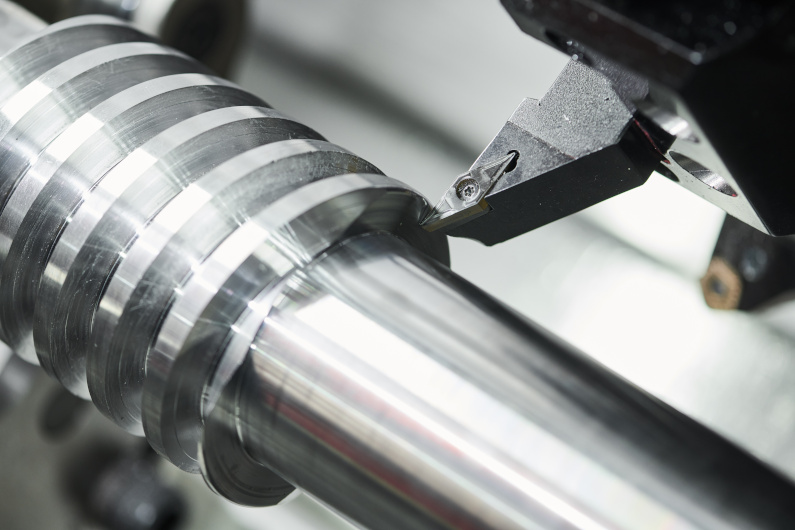
This discrepancy arises from various factors, including the specific form of the steel (hot-rolled vs. cold-drawn), the tooling, and the machining parameters used. While 1018 steel can be machined, it often presents challenges not found in free-machining grades. A common issue cited by machinists is the generation of long, continuous, or "obnoxious" chips. This is due to its ductility; instead of breaking into small, manageable segments, the material tends to deform and shear into long strings that can tangle around tooling, obscure the workpiece, and potentially damage equipment or pose safety risks.
To improve machining performance with 1018 steel, machinists often employ specific strategies:
- Cold-Drawn Material: As mentioned, cold-drawn 1018 offers significantly improved machinability over hot-rolled due to its refined grain structure and increased hardness.
- Tool Geometry: Using tools with chip-breaker geometries can help encourage chip fragmentation.
- Feeds and Speeds: Optimizing cutting parameters can influence chip formation.
- Coolants: Proper use of coolants helps in chip evacuation and reduces heat, preventing chip adhesion to the tool.
While manageable, 1018 steel's machinability is not "exceptional" in the way dedicated free-machining steels are.
Misconception 3: 1018 is an "Alloy Steel"
The terms "plain carbon steel" and "alloy steel" describe fundamental classifications based on chemical composition. A plain carbon steel, like 1018, primarily consists of iron and carbon, with controlled amounts of manganese, phosphorus, and sulfur. While these elements are present, they are not typically added in quantities sufficient to drastically alter the steel's primary characteristics, beyond what carbon provides.
An alloy steel, by definition, contains significant quantities of other alloying elements such as chromium, nickel, molybdenum, vanadium, and tungsten. These elements are intentionally added to enhance specific properties like hardenability, strength, toughness, wear resistance, or corrosion resistance beyond what carbon alone can achieve. Since 1018 steel lacks these substantial additions, it is correctly classified as a plain carbon steel, sometimes referred to as a mild steel, rather than an alloy steel. Understanding this distinction is crucial for material selection, as it directly impacts expected performance characteristics, particularly in heat treatment response and mechanical strength.
When to Consider Alternatives to 1018 Steel
While 1018 steel is an excellent choice for many applications, its specific properties mean it isn't suitable for every task. Recognizing its limitations and understanding when to opt for an alternative is key to successful material specification.
For Higher Hardenability and Strength
If your application requires the steel to achieve high hardness and strength throughout its cross-section after heat treatment, or if it needs significantly higher inherent strength, 1018 steel is not the appropriate choice. Instead, consider alloy steels designed for these characteristics:
- 8620 Steel: This is a low-alloy carburizing steel, meaning it's still primarily intended for case hardening but offers superior core strength and toughness compared to 1018, especially in thicker sections. Its alloying elements (nickel, chromium, molybdenum) improve its hardenability, allowing for a stronger core after the carburizing process.
- 1117 Steel: While still a plain carbon steel, 1117 has higher manganese content than 1018, which slightly improves its hardenability for shallow hardening applications and can enhance machinability due to better chip formation. It's an incremental step up from 1018 for certain strength requirements.
- Medium Carbon Alloy Steels (e.g., 4140, 4340): These are true through-hardening alloy steels containing higher carbon content and significant additions of chromium, molybdenum (in 4140), or nickel-chromium-molybdenum (in 4340). They are capable of achieving high strength and hardness throughout their cross-section after proper quenching and tempering. These are suitable for heavy-duty shafts, gears, and structural components where 1018 would simply not perform.
For Superior Machinability
If ease of machining, particularly chip control and tool life, is a primary concern, and the mechanical properties of 1018 are not strictly necessary, there are more machinable steel grades available:
- AISI 1212 Steel: This is a classic free-machining steel, often used as the 100% benchmark for machinability. Its higher sulfur content promotes the formation of manganese sulfide inclusions, which act as chip breakers and internal lubricants during machining, leading to shorter, more manageable chips and improved surface finish. While it offers superior machinability, its mechanical properties are generally lower than 1018.
To illustrate the differences, here's a comparative overview of 1018 steel and some common alternatives:
| Property | 1018 Steel (Cold-Drawn) | 8620 Steel | AISI 1212 Steel |
|---|---|---|---|
| Type | Low Carbon Plain Steel | Low Alloy Carburizing Steel | Free-Machining Plain Steel |
| Carbon Content | 0.14-0.20% | 0.18-0.23% | 0.09-0.15% |
| Primary Use | General purpose, carburized parts | Case-hardened parts (stronger core) | High-speed machining |
| Hardenability | Very Low (surface only via carburizing) | Moderate (good core strength after carburizing) | Very Low (surface only via carburizing) |
| Machinability | ~70% (relative to 1212) | ~65% (relative to 1212) | 100% (benchmark) |
| Ultimate Tensile Strength | 440 MPa (63800 psi) | Varies, often >600 MPa (as carburized/heat treated) | ~390 MPa (56600 psi) |
| Yield Strength | 370 MPa (53700 psi) | Varies, often >400 MPa (as carburized/heat treated) | ~290 MPa (42100 psi) |
| Chip Formation | Long, stringy | Generally good, manageable | Short, brittle, easily broken |
| Cost | Economical | Moderate | Economical |
(Note: Mechanical properties for alloy steels like 8620 can vary significantly based on specific heat treatment; values are indicative as of 2026-11-13).
Best Practices for Working with 1018 Steel
Understanding the correct practices for working with 1018 steel can help maximize its performance and minimize complications.
Welding Recommendations
1018 steel exhibits excellent weldability, making it compatible with virtually all conventional welding processes, including shielded metal arc welding (SMAW), gas metal arc welding (GMAW), gas tungsten arc welding (GTAW), and submerged arc welding (SAW). Due to its low carbon content, pre-heating is typically not necessary for sections under 50mm thickness, which helps prevent cold cracking. For thicker sections or complex geometries, a mild pre-heat (e.g., 90-120°C / 200-250°F) might be beneficial to manage residual stresses.
Low carbon welding electrodes (e.g., E60XX, E70XX series) are generally recommended to match the base metal's properties and maintain weld ductility. While post-weld heat treatment is often not required for structural integrity, a stress-relieving anneal can be performed at 595-700°C (1100-1300°F) to reduce residual stresses and improve dimensional stability in precision applications. It is crucial to note that welding is not recommended for 1018 steel that has already been carbonitrided or carburized, as this can severely compromise the integrity of the hardened case.
Heat Treatment Processes
While 1018 steel cannot be through-hardened, it can undergo several other beneficial heat treatment processes:
- Normalizing: Heating to approximately 850-900°C (1560-1650°F) followed by air cooling refines the grain structure, homogenizes the material, and improves mechanical properties and machinability.
- Annealing: Heating to 845-870°C (1550-1600°F) and then slow cooling in the furnace softens the steel, improves ductility, and relieves internal stresses, making it easier to machine or form.
- Carburizing (Case Hardening): As discussed, this is the most common and effective hardening treatment for 1018. The steel is heated in a carbon-rich atmosphere at temperatures typically around 900-950°C (1650-1750°F), allowing carbon to diffuse into the surface. Subsequent quenching and tempering then harden the surface.
- Core Refining: After carburizing, some processes might include core refining by heating above the critical temperature of the core, followed by quenching, to improve core toughness before tempering.
- Tempering: After quenching (especially following carburizing), tempering at lower temperatures (e.g., 150-200°C / 300-400°F) is performed to reduce brittleness of the hardened case and achieve desired toughness without significantly sacrificing hardness.
- Stress Relieving: For components that have undergone extensive cold working or welding, stress relieving at 540-675°C (1000-1250°F) can alleviate internal stresses and prevent distortion.
Finishing Considerations and Surface Treatments
1018 steel readily accepts various surface finishes and protective coatings. Its clean surface (especially cold-drawn) is ideal for processes like plating (e.g., zinc, chrome, nickel) to enhance corrosion resistance and aesthetics. Painting and powder coating are also common for both protection and visual appeal. For increased wear resistance beyond what carburizing offers, other surface treatments like nitriding (though less common for 1018 than for alloy steels) or specialized coatings can be considered, depending on the application's specific demands.
Key Data and Technical Specifications of 1018 Steel (as of 2026-11-13)
For precise engineering and design, detailed technical specifications are essential. Below is a summary of the typical properties for 1018 steel:
Chemical Composition (weight %):
- Carbon (C): 0.14 – 0.20
- Manganese (Mn): 0.60 – 0.90
- Phosphorous (P): ≤ 0.040
- Sulfur (S): ≤ 0.050
- Iron (Fe): 98.81 – 99.26 (remainder)
Physical Properties:
- Density: 7.87 g/cc (0.284 lb/in³)
Mechanical Properties (typical for cold-drawn condition):
- Hardness, Brinell: 126
- Tensile Strength, Ultimate: 440 MPa (63800 psi)
- Tensile Strength, Yield: 370 MPa (53700 psi)
- Elongation at Break (in 50 mm): 15.0 %
- Reduction of Area: 40.0 %
- Modulus of Elasticity: 205 GPa (29700 ksi)
- Machinability: 70 % (Based on AISI 1212 steel as 100%)
Electrical Properties (annealed condition):
- Electrical resistivity @0°C (32°F): 0.0000159 Ω-cm
- Electrical resistivity @100°C (212°F): 0.0000219 Ω-cm
- Electrical resistivity @200°C (392°F): 0.0000293 Ω-cm
These values represent typical properties and can vary slightly based on specific manufacturing processes, heat treatment, and the exact chemical composition within the specified ranges.
Conclusion: Informed Material Selection
1018 steel remains a cornerstone material in countless industries due to its excellent weldability, formability, and affordability. However, a superficial understanding can lead to significant engineering challenges. By clarifying common 1018 steel misconceptions—particularly regarding its limited through-hardenability, its nuanced machinability, and its classification as a plain carbon steel—users can make more accurate predictions about its performance.
Understanding that 1018 excels in applications requiring high ductility, good weldability, and surface hardness through carburization, but falls short in scenarios demanding bulk strength or exceptional free-machining characteristics, is critical. For those specific requirements, alternatives like 8620 steel for enhanced core strength, or AISI 1212 for superior machinability, offer more appropriate solutions. Moving forward, always consult detailed material specifications and consider the specific demands of your project before selecting 1018 steel or any alternative.
