
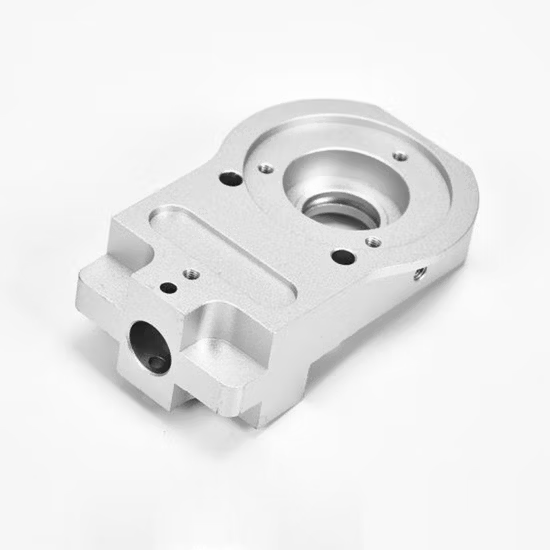
Sourcing Custom Machined Components from Tool Steel: A Buyer's Guide (Current as of November 12, 2026)
For many engineering and manufacturing firms, the complexity of identifying and acquiring high-performance materials for critical applications is a significant challenge. When the demand is for parts that must endure extreme conditions—withstanding immense pressure, abrasive wear, high temperatures, or repeated impact—conventional materials often fall short. This often leads buyers to tool steel, a class of alloys renowned for their superior properties. However, navigating the landscape of custom tool steel machined components requires a nuanced understanding of material science, manufacturing processes, and supplier capabilities. This guide aims to demystify the sourcing process, providing a framework for informed decision-making for buyers seeking precision and reliability.
Understanding Tool Steel: Properties and Advantages
Tool steels represent a specialized category of ferrous alloys, distinguished by their exceptional characteristics engineered for demanding industrial applications. Unlike common construction materials such as various grades of mild steel or even general Steel 1018, tool steels are formulated with specific alloying elements—including tungsten, molybdenum, vanadium, chromium, and cobalt—which impart superior performance attributes.
The underlying principle behind tool steel's utility lies in its microstructural composition, which can be manipulated through precise heat treatments. This allows these steels to achieve a unique combination of high hardness, often exceeding 60 HRC, coupled with significant abrasion resistance, stiffness, and toughness. These properties are not merely surface facts; they are intrinsic to the material's ability to resist deformation, wear, and fracture under conditions that would cause other metals to fail. For instance, while an alloy steel might offer enhanced properties over carbon steel, tool steels take this a step further, specifically optimized for longevity in harsh environments.
The primary advantage of specifying tool steel for custom machined components is its durability. Parts manufactured from these alloys exhibit extended operational lifetimes, reducing the frequency of replacement and maintenance, which in turn minimizes downtime and operational costs. Their high wear resistance means they maintain critical dimensions and surface finishes even after prolonged use, essential for components in precision machinery or tooling. The inherent toughness also allows these parts to absorb significant impact energy without fracturing, a critical factor in applications involving stamping, cutting, or forming.
Common Tool Steel Alloys and Their Distinguishing Characteristics
The diversity within the tool steel family allows engineers to select an alloy precisely matched to the demands of a specific application. While each variant falls under the umbrella of "tool steel," their unique compositions lead to distinct performance profiles. Understanding these differences is crucial for effective sourcing of custom tool steel machined components.
Tool steels are broadly classified by their primary characteristics, such as water-hardening, oil-hardening, air-hardening, hot-work, high-speed, and shock-resisting types.
- Air-Hardening Tool Steels (e.g., A2, D2): These steels are known for their high wear resistance and dimensional stability during heat treatment. They harden in air with minimal distortion, making them suitable for intricate parts that require tight tolerances after hardening. D2, in particular, offers exceptional wear resistance due to its high carbon and chromium content, making it ideal for blanking dies and long-run forming tools.
- Oil-Hardening Tool Steels (e.g., O1): Offering good wear resistance and toughness, O1 is often chosen for general-purpose applications where a balance of properties is needed. It hardens in oil, which provides a more aggressive quench than air, but with less distortion than water-hardening steels.
- Shock-Resisting Tool Steels (e.g., S7): Designed to withstand repeated impact without fracturing, S7 is characterized by its high toughness and moderate wear resistance. Its ability to absorb shock makes it suitable for chisels, punches, and components in impact machinery.
- Hot-Work Tool Steels (e.g., H13): These alloys maintain their hardness and strength at elevated temperatures, making them essential for applications where the tool or component operates at high heat. H13 is widely used in die casting, extrusion dies, and forging operations, demonstrating excellent resistance to thermal fatigue and heat checking.
- High-Speed Tool Steels (e.g., M2, M42): While not as common for structural components, high-speed steels are crucial for cutting tools due to their exceptional hot hardness and wear resistance. They can retain a sharp edge even when cutting at high speeds, generating significant heat.
- Plastic Mold Steels (e.g., P20): These steels are typically supplied in a pre-hardened state, offering good machinability and polishability. P20 is favored for injection molding dies and other plastic tooling due to its ability to take a fine finish and resist pitting.
Each of these alloys possesses specific mechanical properties that make it uniquely suited for certain functions. For example, some may offer higher tensile strength at the expense of toughness, while others prioritize extreme hardness. The precise selection depends on the operational environment, required lifespan, and the specific stresses the custom machined components will encounter.
The Precision of Machining Custom Tool Steel Components
Machining tool steel is inherently more challenging than working with softer metals. Their superior hardness and strength, while desirable in the final product, translate into increased resistance to material removal. This necessitates specialized machining capabilities and a deep understanding of tool steel's behavior under various cutting conditions.
The primary processes for creating custom tool steel machined components include:
- Multi-Axis CNC Milling: Modern CNC (Computer Numerical Control) milling machines, particularly 3-axis and 5-axis systems, are fundamental for producing complex geometries from solid tool steel blocks. Multi-axis capabilities allow for machining intricate features and contours in a single setup, improving accuracy and reducing setup times. The rigidity of the machine, along with powerful spindles and advanced cutting tools (often carbide-tipped or coated), is crucial to effectively cut these tough materials.
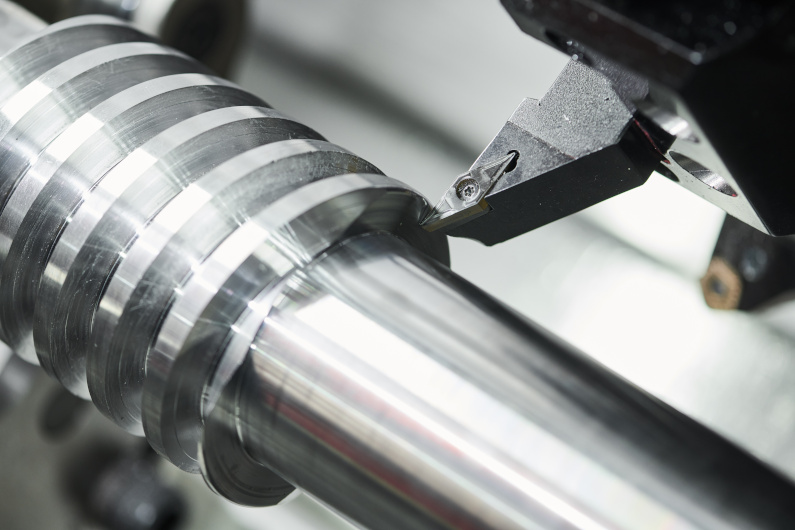
- CNC Turning: For cylindrical or conical parts, CNC turning centers are employed. These machines precisely rotate the workpiece against a stationary cutting tool, enabling the creation of shafts, pins, and other rotational components with high accuracy.
- Electrical Discharge Machining (EDM): When conventional cutting methods are impractical due to material hardness or intricate internal features, EDM becomes indispensable. This non-contact process uses electrical discharges (sparks) to erode material, allowing for the creation of extremely fine details, sharp internal corners, and precise holes in hardened tool steel. Both Wire EDM (for cutting through shapes) and Sinker EDM (for creating cavities) are common.
- Grinding: After initial machining and often post-heat treatment, grinding is frequently used to achieve exceptionally tight tolerances and superior surface finishes. Grinding machines employ abrasive wheels to remove small amounts of material, refining dimensions and improving flatness, parallelism, and perpendicularity.
- Welding and Fabrication: While less common for primary component formation, welding techniques may be used for repair, buildup, or joining tool steel components, requiring specialized procedures and filler materials to maintain the material's integrity and properties.
- Prototyping: The initial phase for many custom components, prototyping with tool steel allows for design validation and performance testing before full production. This often involves iterative machining and testing to refine the component's design and functionality.
The ability to achieve extremely tight tolerances, sometimes measured in thousandths or even ten-thousandths of an inch, is a hallmark of high-quality tool steel machining. This level of precision requires advanced machinery, sophisticated CAM (Computer-Aided Manufacturing) software for tool path optimization, and skilled machinists who understand the thermal and mechanical stresses involved in machining tool steel. Optimal coolant usage and tool wear management are also critical to prevent material damage and maintain dimensional accuracy throughout the machining process.
Key Industries Reliant on Tool Steel Parts
The inherent properties of tool steel make its custom machined components indispensable across a broad spectrum of industries where durability, precision, and performance under extreme conditions are paramount. These components often form the core of machinery, tooling, and critical systems.
In the automotive industry, tool steel is used for stamping dies, forging dies, and various molds that shape vehicle components. Its wear resistance ensures long production runs, while its toughness contributes to the durability of manufacturing equipment. Similarly, the aerospace sector relies on tool steel for dies used in forming high-strength alloys, as well as for certain critical engine components and landing gear parts where extreme stress and temperature resistance are essential. These applications demand the highest levels of material integrity and manufacturing precision.
The medical industry utilizes custom tool steel components for surgical instruments, molds for medical device manufacturing, and specialized fixtures that require sterile conditions and resistance to corrosion and wear. The precision achievable with tool steel machining is critical for the intricate designs often found in medical equipment.
Industrial machinery and heavy equipment are perhaps the most widespread users. From mining and construction equipment to packaging machinery and agricultural implements, tool steel parts are integral to gears, shafts, bearings, and cutting blades that must endure constant friction, impact, and heavy loads. For example, components in large presses or shears benefit from tool steel's resilience and hardness.
The oil and gas industry employs tool steel for drilling components, valves, and specialized tools that operate in harsh downhole environments, facing high pressure, corrosive fluids, and abrasive conditions. Its robustness is crucial for maintaining operational safety and efficiency in extraction processes.
Beyond these, tool steel components find applications in electronics manufacturing for molding plastics and forming metal parts, and in defense for high-stress firearm components and specialized tooling. In every instance, the decision to use custom tool steel machined components stems from a fundamental need for parts that will perform reliably and last longer than those made from less robust materials.
Selecting a Manufacturing Partner for Custom Tool Steel Components
Choosing the right manufacturing partner for custom tool steel machined components is a critical decision that impacts quality, lead times, and ultimately, project success. Buyers should adopt a rigorous evaluation process, looking beyond mere pricing to assess a supplier's true capabilities and commitment to quality.
A primary consideration is the manufacturer's experience and specialization with tool steel. Machining these materials requires specific knowledge of their metallurgy, optimal cutting parameters, and heat treatment protocols. A partner with a proven track record in tool steel will understand how to minimize distortion, prevent cracking, and achieve the desired hardness and toughness. Inquire about their portfolio of previous projects involving specific tool steel grades and applications similar to yours.
Advanced technology and in-house capabilities are also paramount. Look for facilities equipped with modern multi-axis CNC machines, EDM capabilities, and precision grinding equipment. A manufacturer that invests in cutting-edge machinery is often better positioned to handle complex geometries and achieve tighter tolerances. In-house capabilities for heat treatment, surface finishing, and inspection can streamline the production process, reduce reliance on external vendors, and offer greater control over quality.
Rigorous quality control processes are non-negotiable. A reputable supplier should have a well-defined quality management system, ideally backed by certifications such as ISO 9001:2015. This certification demonstrates a commitment to consistent quality across all operations. Key quality measures to inquire about include:
- Material verification upon arrival: Ensuring that incoming raw tool steel meets specified material certifications.
- In-process inspections: Regular checks throughout the machining process to catch deviations early.
- Final dimensional inspection: Utilizing advanced tools like Coordinate Measuring Machines (CMMs) to verify all critical dimensions.
- Audited orders: A willingness to allow client audits of their manufacturing and quality processes.
Finally, consider the manufacturer's consultative approach and engineering support. The best partners don't just execute a drawing; they collaborate. They offer insights into design optimization for manufacturability (DFM), suggest alternative tool steel grades that might improve performance or reduce cost, and work with you to develop optimal solutions that focus on performance, fitment, longevity, and safety for your custom tool steel parts. This partnership approach can be invaluable, especially for complex or novel component designs.
Ensuring Quality and Performance in Your Sourcing Strategy
The ultimate goal in sourcing custom tool steel machined components is to acquire parts that meet or exceed performance expectations, reliably and consistently. This requires a proactive approach to quality assurance throughout the procurement cycle.
Understanding and specifying achievable tolerances and part size ranges is fundamental. While tool steel can be machined to exceptional precision, unrealistic tolerance demands can significantly increase costs and lead times. Engage with your potential manufacturer early to understand their specific capabilities, such as the minimum and maximum part dimensions they can handle, and the tightest precision they can guarantee for different tool steel grades and geometries. This collaborative discussion ensures that design specifications are both ambitious and attainable.
Best practices for verifying material and component quality extend beyond simply checking dimensions. It involves ensuring the chemical composition of the raw material matches specifications through mill certifications. Post-machining, especially after heat treatment, material hardness testing (e.g., Rockwell, Brinell) is crucial to confirm that the desired mechanical properties have been achieved. Surface finish requirements, crucial for wear resistance and fatigue life, should also be verified using appropriate metrology tools.
The role of advanced inspection, particularly through Coordinate Measuring Machines (CMMs), cannot be overstated. CMMs provide highly accurate, three-dimensional measurements of complex parts, ensuring that all features are within specified tolerances. Beyond CMMs, other non-destructive testing (NDT) methods like ultrasonic testing or magnetic particle inspection may be necessary for critical components to detect internal flaws or surface discontinuities. Regular audits of your supplier's quality management system and manufacturing processes provide an additional layer of assurance, confirming adherence to established protocols.
The impact of quality on the performance and longevity of custom tool steel components is direct. A component machined to precise specifications from the correct tool steel, with proper heat treatment, will perform as designed, resisting wear, maintaining structural integrity, and enduring operational stresses for its intended lifespan. Conversely, deviations in material, machining, or heat treatment can lead to premature failure, costly downtime, and potential safety hazards. Therefore, a robust quality assurance strategy is an investment in the reliability and longevity of your products and systems.
What to Explore Next
Successfully sourcing custom tool steel machined components hinges on a thorough understanding of material properties, machining capabilities, and the robust vetting of potential manufacturing partners. As you move forward, consider delving deeper into the specifics of various tool steel heat treatment processes and their impact on final mechanical properties. Investigating advanced inspection techniques beyond CMMs, particularly for highly critical components, could also refine your quality assurance protocols. Finally, exploring how digital manufacturing technologies, such as advanced simulation and data analytics, are further optimizing tool steel machining processes may offer new efficiencies for future projects.
