
Choosing the Right Metal Manufacturing Process: Stamping, Machining, or Fabrication (as of 2026-11-13)
When designing a new product or component, one of the most critical early decisions is selecting the appropriate metal manufacturing process. This choice significantly impacts cost, production speed, material efficiency, and the final quality of the part. Engineers, product managers, and entrepreneurs often face a complex array of options, each with its own advantages and limitations, making a clear metal manufacturing process comparison essential for informed decision-making. Without a deep understanding of these methods—from the high-volume efficiency of stamping to the precision of machining and the versatility of fabrication—projects can suffer from budget overruns, missed deadlines, or suboptimal product performance.
This article delves into the core principles of metal stamping, machining, and general metal fabrication, offering a comparative analysis to help navigate this crucial decision.
Understanding the Core Metal Manufacturing Processes
To effectively choose a manufacturing method, it's vital to grasp the fundamental mechanisms behind each process. These methods transform raw metal into functional parts through distinct approaches.
What is Metal Fabrication?
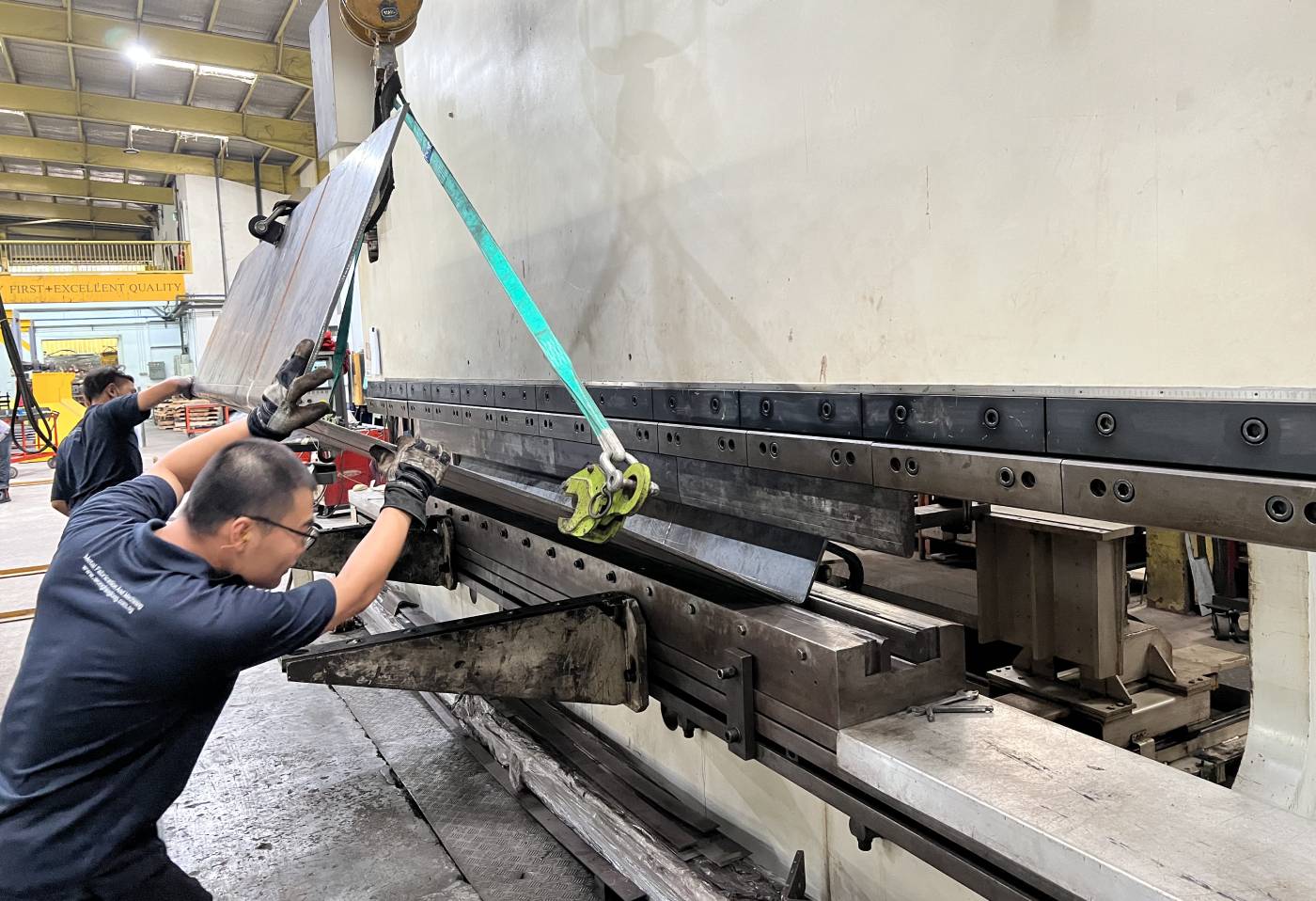
Metal fabrication is a broad category encompassing the creation of metal structures and products by cutting, bending, and assembling raw metal forms such as sheet metal, bars, or tubes. Unlike subtractive or forming processes that create single components, fabrication often involves combining multiple processes to produce a finished assembly.
The underlying principle of fabrication is constructive; it builds up a product from various metal pieces. This begins with cutting operations, which can include shearing (slicing straight lines), laser cutting (using a focused beam to vaporize metal), plasma cutting (using an ionized gas torch), or waterjet cutting (using a high-pressure stream of water and abrasive). After cutting, pieces are often formed using methods like press braking for bending sheet metal, or rolling for creating curved sections. Finally, these individual components are assembled through processes such as welding (fusing pieces with heat), riveting, or fastening to create the final structure. This approach is highly flexible and suited for a wide range of custom, structural, or prototype applications.
What is Metal Machining?
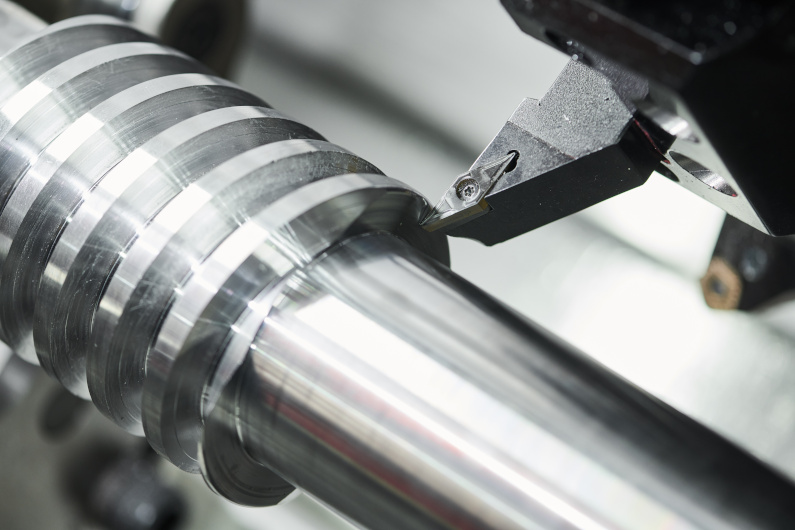
Metal machining is a subtractive manufacturing process where material is removed from a solid block of raw material, known as a blank or workpiece, to achieve a desired shape. The core principle involves precision tooling interacting with the material, shaving away layers until the final geometry is realized.
The most common form of machining today is Computer Numerical Control (CNC) machining. Here, computer programs dictate the precise movements of cutting tools, such as drills, end mills, and turning tools, against the metal workpiece. CNC milling involves rotating multi-point cutting tools that move across a stationary or moving workpiece to create features like pockets, slots, and holes. CNC turning, on the other hand, involves rotating the workpiece itself against a stationary, single-point cutting tool to create cylindrical shapes, often performed on a lathe. Because the material is removed incrementally under computer control, machining excels at producing parts with exceptionally tight tolerances and complex geometries, including intricate internal features and precise mating surfaces. For instance, parts requiring tolerances tighter than ±0.005 inches often necessitate CNC machining. If you're looking for precision components, explore specialized services like a Cnc Machining Service.
What is Metal Stamping?
Metal stamping is a high-volume manufacturing process that transforms flat sheet metal into various shapes using a press and a set of dies. The fundamental principle is plastic deformation: a male die (punch) is forced into a female die, causing the sheet metal positioned between them to conform to the dies' shape.
This process can involve several operations, often in a single stroke or a sequence of strokes. These include:
- Blanking: Cutting out a flat piece of a specific shape from the sheet metal.
- Piercing/Punching: Creating holes or cutouts within the blank.
- Bending: Forming angles or curves.
- Drawing: Stretching the metal into deeper, often cup-shaped forms.
- Embossing: Creating raised or recessed designs.
Stamping is highly efficient and economical for mass production because once the tooling (dies) is created, parts can be produced rapidly and consistently, leading to a very low cost per part at high volumes. This makes it ideal for standardized components found in automotive, appliance, and electronics industries.
Overview of Other Key Methods
While stamping, machining, and fabrication are primary methods, it’s worth noting other significant metal manufacturing processes:
- Casting: Involves pouring molten metal into a mold cavity, allowing it to solidify into the desired shape. This is excellent for complex internal geometries and large parts.
- Forging: Shapes metal using compressive forces, often through hammering or pressing. It enhances the material's grain structure, resulting in parts with superior strength and durability.
- Powder Metallurgy: Compacting metal powders into a desired shape and then sintering (heating without melting) them to bond the particles. This is suitable for intricate parts and specialized alloys.
- Additive Manufacturing (3D Printing): Builds metal parts layer by layer from metal powders or wire, offering unparalleled geometric freedom for complex and customized components, particularly for low-volume or prototyping applications.
Key Factors for Process Selection: Beyond the Basics
Choosing the optimal metal manufacturing process is rarely straightforward; it involves a careful balancing act of various engineering and business considerations.
Part Complexity and Geometric Intricacy
The geometric complexity of a part is a primary determinant.
- Machining excels with high complexity and tight tolerances, allowing for intricate internal features, varied wall thicknesses, and very precise surface finishes. Multi-axis CNC machines can produce highly complex 3D shapes.
- Fabrication handles moderate complexity, especially for assemblies of simpler components. Designs often need to be adapted for ease of cutting, bending, and welding.
- Stamping is best suited for parts with relatively consistent wall thicknesses and less intricate 3D forms, particularly those that can be formed from sheet metal in a series of defined steps. Deep draws or very complex features might require multi-stage dies, increasing tooling costs.
Required Production Volume: From Prototypes to Mass Production
Production volume is perhaps the most significant economic factor in any metal manufacturing process comparison.
- Fabrication is highly adaptable for low-volume production, prototypes, and one-off custom projects. Tooling costs are minimal, making it cost-effective for small batches or unique designs.
- Machining is suitable for low-to-medium volumes. While setup and programming time can be considerable, the absence of expensive hard tooling (like stamping dies) makes it more economical than stamping for quantities below a certain threshold, often thousands of units, depending on complexity. It's also ideal for prototypes requiring production-like materials.
- Stamping is the champion of high-volume manufacturing. While initial tooling costs (for dies) are substantial, the speed and low cycle time make the cost per part plummet as volume increases, becoming extremely economical for hundreds of thousands or millions of units.
Material Selection and Thickness Considerations
The type of metal and its thickness profoundly influence process choice.
- Fabrication can work with a wide array of metals, from various grades of steel (including Steel 1018) and Alloy Steel to aluminum and stainless steel, in various forms (sheet, plate, tube, bar). Laser cutting can handle relatively thick materials.
- Machining is versatile, capable of processing virtually any metal alloy, from soft aluminum to superalloys. The choice of cutting tools and machine rigidity are the main limitations.
- Stamping is primarily used for sheet metal, typically ranging from very thin foils to about 0.25 inches thick. The material must possess sufficient ductility to be formed without cracking. Certain high-strength steels or exotic alloys might be challenging to stamp without specialized heating or more robust presses and dies.
Achieving Precision: Tolerance Requirements
The level of precision and accuracy needed for the final part is critical.
- Machining offers the highest precision, consistently achieving tolerances as tight as ±0.001 inches or even finer for specialized applications. This is due to the controlled, subtractive nature of the process and the rigidity of CNC machines.
- Stamping can achieve good precision, typically within ±0.005 to ±0.010 inches for critical features, with less precise features having larger tolerances. Factors like material spring-back and die wear can influence final accuracy.
- Fabrication generally provides the broadest tolerances, often in the range of ±0.030 inches or more, particularly for welded assemblies where heat distortion can occur. Precision depends heavily on the specific cutting and forming methods used and the skill of the operators.
Budget Constraints and Project Lead Time Expectations
Economic realities and project timelines are always central to the decision.
- Lead Time: Fabrication often has the shortest lead times for prototypes and small batches due to minimal tooling requirements. Machining has moderate lead times, influenced by programming and setup. Stamping has the longest initial lead time due to die manufacturing, but offers the fastest production once tooling is ready.
- Budget: For low volumes, fabrication is typically the least expensive per unit, followed by machining. For high volumes, stamping offers the lowest cost per unit, despite its high upfront tooling investment. Balancing tooling costs versus piece part costs over the expected production life is essential.
Stamping vs. Machining vs. Fabrication: A Detailed Comparison
Understanding the nuances of each process helps in making an informed selection. This detailed metal manufacturing process comparison highlights their strengths and weaknesses.
Comparative Analysis: Scope, Scale, Flexibility, and Cost-per-Part
| Feature / Process | Metal Stamping | Metal Machining | Metal Fabrication |
|---|---|---|---|
| Primary Mechanism | Forming/Cutting sheet metal with dies (Deformative) | Removing material with cutting tools (Subtractive) | Cutting, Bending, Assembling (Constructive) |
| Ideal Production Volume | High to Mass Production | Low to Medium Volume | Low Volume, Prototypes, Custom Work |
| Part Complexity | Moderate (sheet metal forms) | High (intricate geometries, internal features) | Moderate (assemblies of simpler components) |
| Precision / Tolerance | Good (±0.005" to ±0.010") | Excellent (±0.001" and finer) | Broad (±0.030" or more for assemblies) |
| Material Flexibility | Sheet metal (ductile alloys) | Very High (most metal alloys, solid forms) | High (sheet, tube, bar, plate in various alloys) |
| Initial Tooling Cost | Very High (for dies) | Low to Moderate (for fixtures, programming) | Very Low (basic tools) |
| Cost Per Part (High Volume) | Very Low | Moderate to High | High (labor-intensive) |
| Lead Time (Initial) | Long (die design & manufacturing) | Moderate (programming & setup) | Short (minimal setup) |
| Waste Material | Moderate (blanks, slugs) | Moderate to High (chips, shavings) | Moderate (scrap from cuts) |
| Best For | Standardized parts, enclosures, automotive panels | Prototypes, precision components, complex parts | Structural components, custom builds, assemblies |
When to Choose General Fabrication Methods (Custom, Prototypes, Structural Work)
Choose metal fabrication when:
- Your production volume is low, or you need a one-off custom piece or prototype.
- The part is large or structural, requiring assembly of multiple elements.
- Tolerances are relatively forgiving, and precision isn't the absolute highest priority.
- Design flexibility is paramount, allowing for on-the-fly adjustments.
- You need to combine different raw material forms (e.g., sheet, tube, and bar) into a single assembly.
- You are exploring concepts or need components quickly without significant upfront investment in specialized tooling.
When to Choose Machining (High Precision, Complex Geometries, Moderate Volumes)
Opt for machining when:
- Your part requires extremely tight tolerances, fine surface finishes, or precise mating features.
- The geometry is complex, featuring intricate internal cavities, undercuts, or non-uniform wall thicknesses that are difficult to achieve with stamping or basic fabrication.
- You need prototypes that are functionally identical to eventual production parts in material and geometry.
- Production volumes are low to medium (from a few units to several thousand), where the cost of stamping dies would be prohibitive.
- The material is difficult to form or cast, or you need to machine from a solid block for maximum strength and integrity.
When to Choose Stamping (Mass Production, Standardized Parts, Cost-Efficiency)
Select metal stamping when:
- You anticipate very high production volumes (tens of thousands to millions of units), where the initial investment in dies is justified by the extremely low unit cost.
- The part has a relatively consistent cross-section, can be made from sheet metal, and its geometry can be achieved through bending, punching, or drawing operations.
- The primary goal is cost-efficiency for standardized, repeating parts.
- You need components for industries like automotive, consumer electronics, or appliances, where millions of identical parts are required.
- Speed of production is critical after the initial tooling phase.
Advanced Considerations and Emerging Technologies
The landscape of metal manufacturing is continuously evolving, with advancements impacting traditional processes and introducing new possibilities.
The Impact of Automation and Specialized Tooling
Automation is increasingly integrated into all three processes, improving efficiency and consistency. In stamping, advanced progressive dies allow multiple operations to be performed in a single press cycle, boosting throughput. For machining, sophisticated multi-axis CNC machines and robotic loading systems minimize human intervention and expand geometric capabilities. Fabrication benefits from automated cutting (laser, plasma) and robotic welding, which improve speed and weld quality. Specialized tooling, while an initial investment, is key to maximizing efficiency and part quality across the board.
Quality Control and Minimizing Scrap Rates
Maintaining high quality and minimizing waste are critical goals. In manufacturing, facilities often aim to keep scrap rates low, driving efficiency and sustainability. Each process has its unique quality control challenges, from material spring-back in stamping to tool wear in machining and heat distortion in welding. Effective quality management systems, including in-process inspection and statistical process control, are essential to ensure parts meet specifications and to drive down waste.
The Rise of Metal Additive Manufacturing (3D Printing)
Metal 3D printing, once limited to prototyping, is now a viable production method for specific applications. It excels at creating extremely complex geometries that are impossible or cost-prohibitive with traditional methods, often consolidating multiple parts into one. While it typically offers slower production speeds and higher costs per part compared to high-volume stamping, its ability to produce highly customized, low-volume, and geometrically optimized parts (e.g., for lightweighting or internal cooling channels) makes it a disruptive technology, particularly in aerospace, medical, and specialized industrial sectors.
Integrating Multiple Processes for Optimal Design and Production
Often, the best solution isn't to choose just one process, but to combine them. A product might have a precision-machined internal component, a stamped outer casing, and a fabricated bracket to hold them together. This hybrid approach leverages the strengths of each method, optimizing for cost, performance, and manufacturability. Engineers must consider "Design for Manufacturability" (DFM) principles early in the design phase to ensure that chosen processes can efficiently produce the desired part.
In conclusion, the decision of which metal manufacturing process to employ—stamping, machining, or fabrication—is multifaceted. It hinges on a clear understanding of your part's specific requirements regarding complexity, precision, material, and, crucially, the projected production volume and budget. By carefully evaluating these factors against the capabilities of each process, you can make a strategic choice that lays the groundwork for successful product development and manufacturing. The next step in your journey might involve delving deeper into the specifics of a particular process or exploring how design choices impact manufacturability.
Frequently Asked Questions About Metal Manufacturing
What are the different manufacturing processes for metal?
The different manufacturing processes for metal are diverse and include formative, subtractive, and additive methods. Key processes include metal stamping, which forms sheet metal with dies; metal machining (e.g., CNC milling and turning), which removes material precisely; and metal fabrication, which involves cutting, bending, and assembling metal components. Other prominent methods are casting, forging, powder metallurgy, and metal additive manufacturing (3D printing).
What are the different types of metal manufacturing processes?
The types of metal manufacturing processes can be broadly categorized by how they transform material. Formative processes include stamping, casting, and forging, where material is shaped without significant removal. Subtractive processes like machining remove material from a larger block. Additive manufacturing, or 3D printing, builds parts layer by layer. Fabrication is a broader category that combines various cutting, forming, and joining techniques to create assemblies.
