
Advanced Metal Forming Techniques for Complex Part Geometries: A 2026 Overview
For engineers and manufacturers navigating the intricate demands of modern product design, the limitations of conventional metalworking—such as basic bending and stamping—often become apparent when striving for complex part geometries. While foundational, these methods frequently struggle with tight tolerances, intricate curves, variable wall thicknesses, or enhanced material properties required for high-performance applications. The challenge lies in understanding how to move beyond these established processes to achieve unprecedented design freedom and structural integrity.
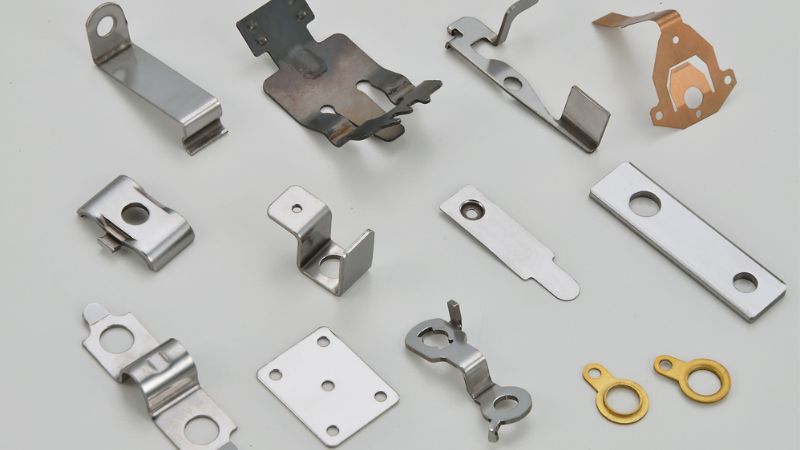
This article, updated for 2026, delves into advanced metal forming techniques specifically designed to overcome these hurdles. It provides a comprehensive overview of specialized processes that leverage sophisticated principles of plastic deformation to craft components with elaborate shapes and superior mechanical characteristics, crucial for industries from aerospace to medical devices.
The Evolution Beyond Basic Bending and Stamping
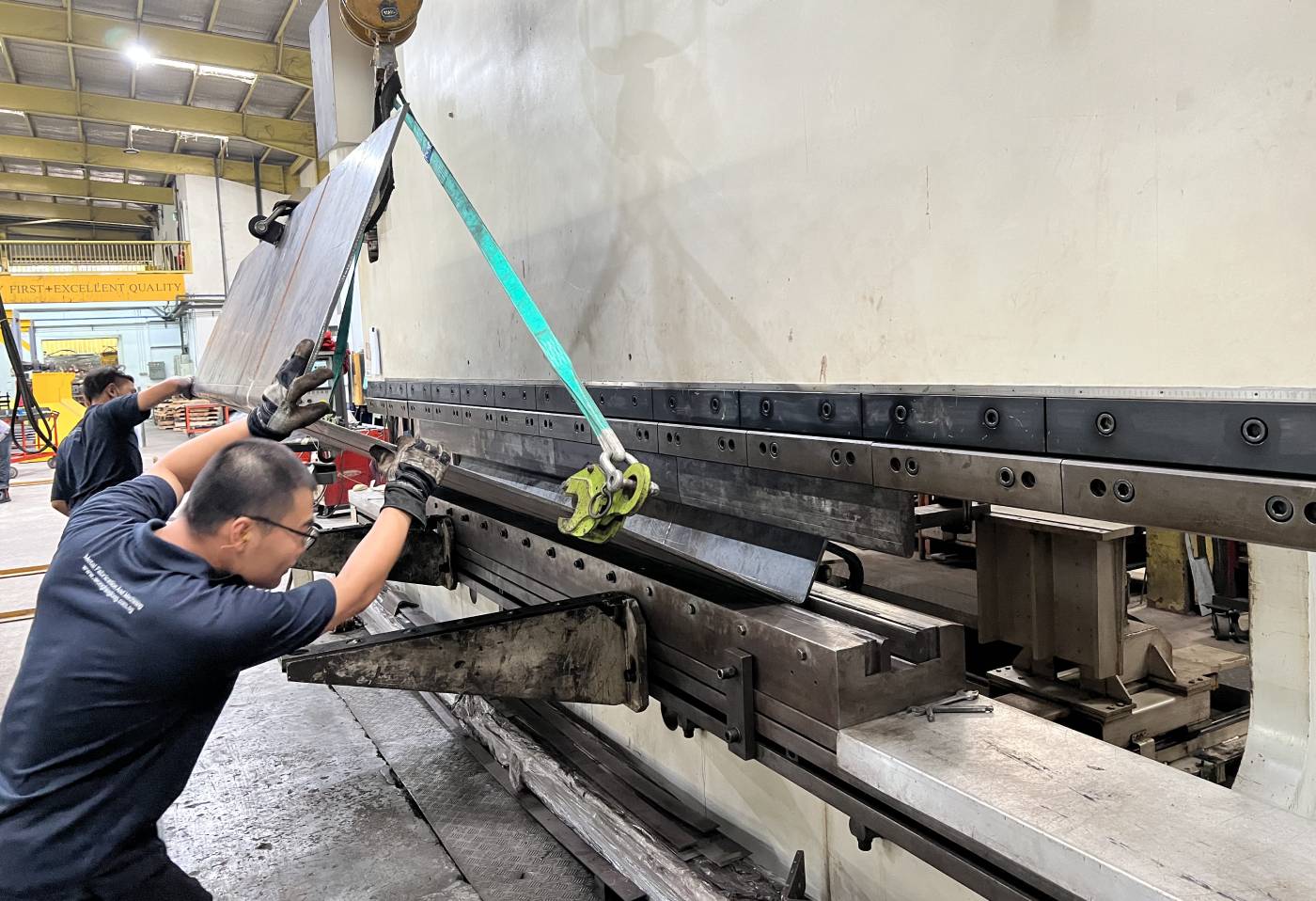
Metal forming, at its core, involves plastically deforming a material to achieve a desired shape, necessitating stresses that exceed the material's yield strength (Source 3, retrieved 2026-11-18). Traditional methods like simple bending, which primarily deforms sheet metal along a straight axis, or stamping, which uses punches and dies to cut and form sheet metal into relatively shallow shapes, are highly effective for mass production of simpler parts. However, as product designs demand lighter, stronger, and more integrated components, these techniques can fall short.
The need for advanced metal forming techniques emerges from several limitations of conventional methods:
- Geometric Complexity: Achieving multi-axis curves, variable cross-sections, or highly intricate internal features is difficult, if not impossible, with simple bending or stamping.
- Material Properties: Basic methods may not optimize grain structure or induce sufficient work hardening uniformly, limiting the final part's strength, fatigue resistance, or toughness.
- Waste Reduction: Stamping often generates significant scrap from blanking operations, whereas advanced methods frequently aim for "near-net shape" production.
- Assembly Simplification: Complex parts can integrate multiple functions into a single component, reducing the need for costly and time-consuming welding or fastening operations.
Understanding these challenges highlights the imperative for specialized approaches that push the boundaries of what is manufacturable.
Core Principles of Advanced Metal Forming
Advanced metal forming techniques fundamentally rely on controlled plastic deformation, but they introduce greater complexity in how forces are applied, how material flow is managed, and how working temperatures are optimized.
Optimizing Deformation Conditions: Cold, Warm, and Hot Forming
The temperature at which metal forming occurs significantly influences material behavior, force requirements, and the final part's properties:
- Cold Working: Performed at room temperature or slightly above, this process offers high precision, excellent surface finishes, and induces strain hardening, which increases the material's strength. However, it requires higher forces and the material's ductility is reduced.
- Warm Working: This involves deformation at elevated temperatures, typically below the recrystallization temperature. Warm working generally requires lower forces than cold working, offers enhanced plasticity, and can still achieve good dimensional accuracy and surface finish.
- Hot Working: This occurs at temperatures above the material's recrystallization temperature, often ranging from 0.5 to 0.75 times the material's melting point (Source 3, retrieved 2026-11-18). Hot working allows for significant deformation with minimal forces, making it suitable for very large changes in shape. While it reduces internal stresses and enhances ductility, it can lead to shorter tool life and a poorer surface finish compared to cold or warm working.
The choice of working temperature is critical for managing material flow, preventing defects, and achieving the desired mechanical properties in complex geometries.
Key Advanced Metal Forming Techniques
Modern manufacturing employs a suite of advanced metal forming techniques to address the intricate requirements of contemporary design. Each method offers unique advantages for specific part geometries and material types.
Hydroforming: Shaping with Fluid Precision
Hydroforming is a sophisticated process that utilizes high-pressure fluid, typically water with an added emulsifier, to form metal. A tubular section or sheet blank is placed into a die cavity, and internal fluid pressure, often combined with axial compression, forces the material to expand precisely into the die's contour (Source 2, retrieved 2026-11-18).
The principle is elegant: the incompressible fluid applies uniform pressure across the entire internal surface of the workpiece, allowing for the creation of complex, hollow shapes with multiple curves and varying cross-sections in a single step. This eliminates the need for multiple stamping operations and subsequent welding, reducing material waste and improving structural integrity.
Applications: Hydroforming is widely used in the automotive industry for producing lightweight yet strong structural components like engine cradles, frame rails, and exhaust components. It's also employed for intricate parts in aerospace, such as ducting and housings, and for creating durable, aesthetically complex components in other industries. For instance, you might find hydroformed components replacing several welded parts, contributing to overall weight reduction and improved performance.
Forging: Enhancing Material Strength and Geometry
Forging involves shaping metal through localized compressive forces, often using hammers or presses. Unlike casting, forging retains the continuous grain structure of the metal, which enhances its structural integrity and mechanical properties. This process is particularly effective for components that must withstand high stresses and fatigue in demanding environments.
Forging can be categorized by how the material is constrained:
- Open-Die Forging: The workpiece is not completely enclosed by the dies, allowing for greater material flow and larger parts. It's suitable for large, relatively simple shapes.
- Impression-Die Forging: The metal is forced into a die cavity (impressions) that imparts the desired shape. Excess material forms "flash" around the part, which is later trimmed. This method allows for more intricate shapes and higher production rates.
- Flashless Forging: A highly efficient method where the entire volume of the workpiece is confined within the die cavity, producing a part with virtually no flash and very close tolerances. This is a stepping stone towards "near-net shape" manufacturing.
The benefits of forging for complex geometries lie in its ability to produce parts with superior strength-to-weight ratios and improved fatigue life. Components for aircraft landing gear, engine parts, and heavy machinery, often made from high-strength Alloy Steel or specialized alloys, frequently benefit from forging due to its ability to refine the material's internal structure.
Deep Drawing: Crafting Seamless Hollow Forms
Deep drawing is a sheet metal forming process that creates deep, hollow parts from flat sheet metal blanks. A punch draws the blank through a die opening, shaping it into a cup-like or box-like geometry with a depth-to-diameter ratio significantly greater than that achieved by simple stamping. This process is ideal for producing seamless structures that offer superior strength and integrity compared to welded assemblies.
The complexity in deep drawing comes from managing material flow and preventing tearing or wrinkling, especially for parts with non-uniform cross-sections or intricate features. Multi-stage deep drawing, where a part undergoes several drawing operations with progressively smaller dies, is used for extremely deep or complex shapes.
Applications: You encounter deep-drawn parts daily in automotive fuel tanks, kitchen sinks, pressure vessels, and various electronic enclosures. Its ability to create robust, leak-proof components with complex internal or external contours makes it indispensable.
Extrusion: Creating Uniform Profiles
Extrusion involves forcing metal through a shaped die opening to create elongated profiles with a uniform cross-section (Source 1, Source 3, retrieved 2026-11-18). The process can be direct (forward extrusion), where the punch and material move in the same direction, or indirect (backward extrusion), where the punch moves opposite to the material flow.
Extrusion is highly versatile, capable of producing complex cross-sections that would be difficult or impossible to achieve with rolling or other forming methods. It offers excellent surface finish and dimensional accuracy for a wide range of materials, including aluminum, copper, and even some steels like Steel 1018.
Applications: Common extruded products include structural components, window frames, heat sinks, tubing, and electrical conduits. The complexity here lies in the die design, which allows for intricate internal and external features to be consistently replicated along the length of the profile.
Advantages of Advanced Metal Forming for Complex Parts
The adoption of advanced metal forming techniques is driven by several compelling advantages for producing complex part geometries:
- Achieving Intricate Designs and Tight Tolerances: Methods like hydroforming and precision forging allow for the creation of components with internal channels, sharp radii, varied wall thicknesses, and multi-dimensional curves that are beyond the scope of basic sheet metal operations. This design freedom enables innovative product functionality and aesthetics.
- Enhanced Material Properties and Structural Integrity: Processes like forging and certain severe plastic deformation techniques intentionally modify the material's microstructure. By refining grain structure, closing internal voids, and inducing work hardening in a controlled manner, these methods can significantly improve tensile strength, fatigue life, ductility, and impact resistance. This is particularly vital for critical components in high-stress applications.
- Weight Reduction and Part Consolidation: By producing complex, near-net shape parts, manufacturers can reduce the amount of material required and consolidate multiple components into a single, integrated piece. This leads to lighter assemblies, fewer fasteners, and simpler manufacturing workflows, especially beneficial in aerospace and automotive sectors where every gram counts.
- Reduced Post-Processing: Many advanced forming techniques aim for "near-net shape" parts, meaning they are formed very close to their final dimensions and shape. This minimizes the need for extensive secondary machining operations, such as those provided by a Cnc Machining Service, reducing manufacturing time, cost, and material waste.
The Future Landscape of Advanced Metal Forming Techniques
The field of metal forming is continuously evolving, driven by demands for even greater complexity, efficiency, and material performance.
Emerging Technologies: Severe Plastic Deformation and Additive Forming
Beyond the established advanced techniques, cutting-edge research is exploring processes such as Severe Plastic Deformation (SPD). Techniques like Equal Channel Angular Pressing (ECAP) and High-Pressure Torsion (HPT) impart extremely large strains to materials, leading to ultra-fine grain structures and significantly enhanced mechanical properties, including increased strength and ductility. While still primarily research-oriented, these methods hold promise for creating high-performance components from novel materials.
Furthermore, advancements in Additive Manufacturing (AM) are beginning to intersect with traditional forming. While AM builds parts layer-by-layer, hybrid approaches (sometimes termed "additive forming") are emerging where additive processes create initial preforms or intricate features, which are then further refined or strengthened through conventional forming techniques. This synergy could unlock designs previously deemed impossible.
Integrating Smart Technologies and Automation
The future of metal forming also heavily relies on the integration of smart technologies. Simulation software, powered by advanced algorithms, allows engineers to predict material behavior, optimize die designs, and virtually test forming processes before committing to expensive physical prototypes. This reduces development cycles and minimizes costly errors.
Automation, robotics, and artificial intelligence (AI) are playing an increasing role in optimizing process parameters, monitoring quality in real-time, and enabling highly flexible manufacturing lines. This leads to greater consistency, higher throughput, and reduced labor costs.
Sustainability and Material Efficiency Considerations
As global industries prioritize sustainability, advanced metal forming techniques contribute by enabling efficient material utilization. Near-net shape forming significantly reduces material waste compared to subtractive manufacturing. The ability to create lighter components also translates to improved fuel efficiency in vehicles and aircraft, lowering carbon footprints throughout the product lifecycle. Research into forming more sustainable alloys and optimizing energy consumption during these processes is ongoing.
Choosing the Right Advanced Metal Forming Process
Selecting the optimal advanced metal forming technique for a specific application is a critical decision. It requires a thorough understanding of the part's functional requirements, the material's properties, and the economic considerations of production.
Factors to consider include:
- Geometry Complexity: How intricate are the curves, internal features, and variations in cross-section?
- Material Type and Properties: Is the material ductile enough for the process? Does it need specific strength or fatigue characteristics?
- Production Volume: Is it for low-volume, highly specialized parts or high-volume mass production?
- Cost Implications: Tooling costs, material costs, and cycle times all contribute to the overall economic viability.
- Tolerance Requirements: How tight are the dimensional accuracy and surface finish specifications?
Engaging with experts in advanced manufacturing and material science is often essential to navigate these complexities. They can provide insights into process feasibility, material selection, and cost-benefit analysis, guiding you toward the most effective solution for your complex part geometries.
Frequently Asked Questions
What are some advanced metal forming processes?
Some advanced metal forming processes include hydroforming, which uses high-pressure fluid to shape components; precision forging, which uses compressive forces to create near-net shape parts with enhanced material properties; deep drawing, used for creating seamless, hollow parts; and extrusion, for forming uniform profiles with complex cross-sections. These techniques move beyond basic bending and stamping to achieve intricate geometries and superior material performance for demanding applications.
