

Navigating the Microcosm: Design and Manufacturing Challenges in Consumer Electronics Metal Component Miniaturization (Updated 2026-11-18)
Every day, the devices we rely on shrink, integrating more power and functionality into ever-slimmer profiles. From the intricate internal workings of a smartwatch to the wafer-thin chassis of a smartphone, the relentless march towards smaller, more powerful consumer electronics is undeniable. Yet, few consider the profound engineering feats occurring at the micro-scale to make this possible. It's not just about silicon chips; it's also about the physical, structural components that hold everything together, conduct signals, and dissipate heat. The challenge of consumer electronics metal component miniaturization presents a unique battleground for precision engineering, pushing the boundaries of what is possible in design and manufacturing.
Understanding Consumer Electronics Metal Component Miniaturization: A 2026 Overview
Miniaturization is a fundamental trend reshaping nearly all industries, but its impact on consumer electronics is particularly evident. Driven by user demand for enhanced portability, aesthetics, and functionality, devices are consistently designed to be thinner, lighter, and more compact. This global trend means that internal components, particularly those made of metal, must also shrink dramatically. For instance, consider the evolution of smartphone connectors: where once robust, comparatively large ports were standard, today's devices feature barely perceptible openings for high-density, multi-pin connections. This transformation is not merely an aesthetic choice; it’s a technological imperative.
The goal is to pack greater functionality—more sensors, more memory, more processing power—into less physical space. This directly translates to demands for precision metal components with incredibly small dimensions, intricate geometries, and uncompromising structural integrity. The shift has fundamentally altered how these components are conceived, engineered, and brought to mass production, necessitating a deeper understanding of micro-mechanics and advanced manufacturing processes.
Driving Forces Behind Micro-Scale Metal Components
The push for smaller metal components in consumer electronics isn't arbitrary; it's a direct consequence of several interconnected technological and market forces.
One of the most foundational drivers stems from the exponential scaling of silicon-based electronics, famously described by Moore's Law. This observation posits that the number of transistors on an integrated circuit chip doubles approximately every two years. This relentless increase in transistor density has led to integrated circuits that are smaller, faster, and consume less power, freeing up physical space within devices. However, this silicon scaling then imposes a reciprocal demand on the surrounding non-electronic components. Connectors, housing elements, heat sinks, and shielding – all must keep pace, requiring corresponding advancements in their own miniaturization.
This scaling results in a requirement for extremely high-density interconnections and I/O (input/output) within diminishing form factors. For example, the miniature connector pins that link circuit boards or external peripherals to a device might have diameters as small as 0.5 mm or even less. These tiny components need to be precisely formed, dimensionally stable, and capable of maintaining reliable electrical contact over thousands of connection cycles.
Beyond consumer electronics, similar drivers are at play in other high-tech sectors, further accelerating research and development in this field. Aerospace benefits from weight reduction through miniaturized components, medical devices rely on micro-parts for implants and portable diagnostic equipment, and the automotive sector, especially for electric vehicles (EVs), utilizes space-optimized components. Even emerging fields like 5G infrastructure and Industrial IoT (IIoT) demand incredibly compact, high-performance metal parts for their sophisticated sensors and communication modules.
Core Design & Manufacturing Challenges for Miniature Metal Parts
Creating these minuscule metal components is far from a scaled-down version of traditional manufacturing. It introduces a complex array of challenges that demand entirely new approaches to design, material selection, and production.
Achieving Ultra-Tight Tolerances
Perhaps the most significant hurdle is achieving and consistently maintaining extremely tight dimensional tolerances. For miniaturized components in consumer electronics, acceptable variations are often as tight as ±0.005 mm (or even tighter). To put this into perspective, a human hair is typically around 0.05 mm to 0.1 mm thick, meaning manufacturers are often working with tolerances an order of magnitude smaller than a single strand of hair. This level of precision requires sophisticated machinery, environmental control, and meticulous process monitoring.
Tooling Limitations and Wear
Micro-machining operations, necessary for such small components, are particularly susceptible to tooling limitations. The cutting tools themselves must be incredibly small and sharp, making them prone to rapid wear and breakage. A slight deviation or dulling of a micro-tool can lead to unacceptable feature inaccuracies or surface finish imperfections. Replacing tools frequently increases production costs and can disrupt continuity.
Altered Material Behavior at Micro-Scales
Materials do not always behave predictably when scaled down to micro-dimensions. For instance, certain metals may exhibit reduced ductility—their ability to deform without fracturing—at very small scales. This can lead to issues like cracking during secondary operations such as crimping or bending, which are common for connector pins. Understanding and compensating for these altered mechanical properties is critical during both design and material selection. For some applications, engineers might consider specific material grades like Steel 1018 for its machinability, while others may necessitate stronger Alloy Steel to withstand operational stresses despite their small size.
Critical Surface Finish Requirements
For many components, particularly those involved in electrical contact, a pristine surface finish is paramount. Imperfections, scratches, or uneven textures can compromise electrical conductivity, increase resistance, or lead to premature failure. Achieving these finishes on intricate micro-surfaces without damaging fine features is a delicate process.
Difficulties in Inspection and Quality Control
Inspecting minuscule components poses substantial challenges. Traditional optical inspection methods may lack the resolution needed to verify features measured in micrometers. Specialized high-resolution optical inspection systems, often coupled with advanced image processing software, are essential to detect defects, measure dimensions, and ensure quality on such small parts.
Plating and Coating Uniformity
Many metal components require plating (e.g., gold, silver, tin) for improved conductivity, corrosion resistance, or wear protection. Achieving uniform plating and coating thickness on extremely small, complex geometries, especially in high-volume production, is difficult. Uneven plating can lead to hot spots, signal integrity issues, or reduced lifespan.
Mitigating High Scrap Rates
Given the tight tolerances and complex processes, the potential for high scrap rates is a constant concern. Even minor deviations can render a batch of components unusable, significantly increasing production costs and lead times. Stabilizing production processes to minimize these rates is an ongoing focus for manufacturers.
Overcoming Obstacles: Technologies and Strategies for Precision Manufacturing
Addressing these formidable challenges demands a multifaceted approach, combining state-of-the-art technologies with rigorous process management.
Precision Swiss CNC Machining
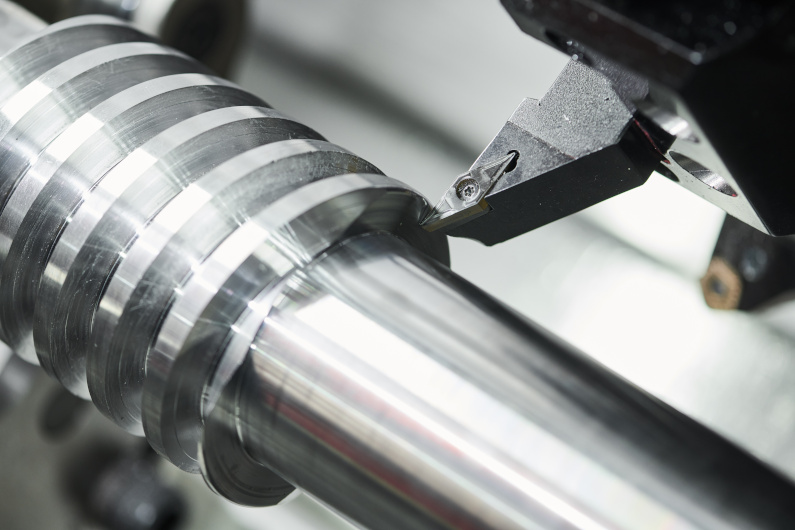
One of the cornerstone technologies for producing extremely small, complex metal components is precision Swiss CNC (Computer Numerical Control) machining. Unlike conventional CNC lathes where the workpiece moves, in Swiss machining, the material bar slides through a guide bushing while the cutting tools remain stationary or move only in specific axes. This setup provides exceptional support close to the cutting point, significantly enhancing rigidity and enabling the machining of very slender and long parts with extreme accuracy and fine surface finishes. This capability is vital for components like micro connector pins or intricate shafts. Modern providers offering advanced CNC machining service can meet these exacting demands.
Specialized Material Expertise
Material selection is critical. Engineers must understand how different metal alloys behave at micro-scales and under specific operating conditions. This includes not only standard properties like strength and hardness but also ductility, thermal expansion, and electrical conductivity, especially when features are sub-millimeter. Innovations in specific metal alloys are continuously being explored to meet evolving requirements.
Rigorous Process Control and Automation
To minimize scrap rates and maintain consistency, manufacturing processes must be meticulously controlled. This involves highly automated systems with real-time monitoring, feedback loops, and statistical process control (SPC) to detect and correct deviations instantly. Environmental controls, such as temperature and humidity regulation, are also crucial in micro-manufacturing to prevent material expansion or contraction that could affect precision.
High-Resolution Inspection Systems
As mentioned, standard inspection methods are insufficient. Advanced optical inspection systems, often leveraging high-magnification microscopy, laser scanning, or even X-ray computed tomography (CT) for internal feature analysis, are indispensable. These systems are typically integrated with automated measurement software capable of precisely quantifying dimensions and identifying defects at the micrometer level.
Design-for-Manufacturability (DFM)
Early engagement between designers and manufacturers through Design-for-Manufacturability (DFM) principles is paramount. DFM involves optimizing the component's design to ensure it can be manufactured efficiently and cost-effectively, without compromising functionality. For miniaturized parts, this means considering tool access, material flow, stress points, and inspection methodologies even in the initial design phases, thereby preventing costly re-designs and production delays.
The Economic Equation: Addressing Miniaturization Costs
The inherent complexities of miniaturization inevitably impact the cost structure of consumer electronics components. While the ultimate goal is to create smaller, lighter, and often more affordable devices for the end-user, the journey to achieve this is resource-intensive.
The primary drivers of increased cost include:
- Specialized Equipment: The precision Swiss CNC machines and high-resolution inspection systems required are significantly more expensive than standard manufacturing equipment.
- Advanced Tooling: Micro-tools are not only costly to produce but also have a shorter lifespan due to increased wear and fragility, leading to higher tooling expenses.
- Increased Rejection Rates: Despite stringent controls, the tight tolerances mean that a higher percentage of components may fail quality checks, directly increasing per-unit costs.
- Extended Development Cycles: The iterative process of optimizing design, material, and manufacturing parameters for micro-components often leads to longer development phases, incurring higher R&D costs.
- Skilled Labor: Operating and maintaining these advanced systems, along with performing meticulous quality assurance, requires highly trained and specialized engineers and technicians, commanding higher wages.
Understanding these underlying mechanisms explains why miniaturization, despite its benefits, presents an ongoing economic balancing act for manufacturers and consumer electronics brands alike.
The Future of Micro-Components: Innovations and Outlook
The journey of miniaturization is far from over. As consumer electronics continue to evolve, so too will the demands placed on precision metal components. The next wave of innovation is likely to focus on several key areas.
Further advancements in material science are expected, leading to new alloys with superior strength-to-weight ratios, enhanced electrical properties, or improved machinability at micro-scales. Research into novel manufacturing processes beyond traditional machining, such as advanced additive manufacturing (metal 3D printing for micro-parts) and sophisticated forms of nanolithography, could open doors to even more intricate geometries and unprecedented levels of precision. Furthermore, the integration of these micro-components with flexible electronics and the exploration of self-assembly mechanisms could redefine how devices are constructed.
For those interested in delving deeper into the mechanics of manufacturing small-scale components, exploring academic journals on micro-electromechanical systems (MEMS) or advanced manufacturing techniques can provide further insights. Understanding the continued interplay between material science, precision engineering, and consumer demand will be crucial for comprehending the future trajectory of device miniaturization.
