
Understanding ASTM B121 Brass Specifications and Applications (as of 2026-11-12)
Navigating the world of metal specifications can often feel like deciphering a complex code. When you encounter terms like "ASTM B121 brass," it refers not merely to a material, but to a precise set of requirements designed to ensure consistency, quality, and performance for specific leaded brass products. This standard, established by ASTM International, provides the framework that engineers, manufacturers, and buyers rely on to specify and procure brass materials suitable for a wide array of industrial applications. Without such a standard, the variability in composition, form, and quality could lead to significant failures and inefficiencies in manufacturing processes.
What is ASTM B121/B121M Leaded Brass?
At its core, ASTM B121/B121M is a rigorous specification that dictates the standards for leaded brass in specific forms: plate, sheet, strip, and rolled bar. It is a critical document for anyone involved in manufacturing or utilizing components made from these brass types. The standard's purpose is to eliminate ambiguity in material ordering and ensure that the end product meets defined chemical, mechanical, and quality parameters.
The "B121" designation refers to the version of the standard that uses inch-pound units, which are commonly used in the United States. Conversely, "B121M" is its counterpart, providing requirements in metric (SI) units. It is crucial to understand that these two systems are considered entirely independent. Mixing values between the inch-pound and SI versions is explicitly stated as non-conforming to the specification, underscoring the need for strict adherence to one system throughout a project.
The forms covered by ASTM B121 are foundational to many manufacturing processes. Plate, sheet, strip, and rolled bar brass are semi-finished products that serve as the raw material for various fabrication techniques, from stamping and deep drawing to machining. These forms are chosen for their versatility and suitability for being further processed into finished parts.
Chemical Composition and Key Leaded Brass Alloys
Understanding the chemical composition is fundamental to appreciating the properties and applications of ASTM B121 brass. Leaded brass alloys are primarily composed of copper and zinc, with a controlled addition of lead. This lead content is a deliberate alloying element, introduced primarily to enhance the material's machinability. Lead does not alloy with copper and zinc but rather disperses as fine particles throughout the brass matrix, acting as a lubricant and chip breaker during cutting operations.
The ASTM B121 specification covers several specific copper-zinc-lead alloys, each identified by a unique UNS (Unified Numbering System) designation. These include:
- C33500: Copper ~65.0%, Zinc ~34.5%, Lead ~0.5%
- C34000: Copper ~65.0%, Zinc ~34.0%, Lead ~1.0%
- C34200: Copper ~65.0%, Zinc ~33.0%, Lead ~2.0%
- C35000: Copper ~61.5%, Zinc ~37.4%, Lead ~1.1%
- C35300 (Brass 353): Copper ~61.2%, Zinc ~37.0%, Lead ~1.8%
- C35600: Copper ~61.2%, Zinc ~36.3%, Lead ~2.5%
These nominal compositions, specified as percentages by weight, dictate the balance of properties, such as strength, ductility, and machinability. Minor amounts of other elements, such as iron, are also indicated, usually in trace quantities. For example, alloys like C35300, often referred to as Brass 353, are well-known for their excellent machinability due to their controlled lead content.
When discussing brass, some might encounter designations like "CZ121 brass." It is important to note that the ASTM B121 standard itself exclusively uses the UNS C3xxxx designations for its covered alloys. "CZ121" is typically a European standard (e.g., from EN 12164, a European norm for wrought and forged brass rods), not an ASTM designation. While CZ121 is also a leaded brass alloy with properties similar to some ASTM B121 alloys (often comparable to C35300), it operates under a different set of specifications and nomenclature. Therefore, while both serve similar functional purposes as free-machining brass, specifying "ASTM B121" refers specifically to the alloys listed with UNS numbers within that standard's framework.
Manufacturing and Quality Requirements for B121 Brass
The production of materials conforming to ASTM B121 involves carefully controlled manufacturing processes to achieve the desired metallurgical structure and surface finish. While specific process parameters are typically proprietary to individual manufacturers, the standard implies the use of common metalworking techniques. Materials such as plate, sheet, strip, and rolled bar are generally produced through a combination of hot working, cold working, and annealing operations. Hot working involves shaping the metal at high temperatures, allowing for significant deformation. Cold working, performed at room temperature, refines the grain structure, increases strength, and improves surface finish. Annealing, a heat treatment process, is used to soften the metal and relieve internal stresses, preparing it for further cold working or improving its ductility. The goal of these processes is to achieve a uniform wrought structure in the final product.
The ASTM B121 standard does not exist in isolation; it integrates with broader ASTM standards to ensure comprehensive quality control. Specifically, it references and incorporates various sections from ASTM B248/B248M, titled "General Requirements for Wrought Copper and Copper-Alloy Plate, Sheet, Strip, and Rolled Bar." This overarching standard covers essential aspects such as:
- Terminology: Standardizing the language used to describe materials and their properties.
- Material Manufacture: General guidelines for how the alloys are to be produced.
- Workmanship: Requirements for surface quality, flatness, and freedom from defects.
- Sampling: Procedures for selecting representative samples for testing.
- Testing: Methods for determining chemical composition, mechanical properties, and other characteristics.
- Packaging: Guidelines for protecting the material during shipment and storage.
The specification also details requirements for temper and edge finish. Temper refers to the combination of mechanical properties (e.g., hardness, strength) achieved through cold working and heat treatment. Different tempers, such as H02 (half-hard), are available to suit specific application needs, dictating the material's formability and strength. Unless otherwise specified by the purchaser, materials are often supplied with slit edges, which are produced by cutting larger sheets or coils into narrower widths.
Commercial Availability and Ordering of ASTM B121 Materials
Materials compliant with ASTM B121 brass specifications are widely available from metal suppliers globally. Commercial entities such as McMaster-Carr and OnlineMetals.com, for example, list various forms of ASTM B121 compliant brass, including Brass 353 (UNS C35300), often available in different tempers like H02. These materials are typically offered in a range of standard dimensions, encompassing various thicknesses, widths, and lengths, from small strips to large sheets. For example, some suppliers stock materials in thicknesses such as 1/16 inch, 1/8 inch, or 1/4 inch, and widths that can range from a fraction of an inch to several feet.
When ordering materials under this specification, clear and comprehensive information is paramount to ensure the correct product is supplied. While specific ordering details may vary slightly by supplier, essential information typically includes:
- The full ASTM designation and its year of issue (e.g., "ASTM B121 – [Year]").
- The specific UNS alloy number (e.g., "UNS C35300").
- The desired temper (e.g., "Half-Hard," "H02").
- Precise dimensions: thickness, width, and length.
- The type of edge required (e.g., "slit edge," "deburred edge").
- How the product should be supplied (e.g., "straight lengths," "coils").
Attention to these details prevents miscommunication and ensures that the material received meets the exact requirements for its intended use. Understanding the nuances of these specifications also helps in identifying when alternative materials, such as various types of Alloy Steel or even Steel 1018, might be more appropriate for a given application, although they differ significantly in properties from brass.
Applications and Considerations for Leaded Brass (ASTM B121)
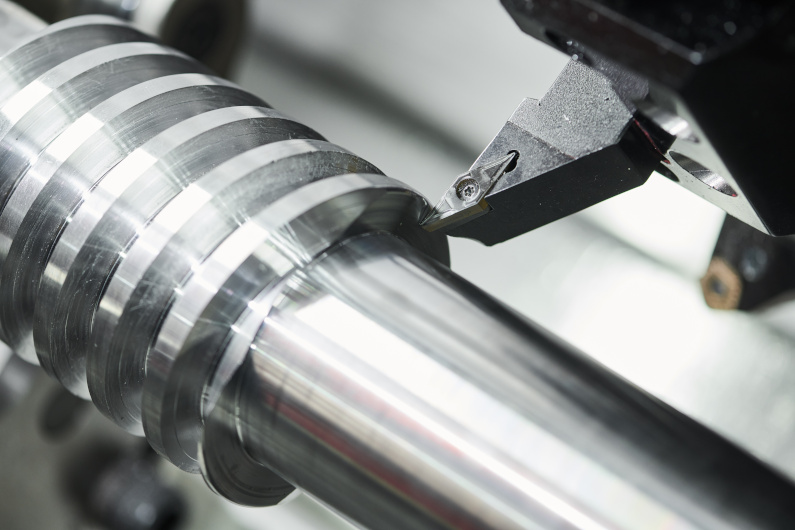
While the ASTM B121 standard itself focuses primarily on defining the material's composition and manufacturing requirements rather than specific end-use applications, the properties inherent to leaded brass dictate its suitability for particular industries and components. The primary advantage of leaded brass is its exceptional machinability. The inclusion of lead creates a short, brittle chip during machining, which reduces tool wear and allows for higher cutting speeds, leading to more efficient production of complex parts. This property makes ASTM B121 brass an ideal choice for components that require extensive machining, such as:
- Fasteners: Screws, nuts, and bolts.
- Valve components: Stems, guides, and fittings.
- Connectors: Electrical and plumbing connectors.
- Gears and Pinions: Small, intricate mechanical parts.
- Hardware: Decorative and functional hardware components.
Industries that frequently utilize ASTM B121 brass include plumbing, electrical, automotive, and general manufacturing, particularly where precision and cost-effective production of machined parts are critical. Companies offering CNC Machining Service frequently work with these types of alloys due to their favorable machining characteristics.
However, the presence of lead also brings important considerations, particularly regarding environmental regulations and health. Lead is a toxic heavy metal, and its use in certain applications, especially those involving potable water or food contact, is increasingly restricted by regulations such as the Safe Drinking Water Act (SDWA) in the United States. While ASTM B121-compliant brass contains lead, manufacturers and users must be aware of and comply with relevant local and international regulations concerning lead content in finished products. For applications where lead is prohibited, alternative lead-free brass alloys or other materials must be considered.
Frequently Asked Questions
What are the main components of CZ121 brass?
The ASTM B121 standard specifies leaded brass alloys by their UNS (Unified Numbering System) designations, such as C35300, not "CZ121." CZ121 is a common European designation for a free-machining brass alloy (EN 12164 CW614N) that shares similar compositional characteristics with some ASTM B121 alloys. While not directly covered by ASTM B121, CZ121 is primarily composed of approximately 57-59% copper, 38-40% zinc, and 2.5-3.5% lead, along with trace elements like iron.
Conclusion
The ASTM B121 standard provides a crucial framework for understanding and specifying leaded brass in plate, sheet, strip, and rolled bar forms. By detailing precise chemical compositions and integrating with broader general requirements, it ensures consistency and quality in a range of industrial materials. While this standard itself doesn't prescribe end-use applications, the excellent machinability of the leaded brass alloys it covers makes them invaluable for complex, high-volume machined components across various sectors. For those working with or specifying these materials, a thorough understanding of ASTM B121 is essential for navigating material selection, manufacturing processes, and regulatory compliance. Further exploration might involve delving into the specific mechanical property requirements for each UNS alloy or researching the evolving landscape of lead regulations impacting brass usage.
