

Advanced Corrosion-Resistant Metal Fabrication for Chemical Processing Equipment (2026-11-18)
In the highly demanding world of chemical processing, the integrity of equipment is paramount. Imagine a facility where a critical reaction vessel, designed to hold potent acids or highly corrosive solvents, begins to degrade prematurely. This isn't merely an aesthetic flaw; it represents a significant safety hazard, a potential for catastrophic operational failure, and a direct threat to product quality and production schedules. The challenge lies in selecting and transforming raw metals into robust components capable of withstanding relentless chemical attack—a task far more complex than it might initially appear. Understanding the principles and advanced techniques behind corrosion-resistant metal fabrication for the chemical industry is not just about material choice, but about ensuring the longevity, safety, and efficiency of an entire industrial operation.
The Critical Need for Corrosion Resistance in Chemical Processing
Corrosion, in chemical processing environments, extends far beyond simple rust. It is a pervasive and insidious degradation of materials that can manifest in several destructive forms, each posing unique challenges to equipment integrity. Fundamentally, corrosion is an electrochemical process where a material, typically a metal, reacts with its environment. In the chemical industry, this environment is often a complex cocktail of aggressive chemicals, high temperatures, varying pressures, and sometimes abrasive slurries.
Common mechanisms of corrosion encountered include:
- General Corrosion: A relatively uniform attack over the entire surface of the metal. While predictable, if the rate is high, it can quickly thin components and lead to rupture.
- Pitting Corrosion: Localized attack that results in small holes or "pits" on the metal surface. These pits can penetrate deeply and cause failure with minimal material loss, often occurring in environments with chloride ions.
- Crevice Corrosion: Similar to pitting but occurs in confined spaces, such as under gaskets, bolt heads, or stagnant areas where oxygen is depleted, allowing localized corrosive species to concentrate.
- Chloride Stress Corrosion Cracking (CSCC): A particularly dangerous form of localized corrosion that can occur in certain alloys, notably austenitic stainless steels, when exposed to tensile stress and warm, chloride-rich environments. It leads to cracks propagating through the material without significant visible surface corrosion.
The impact of corrosion is profound. Beyond the immediate risks of leaks, spills, and catastrophic equipment failure, it leads to increased maintenance costs, prolonged downtime for repairs or replacements, and compromised product quality due to contamination. For example, a corroding reactor liner could introduce metallic ions into a sensitive chemical batch, ruining the product. Therefore, implementing effective corrosion resistance measures is not an optional add-on but a fundamental requirement for consistent performance, structural integrity, and regulatory compliance. Engineers must meticulously define operational variables, including maximum temperatures, design pressures, chemical concentrations, and potential contaminant profiles (e.g., halogens, dissolved oxygen), to predict and mitigate these failure modes.
Selecting Optimal Corrosion-Resistant Materials for Chemical Service
The first and arguably most critical step in designing chemical processing equipment is the judicious selection of materials. This decision is driven by a deep understanding of the specific corrosive agents, their concentrations, operating temperatures, and pressures. While various materials can offer some degree of corrosion resistance, the severity of chemical environments often necessitates advanced alloys.
Standard stainless steels, such as 304, provide general corrosion resistance, but many chemical applications demand more. 316L stainless steel, for instance, is a common choice, distinguished by its inclusion of molybdenum. This alloying element significantly enhances its resistance to pitting and crevice corrosion, especially in chloride-bearing streams and reducing environments, offering a substantial upgrade over 304 for many chemical-heavy applications. For a broader understanding of different steel types, you might refer to general information on alloy steel categories.
However, even 316L has its limits. Highly aggressive conditions mandate the use of specialized high-performance nickel alloys and super-austenitic or duplex stainless steels:
- Alloy 20: This robust alloy contains a significant amount of nickel (typically 32% to 38%) alongside copper and chromium. It is specifically engineered to resist aggressive sulfuric acid environments, making it indispensable in processes involving concentrated sulfuric acid.
- Hastelloy C-276: Known for its exceptional versatility, Hastelloy C-276 offers outstanding resistance to a wide range of severe corrosive media, including wet chlorine gas, hypochlorite, chlorine dioxide solutions, and strong oxidizing and reducing acids, such as hydrochloric and hydrofluoric acids.
- AL-6XN: A super-austenitic stainless steel, AL-6XN features approximately 6% molybdenum and elevated nitrogen levels. This composition provides superior resistance to chloride-induced corrosion, including pitting and crevice corrosion, in challenging chloride-bearing streams.
- Duplex Stainless Steels (e.g., 2205): These steels possess a mixed microstructure of austenite and ferrite, combining the beneficial properties of both. For example, Duplex 2205 offers roughly twice the strength of standard 316L stainless steel, coupled with superior resistance to chloride-induced stress corrosion cracking and general corrosion.
- Aluminum Alloys: While often requiring proper surface finishing for enhanced protection, certain aluminum alloys can be suitable for less aggressive chemical environments or specific applications where weight is a critical factor.
The term "marine grade" is often encountered in discussions of corrosion resistance. It functions as a performance standard, signifying a material's inherent ability to withstand corrosive conditions found in moisture-heavy, salt-laden, chemical-exposed, or environmentally demanding settings—not exclusively for ocean applications. This designation is relevant to chemical processing equipment that must endure similar environmental stresses.
Precision Fabrication Techniques for Enhanced Corrosion-Resistant Metal Fabrication in the Chemical Industry
Material selection, while foundational, is only one part of the solution. The longevity and performance of equipment depend equally on the quality and precision of its fabrication. Incorrect fabrication methods can compromise even the most advanced materials, creating vulnerabilities that lead to premature corrosion and failure.
Corrosion-resistant metal fabrication for the chemical industry demands meticulous attention to detail through every stage:
- Cutting and Forming: Techniques like laser cutting, plasma cutting, and precision bending must be carefully controlled to prevent introducing stresses or surface defects that could become initiation points for corrosion. For instance, excessive heat input during cutting can alter the microstructure of an alloy, reducing its localized corrosion resistance.
- Welding: This is arguably the most critical fabrication step impacting corrosion resistance.
- Filler Metal Selection: Over-alloyed filler metals are often specified to ensure the weld zone has superior corrosion resistance compared to the base material, compensating for potential elemental segregation during solidification.
- Thermal Control: Stringent control of heat input, interpass temperature, and travel speed is vital to prevent sensitization (especially in stainless steels, where chromium carbides can precipitate at grain boundaries, depleting chromium and making the material vulnerable to intergranular corrosion) and distortion.
- Shielding Gases: Proper shielding gases prevent atmospheric contamination (like oxygen and nitrogen) from reacting with the molten weld pool, which can lead to porosity, inclusions, and reduced corrosion resistance.
- Dissimilar Metal Joints: When joining different alloys, specialized procedures and filler metals are required to prevent galvanic corrosion, where one metal preferentially corrodes due to an electrochemical potential difference.
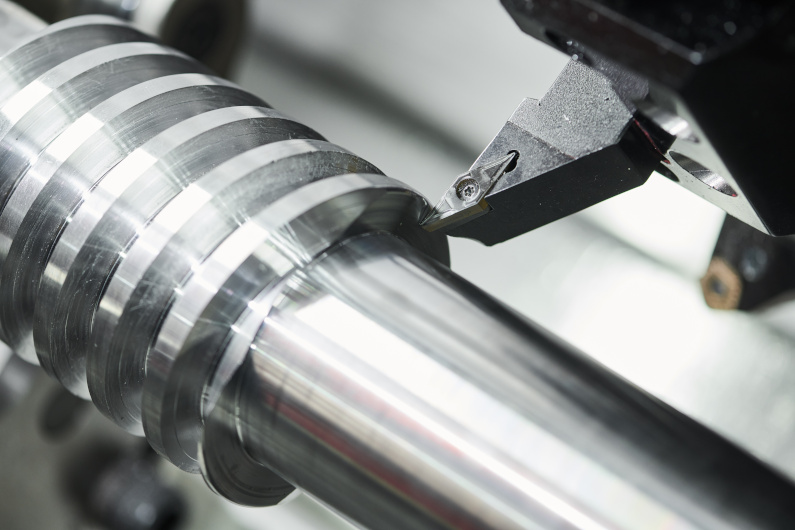
- Precision Machining: Components requiring tight tolerances and complex geometries often undergo CNC machining service. This process must be carried out with appropriate coolants and tooling to avoid work hardening, surface tearing, or contamination that could compromise corrosion resistance.
- Surface Preparation and Finishing: Post-fabrication treatment is essential to restore and enhance the material's inherent corrosion resistance.
- Deburring and Cleaning: Sharp edges and residual debris from machining or cutting can create sites for crevice corrosion. Thorough deburring and cleaning remove these vulnerabilities.
- Pickling and Passivation: For stainless steels, pickling removes scale and heat tint (chromium-depleted oxide layers) formed during welding or heat treatment, while passivation chemically restores the passive chromium oxide layer, which is crucial for corrosion resistance. ASTM A967/A967M provides standard practices for chemical passivation treatments for stainless steel parts.
- Electro-polishing: This electrochemical process smooths and brightens the metal surface, removing microscopic imperfections and further enhancing the passive layer, reducing areas where corrosive agents can adhere or concentrate.
- Anodizing and Powder Coating: For materials like aluminum, anodizing creates a durable oxide layer, while powder coating provides a barrier against chemical attack and abrasion.
The quality of these fabrication processes directly dictates how well the selected corrosion-resistant material performs over its operational lifetime.
Adherence to Industry Standards and Quality for Chemical Processing Equipment
In the chemical industry, the margin for error is virtually nonexistent. Therefore, all corrosion-resistant metal fabrication chemical industry practices must conform to rigorous industry standards and quality assurance protocols. These standards are not merely guidelines; they are critical safeguards developed through extensive research and experience to ensure safety, reliability, and interoperability.
One of the most essential standards for pressure-containing equipment is the ASME Boiler and Pressure Vessel Code (BPVC). Compliance with this code, often indicated by a "U-stamp" certification, ensures that vessels are designed, fabricated, inspected, and tested to stringent requirements, minimizing the risk of catastrophic failure under pressure.
Beyond ASME, several other standards bodies play crucial roles:
- NACE International (formerly National Association of Corrosion Engineers): NACE standards provide comprehensive guidelines on corrosion control, material selection, coatings, and cathodic protection, specifically focusing on mitigating corrosion in diverse industrial environments.
- ASTM International (American Society for Testing and Materials): ASTM publishes a vast array of standards covering material specifications, test methods, and practices for a wide range of materials, including specific compositions and properties for corrosion-resistant alloys.
- API (American Petroleum Institute): While primarily focused on the oil and gas industry, API standards are highly relevant given the extensive chemical processing involved, covering equipment design, manufacturing, and operational integrity for applications that often overlap with the chemical sector.
Before fabrication commences, engineers must meticulously define all operational parameters. This includes not just maximum operating temperatures and design pressures, but also precise chemical concentrations, flow rates, potential contaminant profiles (e.g., specific halogens, sulfur compounds), and the expected mechanical loads. This detailed specification forms the basis for material selection and dictates the fabrication methods, inspection points, and quality control measures required.
Quality assurance extends to non-destructive testing (NDT), which is indispensable for verifying the integrity of fabricated components without damaging them. Common NDT methods include:
- Radiographic Testing (RT): Uses X-rays or gamma rays to detect internal flaws like cracks, porosity, or inclusions in welds.
- Ultrasonic Testing (UT): Employs high-frequency sound waves to detect internal discontinuities and measure material thickness.
- Liquid Penetrant Testing (PT): Reveals surface-breaking defects by applying a liquid dye that seeps into discontinuities.
- Magnetic Particle Testing (MT): Detects surface and shallow subsurface discontinuities in ferromagnetic materials.
These tests, performed at various stages of fabrication, ensure that welds are sound, materials are free from critical defects, and components meet the specified structural and corrosion resistance requirements.
Strategic Partnership in Corrosion-Resistant Metal Fabrication for the Chemical Industry
Given the complexities and critical nature of chemical processing equipment, selecting the right fabrication partner is a strategic decision. It is not merely about finding a vendor, but about establishing a collaboration with a firm that possesses specialized knowledge and demonstrated expertise in corrosion-resistant metal fabrication for the chemical industry.
When evaluating potential fabrication partners, critical criteria include:
- Proven Experience: Look for a history of successful projects involving similar corrosive media and operating conditions. Experienced fabricators understand the nuances of various alloys and the specific challenges of chemical environments.
- Material Science Expertise: A deep understanding of metallurgy, corrosion science, and the interactions between specific chemicals and alloys is essential. They should be able to advise on appropriate material selection based on your process specifications.
- Advanced Fabrication Capabilities: Access to state-of-the-art equipment for precision cutting, forming, welding (including specialized techniques like orbital welding), and surface finishing (e.g., electro-polishing, passivation) is crucial.
- Rigorous Quality Control & Certifications: Verification of robust quality management systems (e.g., ISO 9001) and specific industry certifications (e.g., ASME U-stamp, NACE certifications for welding procedures) indicates a commitment to delivering components that meet the highest standards.
- In-house NDT Capabilities: The ability to perform a wide range of NDT in-house streamlines the process and ensures consistent quality oversight.
Specialized fabrication expertise ensures that critical equipment—such as process vessels, reactors, storage tanks, and intricate process piping—is not only built to specification but also engineered for maximum lifespan and operational reliability in the face of continuous chemical exposure. Companies like American Alloy Fabricators or Washington Metal Fabricators are examples of firms specializing in this challenging field, contributing significantly to the safety and efficiency of chemical plants globally.
Exploring the Future of Corrosion Control
The field of corrosion-resistant metal fabrication is continually evolving. While established alloys and techniques provide robust solutions, ongoing research explores novel materials, advanced coatings, and intelligent monitoring systems to push the boundaries of durability and cost-effectiveness. Understanding the principles outlined here forms a solid foundation, but engineers and industry professionals should remain attentive to emerging alloy developments, advanced composite materials, and innovative manufacturing processes. Continuous learning about new standards, material behaviors, and advanced protection methods is essential to safeguard operations and drive innovation within the chemical processing sector.
