
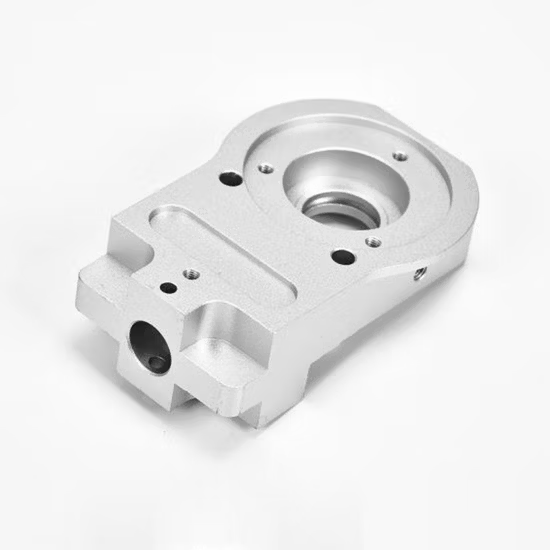
Laser Cutting Titanium Components: Techniques, Challenges, and Applications in 2026
Titanium, a metal renowned for its exceptional strength-to-weight ratio, superior corrosion resistance, and biocompatibility, is indispensable in industries ranging from aerospace to medical devices. However, its very strengths pose significant challenges when it comes to manufacturing and machining. Unlike more common materials like stainless steel or Alloy Steel, titanium's high melting point, low thermal conductivity, and reactivity with atmospheric gases make it notoriously difficult to process with traditional methods. This often leads engineers and manufacturers to seek advanced solutions, with titanium laser cutting emerging as a highly precise, yet technically demanding, method.
The intricacies of laser cutting titanium are not immediately apparent. It's not simply a matter of increasing laser power; rather, it involves a delicate balance of specific laser technologies, carefully controlled process parameters, and an understanding of the material's unique metallurgical behavior under intense thermal stress. This article delves into the core techniques employed, the persistent challenges faced, and the diverse applications that benefit from the precision offered by laser-cut titanium components, as understood in late 2026.
The Unique Material Science of Titanium for Precision Manufacturing
Titanium's desirable properties stem from its atomic structure, which grants it high tensile strength while remaining remarkably lightweight compared to many other structural metals. For example, when contrasted with a material like Steel 1018, titanium offers a significantly better strength-to-density ratio, making it ideal for weight-critical applications. Furthermore, its inherent resistance to corrosion, particularly in harsh environments such as saltwater or biological fluids, is unparalleled. This characteristic makes it the material of choice for marine components and surgical implants.
However, these advantageous traits also introduce complexities during fabrication. Titanium readily absorbs atmospheric gases like oxygen and nitrogen at elevated temperatures, leading to embrittlement and a degradation of mechanical properties. Its low thermal conductivity means that heat generated during cutting tends to remain localized, creating a pronounced heat-affected zone (HAZ) and potential material distortion. These factors necessitate specialized laser cutting techniques to preserve the material's integrity and achieve the required dimensional accuracy and surface quality.
Fundamental Techniques for Laser Cutting Titanium
Effective titanium laser cutting hinges on selecting the right laser technology and meticulously controlling the cutting environment. The precision required for titanium components demands systems capable of delivering highly focused energy with minimal thermal impact on the surrounding material.
Fiber Lasers: The Preferred Choice for Titanium Processing
When it comes to laser cutting and engraving titanium, fiber lasers have become the industry standard. Specifically, MOPA (Master Oscillator Power Amplifier) fiber lasers are frequently recommended due to their ability to precisely control pulse duration and frequency. This control allows for finer manipulation of the energy delivered to the material, reducing the extent of the heat-affected zone and improving cut quality.
For thinner titanium sheets, such as those up to approximately 0.8mm thick, a minimum laser power of 50W is often suggested, with 60W MOPA fiber lasers proving to be a practical option for both cutting and engraving. This power range provides sufficient energy to initiate and sustain the cutting process while allowing for the precise control necessary to handle titanium's thermal properties. Higher power lasers would be needed for thicker materials, but specifics for greater thicknesses are less widely documented and often depend heavily on the exact alloy and machine configuration.
The Critical Role of Assist Gases
A defining characteristic of successful titanium laser cutting is the strategic use of an inert assist gas. Unlike cutting steel, where oxygen might be used to enhance the exothermic reaction and accelerate the cut, titanium's reactivity at high temperatures necessitates a protective atmosphere.
Argon is the assist gas predominantly used for laser cutting titanium. When directed at the cutting front, argon serves multiple purposes: it physically blows away molten material, preventing dross accumulation on the cut edge, and critically, it shields the superheated titanium from atmospheric oxygen and nitrogen. This inert blanket prevents the oxidation and nitridation that would otherwise lead to a brittle, discolored, and structurally compromised edge. Without argon, the cut surface would likely exhibit significant discoloration and a hardened layer, requiring extensive post-processing or leading to component failure in critical applications. For example, observing laser systems in action, such as the Kern FiberCELL demonstrating titanium cutting with argon assist gas (documented as early as March 5, 2019), clearly shows the importance of this gas in achieving a clean, quality cut.
Overcoming the Technical Challenges in Titanium Laser Cutting
Despite the advancements in laser technology, laser cutting titanium remains an art that combines scientific understanding with practical experience. The unique challenges it presents require continuous optimization of parameters.
Thermal Management and Heat-Affected Zone (HAZ)
Titanium's low thermal conductivity is a double-edged sword: it makes the material resistant to heat transfer, which is great for high-temperature applications, but problematic for thermal cutting. The localized heat input from a laser tends to remain concentrated at the cut edge, creating a distinct HAZ. Within this zone, the material's microstructure can change, potentially leading to increased hardness, reduced ductility, or even micro-cracking. Mitigating HAZ involves precise control over laser pulse duration, frequency, and power, coupled with efficient cooling via the assist gas, to minimize the overall heat input into the material.
Preventing Dross and Achieving Clean Edges
Dross, or recast material, is a common byproduct of thermal cutting processes. For titanium, dross formation is particularly problematic due to the material's tendency to react with oxygen and form refractory oxides if not adequately shielded. This molten material can solidify along the bottom edge of the cut, creating an uneven, undesirable finish that requires costly post-processing. The correct balance of assist gas pressure, nozzle design, and cutting speed is crucial to effectively eject molten material from the kerf, ensuring a clean, dross-free edge. Iterative fine-tuning of these settings is often necessary to achieve optimal results for specific titanium alloys and thicknesses.
Surface Finish and Metallurgical Integrity
For many of titanium's high-performance applications, such as medical implants or aerospace components, surface finish and metallurgical integrity are paramount. A rough cut surface can act as a stress concentration point, initiating cracks under cyclic loading. Discoloration indicates surface oxidation, which can compromise corrosion resistance and biocompatibility. Achieving a smooth, clean, and uncompromised cut surface requires not only the right equipment and assist gas but also a deep understanding of how each parameter influences the cut quality. Advanced laser systems offer feedback loops and adaptive control to help maintain consistent quality, but expert operators are still essential.
Applications of Laser-Cut Titanium Across Industries
The ability to precisely cut titanium opens doors to fabricating intricate, high-performance components that would be difficult or impossible to produce with other methods.
- Aerospace and Defense: Titanium's strength-to-weight ratio is critical for aircraft components, engine parts, and missile structures, where every gram counts towards fuel efficiency and performance. Laser cutting allows for the production of complex aerodynamic shapes, lightweight brackets, and structural elements with minimal material waste.
- Medical Devices: Biocompatibility and corrosion resistance make titanium ideal for surgical implants, prosthetics, and dental devices. Laser cutting enables the creation of highly intricate components like bone plates, custom joint replacements, and miniature instrument parts, often with very fine features required for patient-specific solutions.
- Automotive and Motorsports: In high-performance vehicles, titanium components contribute to weight reduction and increased strength in areas like exhaust systems, engine valves, and chassis parts. Laser cutting facilitates rapid prototyping and production of these specialized components.
- Marine and Subsea: Given its exceptional resistance to saltwater corrosion, titanium is used in underwater vehicles, heat exchangers, and marine hardware. Laser cutting provides the precision needed for pressure-resistant enclosures and robust structural elements.
- Consumer Goods: From premium sporting equipment to luxury watches and eyewear frames, titanium's lightweight and durable properties are increasingly valued. Laser cutting allows for aesthetic designs and precision fitting.
In all these sectors, laser cutting offers the advantage of producing complex geometries with narrow kerf widths and often reduced need for secondary finishing operations, directly contributing to cost efficiency and improved product performance for www.bingzhen-sh.com.
Comparing Titanium Laser Cutting with Alternative Methods
While laser cutting offers significant advantages for titanium, it is not always the sole or optimal solution. Other advanced manufacturing techniques like waterjet cutting and CNC routing also play crucial roles, depending on the specific application, material thickness, and desired outcome. Understanding the trade-offs is essential for selecting the most appropriate process.
Here's a comparison of these key methods for titanium fabrication:
| Method | Pros for Titanium | Cons for Titanium | Best Use Cases |
|---|---|---|---|
| Laser Cutting | High precision, intricate geometries, narrow kerf, minimal tool wear | Costly for very thick sections, potential HAZ and dross, parameter sensitivity | Thin sheets (up to ~3-6mm), intricate designs, prototyping, high-volume flat patterns |
| Waterjet Cutting | No heat-affected zone (cold cutting), no material hardening, can cut very thick sections | Slower cutting speed, wider kerf, abrasive material disposal, potential for material saturation | Thick plates, complex shapes where heat distortion is critical, stacked cutting |
| CNC Routing/Milling | Excellent surface finish, 3D shaping, good for thicker stock, high accuracy | Slower for intricate 2D cuts, significant tool wear (requires specialized carbide tools), limited internal features compared to laser | Machining from solid blocks, thick parts requiring 3D contours, standard features, high surface finish requirements |
For applications involving thin titanium sheets and highly intricate designs, laser cutting often provides unmatched speed and precision. However, for significantly thicker titanium plates, especially where thermal effects are absolutely unacceptable, waterjet cutting becomes the preferred method, despite its slower speed and broader kerf. CNC routing, meanwhile, excels at producing complex three-dimensional components with superior surface finishes from thicker stock, though it incurs higher tool wear costs and can be slower for complex 2D profiles. The choice between these methods depends heavily on the project's specific requirements for thickness, tolerance, surface quality, and overall production volume.
Future Outlook and Best Practices for Titanium Laser Processing
The landscape of titanium laser cutting is continually evolving. Ongoing research focuses on developing even more precise laser sources, such as picosecond and femtosecond lasers, which deliver ultrashort pulses to further minimize the HAZ and improve cut quality, albeit at a higher cost. Improvements in process control, including real-time monitoring and adaptive parameter adjustment, are also expected to make titanium laser processing more robust and less reliant on extensive trial and error.
For those embarking on titanium laser cutting projects, the best practices revolve around:
- Material Characterization: Understand the specific titanium grade and its properties.
- Equipment Selection: Invest in a fiber laser system with precise pulse control (like MOPA) and robust assist gas delivery.
- Assist Gas Optimization: Prioritize inert gases, particularly argon, and ensure optimal gas pressure and nozzle alignment.
- Parameter Development: Expect to conduct thorough testing to fine-tune power, speed, frequency, and focal position for each unique material thickness and alloy.
- Post-Processing Consideration: Plan for potential minor finishing operations, even with optimized laser cuts, to meet the highest quality standards.
- Safety Protocols: Implement strict safety measures for laser operation and fume extraction.
As demand for high-performance titanium components grows across various industries, the technical mastery of laser cutting will remain a critical skill. Understanding these challenges and employing appropriate techniques will continue to drive innovation and efficiency in manufacturing. The next step for those interested in leveraging this technology might be to delve deeper into specific laser parameter optimization strategies or explore advanced material characterization techniques to further refine the cutting process.
