

Optimizing Metal Stamping Die Design for Enhanced Production Efficiency & Part Quality (2026-11-19)
Achieving consistent, high-quality stamped parts while maintaining efficient, cost-effective production in metal manufacturing is a persistent challenge. Many manufacturers encounter issues such as excessive material waste, frequent tool wear, dimensional inaccuracies, or part defects like cracks and wrinkles, often tracing these problems back to the initial design of their metal stamping dies. Without a deep understanding of the underlying principles and advanced techniques, optimizing die performance can seem like an elusive goal. However, through a systematic approach to metal stamping die design optimization, these common hurdles can be overcome, transforming production challenges into opportunities for significant improvement.
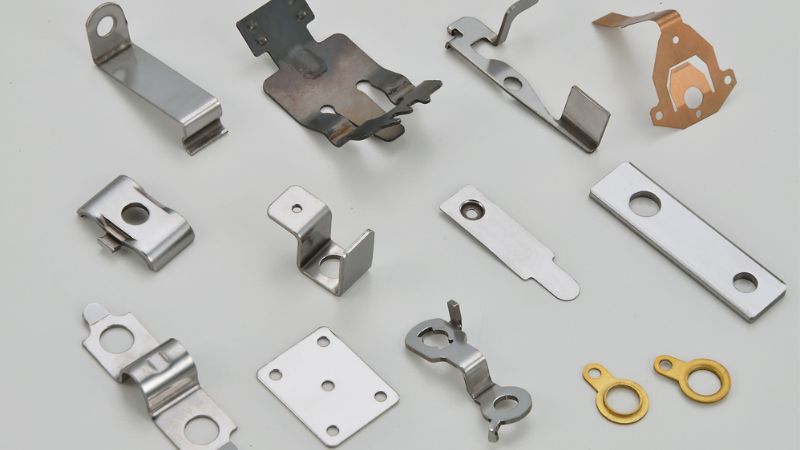
This article delves into the methodologies and crucial considerations involved in refining metal stamping die designs, not merely for functionality, but specifically for enhancing overall production efficiency and elevating the quality of every single stamped component.
The Critical Role of Die Design Optimization in Modern Manufacturing
Die design is far more than just creating a tool to cut and form metal; it is the blueprint for a manufacturing process. Suboptimal die design can cascade into a myriad of production problems, leading to significant financial losses and operational inefficiencies. Conversely, a well-optimized die delivers tangible benefits across the entire production lifecycle.
Die optimization is fundamentally critical for several reasons. It directly impacts material utilization, dramatically reducing scrap and waste, which are major cost drivers in stamping operations. Optimized dies improve part quality and consistency, minimizing the need for rework or rejection of components due to issues like burrs, springback, feeding instability, or dimensional variations—many of which are determined during the die design stage itself. Furthermore, effective die design increases tool life by reducing undue stresses and wear, thereby lowering maintenance costs and minimizing downtime for tool changes. The cumulative effect is accelerated production cycles and a substantial reduction in overall manufacturing costs, directly contributing to a more competitive and profitable operation.
Anatomy of a Stamping Die: Core Components and Their Functions
To truly appreciate die design optimization, it is essential to understand the fundamental components of a metal forming die and their specific roles. Each part works in concert to achieve the desired deformation and separation of the sheet metal.
Essential components typically include:
- Punch: The upper part of the die that moves downwards to press or cut the material. Its shape dictates the inner contours or cutouts of the part.
- Die Cavity: The stationary lower part of the die that the punch enters. It defines the outer shape or contours of the formed or cut part.
- Binder (Blank Holder): A critical component in drawing operations, the blank holder applies controlled pressure to the periphery of the sheet metal blank. This pressure prevents uncontrolled wrinkling of the material as it flows into the die cavity, ensuring uniform deformation.
- Draw Beads: Raised sections, often integrated into the binder, that control the flow of material by introducing localized resistance. They manage the tensile and compressive forces within the sheet, guiding the material into the die cavity in a controlled manner to prevent tearing or wrinkling.
- Pressure Pads: These provide pressure to hold the material during forming or stripping the part from the punch or die. They often use springs or gas cylinders to exert force.
- Knockout Systems: Mechanisms (e.g., pins, cylinders) used to eject the finished part or slugs from the die, ensuring smooth part removal and preventing jamming.
The interplay of these components, along with their precise geometry and material properties, dictates the success of the stamping operation. For instance, the choice of material for the die components themselves, such as a robust Alloy Steel or specific grades like Steel 1018 for certain wear plates, directly impacts the die's durability and performance.
The Comprehensive Process of Metal Stamping Die Design Optimization
Effective metal stamping die design optimization is not a single step but a methodical process that integrates engineering principles with practical experience. This systematic approach ensures that the final die design is robust, efficient, and capable of producing high-quality parts consistently.
The process typically begins with a thorough part review. This involves analyzing the final part's geometry, critical dimensions, tolerances, material specifications, and production volume requirements. Understanding the part's function and its interaction with other components is vital to identify potential challenges early on.
Following the part review is process planning, where the sequence of operations (e.g., blanking, piercing, forming, drawing, trimming) is determined. This stage involves deciding the number of stations required, the progression of material through the die, and the necessary forming allowances.
Next, die type selection occurs, choosing the most suitable die configuration (e.g., progressive die, transfer die, compound die) based on part complexity, material, and production volume.
A critical modern step is the use of CAE (Computer-Aided Engineering) simulation. This is where theoretical understanding meets practical application. Simulation allows designers to virtually test die designs, predict material behavior, identify potential defects, and optimize forming parameters before any physical tool is cut. This significantly reduces costly trial-and-error iterations.
After initial simulation and adjustments, detailed die structure design takes place, where all individual components are meticulously engineered, including clearances, radii, guides, and fastening methods. Every aspect, from stripper plate design to punch geometry, is finalized.
Finally, the die undergoes tryout and optimization based on feedback. Physical trials are conducted, and any observed issues (e.g., springback, cracking, wrinkling, burrs) are analyzed. The design is then refined through iterative adjustments until the desired part quality and production efficiency are achieved. This iterative feedback loop is crucial for true optimization.
Throughout this process, adherence to fundamental design principles is paramount:
- Process feasibility: Ensuring the design remains within the material's formability limits and the press's tonnage and stroke capabilities.
- Precise clearance control: Critical for cutting quality, tool life, and preventing premature wear.
- Effective material flow management: Employing drawbeads, appropriate blank holder force, and generous radii to guide material smoothly.
- Easy maintenance access: Designing for straightforward replacement of wear parts, which minimizes downtime and extends the overall life of the die.
Harnessing Advanced Simulation for Precision Die Optimization
In the contemporary landscape of metal stamping, traditional trial-and-error methods are increasingly inefficient and costly. Advanced simulation and numerical methods have become indispensable tools for die optimization, particularly for predicting and mitigating complex material behaviors like springback.
Springback, the elastic recovery of a material after forming, is one of the most challenging phenomena to control in metal stamping. It leads to dimensional inaccuracies in the final part. To address this, sophisticated numerical methods are employed. For instance, Design Sensitivity Analysis (DSA) based on Lagrangian formulation and meshfree methods, such as the Reproducing Kernel Particle Method (RKPM), offer powerful ways to optimize die shape to minimize springback effects in elastoplastic materials undergoing large deformations. These methods allow engineers to understand how changes in die geometry or process parameters influence the final part shape, providing actionable insights for design adjustments.
A 2001 study, for example, demonstrated the efficacy of using meshfree methods for die shape design optimization. The research found "excellent agreement" when comparing the accuracy of sensitivity information derived from these methods with results obtained from the finite difference method, affirming their reliability for predictive analysis in complex forming operations (Source: Int. J. Numer. Meth. Engng 2001; 51:1385–1405). Such advanced computational tools enable designers to fine-tune die surfaces, adjust radii, and modify forming sequences in a virtual environment, significantly reducing the need for expensive physical prototypes and accelerating the path to an optimized, high-performing die.
Critical Design Parameters: Material Behavior, Friction, and Geometrics
Successful die forming is deeply intertwined with a thorough understanding of material science and meticulous attention to geometric design parameters. Neglecting these aspects can lead to predictable failures and inefficient production.
Material Behavior: A fundamental aspect of die design is understanding the specific material being stamped. Key properties include yield strength, work hardening characteristics, and formability limits. Designers must ensure that the applied strains during forming remain within the material's capabilities to avoid defects like cracking or excessive thinning. Proper strain distribution is crucial; uneven strains often manifest as localized weaknesses or unwanted deformation. Different materials, such as various steel alloys, exhibit distinct behaviors under stress, necessitating tailored die designs.
Friction Management: Friction at the die-sheet interface significantly influences material flow and the distribution of forces. High friction can lead to material tearing, excessive thinning, or increased wear on the die components. Conversely, too little friction might result in uncontrolled wrinkling. Die designers must strategically manage friction through:
- Lubrication: Selecting appropriate lubricants that reduce friction without causing contamination or damaging the material.
- Surface Finishes: Applying proper surface finishes to die components. Recommended finishes typically range from 400 to 800 grit, depending on the specific material being stamped and the severity of the forming operation. A smoother finish generally reduces friction and improves material flow.
- Material Flow Control: Utilizing drawbeads and blank holder forces to control the rate at which material flows into the die cavity, thus managing frictional resistance and preventing defects.
Geometric Features: Specific geometric features of the die play a pivotal role in ensuring smooth material flow and preventing stress concentrations.
- Radii: For draw dies, best practices suggest maintaining minimum radius-to-thickness ratios typically between 6 and 9 times the material thickness. Insufficient radii can cause localized thinning, tearing, or increased friction, while excessively large radii might lead to wrinkling.
- Draft Angles: Appropriate draft angles are essential for easy part ejection and preventing damage to both the part and the die. A minimum of 5° is generally recommended for standard applications, with this angle increasing for stronger materials or deeper draws. Insufficient draft can cause parts to stick in the die or lead to galling.
- Clearance: The gap between the punch and die determines the quality of the cut and influences tool wear. Precise clearance control is critical for clean cuts and extending die life.
Considering the manufacturing method for die components is also key. Using a reputable Cnc Machining Service ensures the precise dimensional accuracy and surface finishes required for optimal die performance.
Best Practices and Evolving Strategies in Die Design Optimization
The journey of die design optimization is continuous, driven by advancements in materials, simulation technology, and manufacturing processes. To stay at the forefront, adopting best practices and embracing evolving strategies is essential.
One fundamental best practice is a holistic design approach. Instead of optimizing individual die components in isolation, considering the entire stamping process—from blanking to final forming—allows for a more cohesive and efficient design. This includes integrating material behavior, press characteristics, and part functionality into every design decision.
Early involvement of all stakeholders is another critical element. Designers, material scientists, production engineers, and quality control specialists should collaborate from the initial part review phase. This interdisciplinary approach helps identify potential issues, share insights, and streamline the optimization process.
Regular performance monitoring and analysis of existing dies are also crucial. Data collected during production, such as tool wear patterns, part quality metrics, and downtime records, provides invaluable feedback for refining future die designs. This empirical data complements theoretical simulations, creating a powerful feedback loop for continuous improvement.
Looking ahead, the emphasis on data-driven decision-making will only grow. While specific commercial software tools and complex workflows (like those involving AutoForm, LS-Dyna, Abaqus, or Pam-Stamp) are beyond the scope of this discussion, the general trend is clear: leveraging sophisticated simulation and analysis tools will remain central to predicting and optimizing die performance. As materials continue to evolve, especially with the introduction of new advanced high-strength steels (AHSS) and lightweight alloys, die optimization strategies must adapt to their unique forming characteristics and challenges.
Conclusion
Optimizing metal stamping die design is a complex yet immensely rewarding endeavor that directly underpins the success of modern manufacturing operations. By moving beyond traditional approaches and embracing a comprehensive understanding of die components, systematic design processes, advanced simulation techniques, and critical material and geometric parameters, manufacturers can unlock significant improvements in production efficiency and part quality. The precision and consistency achieved through a well-optimized die translate into reduced costs, increased throughput, and a competitive edge in a demanding market.
For those looking to deepen their expertise, exploring specific material science principles related to sheet metal forming, investigating the practical applications of various CAE simulation software, or studying advanced topics in friction control and tribology within stamping operations would be beneficial next steps in your learning journey.
