

Precision Sheet Metal Bending Industry Applications: 2026 Insights
The precise shaping of metal is a cornerstone of modern manufacturing, yet the intricate process of sheet metal bending often goes unrecognized by those outside the industry. While the final products—from sleek smartphone casings to robust aircraft components—are evident, the sophisticated techniques that transform flat sheets into complex, three-dimensional forms remain a specialized domain. Understanding the diverse sheet metal bending industry applications reveals not only the versatility of this process but also its indispensable role in almost every sector of our technologically advanced world as of late 2026.
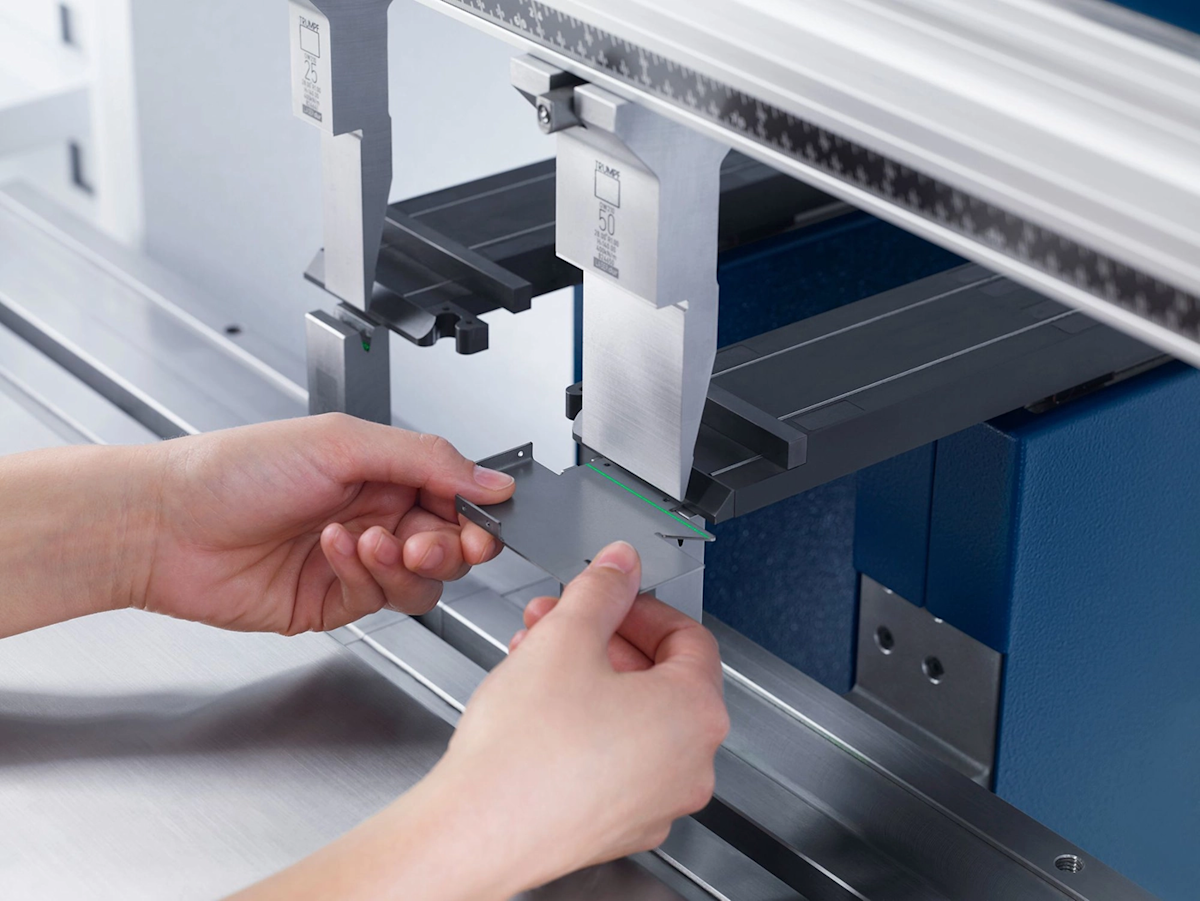
This article aims to demystify precision sheet metal bending, exploring the underlying principles, the technological advancements that enable its accuracy, and its critical deployment across a multitude of industries. We will delve into how metals are meticulously folded and angled to meet stringent design and functional requirements, providing a current perspective on this foundational manufacturing capability.
The Mechanics Behind Precision Sheet Metal Bending
To truly appreciate where precision sheet metal bending is applied, one must first grasp the fundamental mechanics. It's not simply about folding metal; it's a controlled deformation process governed by material science, geometry, and mechanical force.
From Flat Sheet to Formed Component: The Bending Principle
At its core, sheet metal bending involves applying localized force to a flat sheet of metal, causing it to plastically deform around a linear axis. This deformation occurs when the stress induced by the bending force exceeds the material's yield strength but remains below its ultimate tensile strength. The outside surface of the bend stretches (tensile stress), while the inside surface compresses (compressive stress), with a neutral axis experiencing minimal change.
The common setup involves a punch (or upper die) pressing a metal sheet into a V-shaped, U-shaped, or channel-shaped die (or lower die). The type of die and punch determines the bend angle and radius. Crucially, metals inherently possess a property called "springback," where the material attempts to return to its original shape after the bending force is removed. Modern precision bending techniques account for springback, over-bending the material slightly to achieve the desired final angle.
Key Bending Techniques: Shaping Metals with Accuracy
Several distinct bending techniques are employed, each suited to specific geometries, materials, and production volumes:
- Air Bending: The most versatile method, where the punch presses the sheet into the V-die without bottoming out. The bend angle is controlled by the depth the punch penetrates the die, allowing for flexible angle adjustments. This technique is favored for its adaptability and reduced tooling costs.
- Bottoming (or Coining): The punch presses the material fully into the die, ensuring direct contact between the punch, sheet, and die. This method offers high angular accuracy and repeatability, as the material is "coined" into the exact shape of the die.
- Roll Bending: Utilized for producing large radius bends, cylinders, and cones. The sheet passes between three or four rollers, which gradually curve the metal. This is common for large architectural elements or tank shells.
- V-Bending: A very common method for creating V-shaped bends, where the metal sheet is pressed between a V-shaped punch and a V-shaped die.
- Wipe Bending (or Edge Bending): The sheet is clamped at one end, and a wiping die descends, bending the free end over the edge of the die. This is often used for creating hems or flanges.
- Hot Metal Bending: For materials that are difficult to bend at room temperature, such as certain high-strength steels or thick plates, the metal is heated to increase its ductility before bending. This reduces the force required and minimizes the risk of cracking.
The Role of CNC and Automation in Modern Bending
The precision required in today's industrial components is largely enabled by Computer Numerical Control (CNC) press brakes. These machines use computer programs to control the movement of the punch and die, the back gauge (which positions the sheet), and other parameters with exceptional accuracy. CNC systems allow for:
- High Repeatability: Consistently producing identical bends across thousands of parts.
- Complex Bend Sequences: Programming multiple bends in a single setup, reducing manual handling.
- Real-time Adjustments: Sensors can monitor the bend angle during the process, and the CNC system can make micro-adjustments to compensate for material variations or springback.
- Integrated Workflows: Modern facilities often integrate CNC bending with other fabrication processes like laser cutting, ensuring a seamless flow from raw material to finished component.
Diverse Industry-Specific Applications of Sheet Metal Bending
The ubiquitous nature of sheet metal bending is evident across virtually every manufacturing sector. The capability to transform flat sheets into rigid, structurally sound, and aesthetically pleasing forms makes it an indispensable process. Here's a look at some of the key sheet metal bending industry applications:
Automotive Sector: Crafting Vehicle Structures and Components
The automotive industry relies heavily on precision sheet metal bending for producing a vast array of components. From the foundational chassis elements to exterior body panels and interior brackets, bent sheet metal is critical for both structural integrity and aesthetic design. Applications include:
- Body Panels: Fenders, doors, hoods, and roofs are often formed from bent sheet metal to create aerodynamic shapes and occupant compartments.
- Chassis and Frame Components: Structural members that provide stiffness and safety are meticulously bent to precise dimensions.
- Exhaust Systems: The intricate curves and connections within an exhaust system are achieved through specialized bending techniques.
- Mounting Brackets and Enclosures: Countless smaller components for engines, dashboards, and lighting systems are bent from sheet metal.
Aerospace and Defense: Lightweight, High-Strength Assemblies
In aerospace, the demand for lightweight yet incredibly strong components is paramount. Precision sheet metal bending helps create complex geometries that contribute to fuel efficiency and structural integrity. Materials like aluminum alloys and titanium are frequently bent.
- Aircraft Fuselage and Wing Components: Ribs, spars, and skin panels are bent to form the aerodynamic shapes of aircraft.
- Engine Cowlings and Ducts: Airflow management systems require precisely bent and formed metal parts.
- Interior Structures: Seating frames, galley components, and overhead bin structures often use bent sheet metal for strength and reduced weight.
- Defense Applications: Components for military vehicles, missile casings, and electronic enclosures demand extreme precision and material integrity, often utilizing advanced Alloy Steel or specialized aluminum alloys.
Construction and Architecture: Functional and Aesthetic Elements
Sheet metal bending plays a significant role in both the structural and aesthetic aspects of buildings and infrastructure. Large-scale bending operations create components for diverse architectural styles.
- Structural Elements: Beams, columns, and connection plates for pre-fabricated structures.
- Facades and Cladding: Modern architecture frequently uses bent metal panels for visually striking and durable building exteriors.
- Roofing and Gutter Systems: Custom bent flashings, gutters, and downspouts provide weather protection.
- HVAC Ductwork: Extensive systems for heating, ventilation, and air conditioning are typically constructed from bent galvanized steel or aluminum sheets.
Consumer Electronics and Appliances: Enclosures and Frameworks
Look inside almost any electronic device or household appliance, and you'll find precision bent sheet metal. Its ability to provide robust, lightweight enclosures makes it ideal for protecting sensitive internal components.
- Computer Casings: Desktop and server chassis are classic examples, providing structural support and protecting internal hardware.
- Appliance Housings: Washing machines, refrigerators, ovens, and microwaves all rely on bent sheet metal for their outer shells and internal frames.
- Medical Equipment: Enclosures for diagnostic machines and patient monitoring systems require clean, precise bends, often from stainless steel for hygiene.
- Office Equipment: Printer frames, photocopier bodies, and filing cabinets are typically constructed using bent sheet metal.
Industrial Machinery and Equipment: Guards, Housings, and Systems
Industrial environments demand durable and reliable components. Precision bending contributes to the creation of robust machinery and safety features.
- Machine Guards: Safety enclosures and covers for moving parts are frequently fabricated from bent sheet metal to protect operators.
- Control Panels and Electrical Enclosures: These house sensitive electronics and switches, requiring precise bends for secure fitting and protection.
- Conveyor System Components: Trays, guides, and structural supports for material handling systems are often bent from heavy-gauge sheet metal like Steel 1018.
- Storage Solutions: Industrial shelving, cabinets, and lockers are typically made from bent and welded sheet metal.
Medical Devices and Scientific Instruments: Precision and Hygiene
The medical and scientific sectors require components with extremely tight tolerances and often specific material properties (e.g., biocompatibility, ease of sterilization). Stainless steel is a common material.
- Diagnostic Equipment Housings: Precision-bent enclosures protect delicate internal optics and electronics.
- Sterilization Trays and Carts: Stainless steel sheets are bent to create containers and mobile units for medical instruments.
- Laboratory Apparatus: Custom-bent components for research equipment and cleanroom applications.
Renewable Energy: Components for Sustainable Systems
The growing renewable energy sector, especially solar and wind, increasingly utilizes precision bent sheet metal for structural and functional components.
- Solar Panel Mounting Systems: Frames and brackets for ground-mounted or rooftop solar arrays.
- Wind Turbine Nacelle Components: The housing for the generator and gearbox in a wind turbine often includes large, bent sheet metal panels.
- Battery Storage Enclosures: Housings for large-scale energy storage systems.
Material Considerations and Achieving Optimal Bends
The success of any sheet metal bending operation hinges significantly on the material chosen and the careful consideration of its properties. Different metals react distinctly to the bending process, necessitating specific approaches and tooling.
The Ductility Factor: Why Material Choice Matters
Ductility, a material's ability to deform under tensile stress without fracturing, is a primary concern in bending. Highly ductile metals can undergo significant deformation, while brittle materials are prone to cracking.
- Steel: A ubiquitous material in bending. Various grades of steel, including mild steel (like Steel 1018) and stainless steel, offer excellent bendability, though springback can vary.
- Aluminum: Known for its lightweight and good ductility, aluminum is commonly bent for aerospace, automotive, and consumer products. Different aluminum alloys have varying bending characteristics.
- Copper and Brass: These non-ferrous metals are highly ductile and are often used for electrical components, decorative items, and plumbing.
- Alloy Steels: Specialized Alloy Steel varieties are developed for enhanced strength, corrosion resistance, or other specific properties, but their bending characteristics can be more challenging, sometimes requiring hot bending or larger bend radii.
Factors like grain direction (the alignment of the material's internal crystalline structure) can also influence bend quality. Bending parallel to the grain can increase the risk of cracking, so designers often specify bends perpendicular to the grain where possible.
Managing Springback and Tooling Selection
As noted earlier, springback is the elastic recovery of a material after the bending force is released. Accurately compensating for springback is critical for achieving the target angle. Modern CNC press brakes can calculate and apply over-bending automatically, or operators can use empirical data.
The selection of tooling—the punch and die—is equally vital. The radius of the punch dictates the inner bend radius, while the die opening influences the outer bend radius and the amount of springback. Choosing the correct V-die opening for a given material thickness is essential to prevent cracking and achieve a consistent bend. Specialized tooling exists for complex bends, multiple bends in one stroke, or for working with delicate materials.
Advantages, Challenges, and The Enduring Role of Precision Bending
Precision sheet metal bending offers compelling advantages that cement its role in modern manufacturing, but it also presents inherent challenges that require expertise and advanced technology.
Key Benefits: Precision, Efficiency, Versatility, and Enhanced Strength
- High Precision and Repeatability: Modern CNC equipment delivers highly accurate and consistent results, crucial for interchangeable parts and complex assemblies.
- Material Efficiency: Bending processes typically produce minimal scrap compared to subtractive methods like machining, leading to cost savings and reduced waste.
- Versatility: A wide range of metals and thicknesses can be bent, and various techniques allow for simple angles to complex, multi-axis forms.
- Enhanced Structural Integrity: Bending can create strong, rigid structures from a single piece of metal, reducing the need for welding or fasteners, which can be points of weakness.
- Speed and Automation: CNC bending machines can operate at high speeds, and integrated robotic loading/unloading further boosts production efficiency.
Potential Disadvantages: Stress, Hardening, and Equipment Requirements
While advantageous, the bending process itself can introduce certain material effects and demands significant investment:
- Material Stress and Hardening: Bending induces stress and strain hardening in the material, which can alter its mechanical properties at the bend line. In some cases, this might require post-bending heat treatment.
- Equipment and Skill Requirements: Precision sheet metal bending necessitates specialized machinery (e.g., high-tonnage press brakes, sophisticated CNC controls) and skilled operators capable of programming, setup, and troubleshooting.
- Design Limitations: There are limits to the minimum bend radius and maximum bend angle achievable, which are governed by material properties and thickness. Designing outside these limits can lead to material failure.
Outlook for Sheet Metal Bending in the US Market
As of 2026, the demand for precision sheet metal bending in the US remains robust, driven by continued innovation in sectors like electric vehicles, renewable energy infrastructure, advanced electronics, and medical technology. While specific market growth figures are complex to track for a single process, the consistent need for custom-fabricated metal components ensures its fundamental importance. Ongoing advancements in automation, real-time sensing, and integration with digital manufacturing platforms are likely to further enhance efficiency and capability, allowing manufacturers to tackle increasingly complex designs and material challenges. The industry continues to evolve, pushing the boundaries of what is possible with formed metal.
Frequently Asked Questions
What are the applications of sheet metal working?
Sheet metal working applications are incredibly diverse, spanning almost every industrial sector. Key applications include creating structural components for vehicles and aircraft, producing casings and enclosures for electronics and appliances, forming frames and panels for construction, and fabricating parts for industrial machinery, medical devices, and renewable energy systems. The versatility of sheet metal allows for the creation of both functional and aesthetic parts.
What industries use sheet metal?
Industries that extensively utilize sheet metal include automotive, aerospace, construction, consumer products (e.g., electronics, white goods), industrial equipment and manufacturing, medical devices, and the emerging renewable energy sector. Its strength-to-weight ratio, formability, and cost-effectiveness make it a preferred material for a vast range of product designs and structural applications across these varied industries.
