

CNC Machining 1018 Carbon Steel: Understanding Properties, Processes, and Optimization
For engineers, designers, and manufacturing professionals, understanding the intricacies of material selection and its impact on machining processes is paramount. One common point of inquiry revolves around 1018 carbon steel, a material frequently chosen for its balance of cost-effectiveness and performance. While broadly known for its machinability, truly optimizing the CNC machining 1018 carbon steel process demands a deeper appreciation of its unique properties and the specific strategies required to achieve precise, high-quality components.
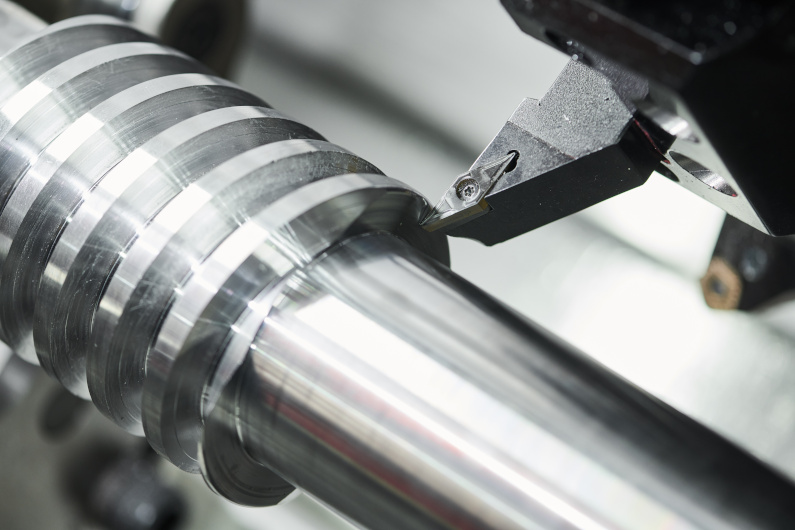
This article aims to clarify the considerations, processes, and best practices involved in CNC machining 1018 carbon steel, moving beyond superficial facts to explain the underlying principles that govern successful manufacturing with this versatile material.
The Nature of 1018 Carbon Steel
Before delving into machining specifics, it is essential to understand what defines 1018 carbon steel and its fundamental characteristics. This knowledge forms the basis for effective process planning and problem-solving in manufacturing.
Defining AISI 1018
AISI 1018 is categorized as a low-carbon steel, often referred to as a mild steel due to its relatively low carbon content. This classification is significant because it directly influences the material's mechanical properties, making it highly suitable for applications requiring good ductility, formability, and ease of fabrication. Its composition typically includes around 0.18% carbon (Source 2), along with manganese, sulfur, and phosphorus. This low carbon presence distinguishes it from higher carbon content steels, which tend to be harder but less ductile.
The inherent characteristics of 1018 carbon steel—excellent weldability, good formability, and predictable machinability—make it a foundational and economical choice across numerous industries. For further general information on such materials, you can explore resources on Mild Steel properties.
Mechanical Properties and Composition
Understanding the mechanical properties of 1018 carbon steel is crucial for predicting its behavior during machining and under various load conditions. AISI 1018 typically exhibits an approximate yield strength of 54 KSI (kips per square inch) (Source 2). This relatively moderate strength, combined with its ductility, contributes to its ease of machining and forming.
Comparing 1018 with other carbon steel grades highlights its specific niche. For instance, AISI 1045 is a medium-carbon steel with approximately 0.45% carbon content (Source 2). This higher carbon content makes 1045 through-hardenable, meaning its entire cross-section can be hardened, achieving significantly higher yield strengths (e.g., 60 KSI annealed, 90+ KSI hardened, Source 2) through heat treatment processes like quench and temper. In contrast, 1018 is primarily a case-hardening grade, meaning only its surface can be hardened effectively, while the core remains tough and ductile. Another distinction is seen with grades like 12L14, a leaded free-machining steel known for its superior machinability, often chosen for high-volume production, but generally not suitable for welding or heat treatment due to its lead content (Source 2). This comparison underscores that while 1018 is versatile, material selection for any component must align with the specific performance requirements and desired post-processing capabilities. Detailed information on various steel compositions can also be found in resources discussing Alloy Steel, which often includes higher-grade carbon steels.
Common Applications for CNC Machined 1018 Carbon Steel Parts
The blend of affordability, machinability, and mechanical properties makes 1018 carbon steel a popular choice for a wide array of CNC machined components. Its versatility extends across various industrial sectors.
In mechanical and structural applications, 1018 carbon steel is frequently utilized for general structural components, ensuring robust and reliable frameworks. It also finds use in applications like die plates, tooling, fasteners, and gears where good wear resistance (especially after case hardening) and strength are required. Industries such as automotive and agriculture heavily rely on 1018 for a diverse range of hardware and critical components (Source 1, Source 2).
Beyond its direct structural uses, 1018 carbon steel is highly amenable to several post-machining processes. Its excellent weldability allows for easy integration into larger assemblies. Furthermore, it is a preferred material for processes such as heat treating (specifically case hardening), forging, drilling, and cold drawing, which further enhances its mechanical properties or forms it into desired shapes (Source 1, Source 2).
Precision and Process Considerations in 1018 Carbon Steel CNC Machining
Achieving accuracy when working with 1018 carbon steel demands a thorough understanding of CNC capabilities and specific material considerations. While 1018 is generally forgiving, precision is not automatic.
Achievable Tolerances and General Principles
The precision attainable through CNC machining processes on 1018 carbon steel varies depending on the machinery, tooling, and specific process parameters. Standard tolerances for carbon steel CNC machining are commonly around +/- 0.001 inches (Source 2). However, under highly controlled conditions with advanced equipment, it is possible to achieve tighter tolerances. For instance, some reports indicate that advanced services can achieve tolerances as low as +/- 0.005 mm (approximately 0.0002 inches) (Source 1). Achieving such exacting standards typically involves factors like machine rigidity, environmental control, sophisticated tooling, and meticulous process optimization. For components requiring even greater precision, secondary operations like grinding are often employed after initial CNC machining (Source 2).
Key Machining Processes
A range of CNC processes are effectively used for 1018 carbon steel. These include:
- CNC Milling: For producing complex shapes, slots, and flat surfaces.
- CNC Turning: Essential for cylindrical parts, shafts, and detailed internal/external features.
- Wire EDM (Electrical Discharge Machining): Used for intricate cuts and tight tolerances, particularly in hardened materials or for complex internal geometries.
- Grinding: A finishing process used to achieve extremely tight tolerances and superior surface finishes.
While 1018 is renowned for its machinability, it is crucial to recognize that merely applying generic machining parameters will not yield optimal results. The specific characteristics of this low-carbon steel necessitate tailored speeds, feeds, and tooling choices to ensure efficient material removal, excellent surface finish, and extended tool life. For more on the material's specific characteristics and how they interact with machining processes, you can refer to information on 1018 steel cnc machining.
Optimizing Speeds and Feeds for 1018 Carbon Steel
The successful CNC machining 1018 carbon steel relies heavily on correctly determining speeds and feeds. These parameters dictate how the cutting tool interacts with the material, influencing everything from chip formation and heat generation to tool wear and surface finish.
Milling Strategies
Milling 1018 carbon steel, while generally straightforward, can present challenges if parameters are not optimized. Machinists commonly encounter issues such as tool squealing and difficulty achieving a desirable surface finish, particularly when using live tooling or experiencing extended tool stick-out (Source 3). These issues typically arise from excessive vibration or improper chip load.
To mitigate these challenges, optimizing surface feet per minute (SFM), revolutions per minute (RPM), and feed per tooth (FPT) is critical. For instance, experienced machinists discussing milling 1018 have shared successful parameters for a 0.5-inch diameter, 4-flute carbide end mill with 1.62-inch depth of cut and 0.030-inch step over. These examples include combinations like 3000 RPM at 30 IPM (resulting in 0.0025 FPT and 392 SFM) or 2000 RPM at 20 IPM (0.0025 FPT, 260 SFM). For hole milling a 0.933-inch diameter, a feed rate of 12 IPM at 3000 RPM was suggested (Source 3). These are illustrative examples and starting points; fine-tuning is often necessary.
Tooling plays a significant role. Utilizing appropriate carbide end mills, especially roughing end mills, can help reduce cutting pressure and manage chip evacuation more effectively (Source 3). The choice of tool coating (e.g., AlTiN, TiCN) can also enhance performance and tool life. Furthermore, adequate coolant application is essential to dissipate heat, lubricate the cut, and clear chips, preventing re-cutting and improving tool longevity.
Turning Strategies
Turning 1018 carbon steel also requires careful attention to speeds and feeds to ensure efficient chip breaking and an optimal surface finish. Forum discussions among machinists suggest that higher surface feet per minute (SFM) and inches per revolution (IPR) can promote better chip breaking, which is crucial for continuous operation and preventing chip entanglement (Source 4).
As a starting point for turning operations, recommendations from experienced machinists include aiming for approximately 800 SFM, with feed rates between 0.012-0.015 IPR for roughing passes (Source 4). However, the actual RPM will often be limited by the machine's capabilities (e.g., a maximum of 4000-5000 RPM for some machines).
The use of Constant Surface Speed (CSS) is often preferred in turning 1018 carbon steel. CSS automatically adjusts the spindle RPM based on the cutting diameter, ensuring a consistent SFM across different diameters of a part. This helps maintain consistent cutting conditions, leading to more predictable chip formation and better surface finishes. For achieving specific surface finishes, parameters such as tool nose radius and feed rate are critical. For example, using a 0.03-inch nose radius tool with a 0.01-inch feed could potentially yield a 125 microinch (µin) finish (Source 4).
Post-Machining and Enhancing 1018 Carbon Steel Components
Once CNC machined, 1018 carbon steel parts may require further treatment to achieve desired mechanical properties or corrosion resistance, depending on their intended application.
Heat Treatment Options
As a low-carbon steel, 1018 is not suitable for through-hardening to achieve high overall strength. Instead, it is classified as a case-hardening grade (Source 2). This means its primary heat treatment involves carburizing, a process where carbon is introduced into the surface of the steel, followed by quenching and tempering. This creates a hard, wear-resistant outer case while retaining a tough, ductile core, making it ideal for components subjected to surface wear, such as gears or pins.
In contrast, other medium-carbon steels like 1045 can be subjected to quench and temper processes to harden the entire material for increased core strength and toughness (Source 2). Understanding these distinctions is fundamental to material selection and post-processing.
Corrosion Protection
A significant characteristic of 1018 carbon steel, common to many plain carbon steels, is its lack of inherent corrosion resistance. Without protection, it is susceptible to rust and degradation in most environments. Therefore, for applications where corrosion protection is necessary, post-machining coatings are essential. Common protective coatings include:
- Black Oxide: Provides a thin, aesthetically pleasing black finish with mild corrosion resistance, often enhanced with oil.
- Zinc Plating: Offers a sacrificial coating that protects the steel from rust, commonly used for fasteners and general hardware.
- Electroless Nickel Plating: Provides excellent corrosion resistance, uniform coating thickness, and often improved hardness (Source 2).
Quality Assurance
Regardless of the material or process, stringent quality assurance measures are critical. This involves meticulous inspection of machined dimensions, surface finish, and adherence to design specifications. For precision 1018 carbon steel components, verifying that both the machining process and any post-treatment operations have met the required standards ensures the final part will perform as intended.
Conclusion
The successful CNC machining of 1018 carbon steel hinges on a comprehensive understanding of its material properties, the specific challenges it presents during machining, and the strategic application of appropriate techniques. Its balance of machinability, weldability, and affordability makes it an indispensable material, but unlocking its full potential requires more than just general CNC knowledge.
To truly master working with this material, it is beneficial to continue exploring specific tooling geometries and materials optimized for 1018, delve into the nuances of various coolant types and delivery methods, and examine the critical impact of machine rigidity and workholding on achievable precision. A deeper investigation into these areas will further refine your understanding and enhance the quality of components produced from 1018 carbon steel.
