
Achieving High-Volume Precision in Stainless Steel Bending: Techniques for 2026
The appeal of stainless steel in manufacturing is undeniable, from its exceptional corrosion resistance to its aesthetic finish and mechanical strength. Yet, for manufacturers tasked with producing intricate parts at scale, the process of bending this formidable alloy with high-volume precision often presents a significant engineering puzzle. Simply scaling up conventional bending methods frequently leads to costly inconsistencies, material waste, and premature tooling wear, failing to meet the stringent dimensional tolerances demanded by modern industries.
This article delves into the advanced techniques and critical considerations necessary to master high-volume stainless steel bending as of late 2026. It moves beyond basic sheet metal forming, exploring the metallurgical nuances of stainless steel and the sophisticated methodologies employed to achieve repeatable accuracy in large-scale production runs.
Understanding Stainless Steel's Unique Bending Challenges
To truly achieve precision in bending, one must first grasp the inherent characteristics of stainless steel that differentiate it from other common metals like mild steel or even alloy steel. These properties, while beneficial for end-product performance, introduce distinct challenges during fabrication:
High Tensile Strength and Work Hardening Explained
Stainless steel, by its very nature, possesses a high tensile strength. This means it requires substantially more force to deform permanently compared to many other metals. Furthermore, stainless steel exhibits a phenomenon known as work hardening. As the material is bent, its internal structure changes, making it stronger and harder in the localized bend area. This increased strength during the bending process itself can lead to several complications, including:
- Increased Tonnage Requirements: Machines must apply greater force, demanding robust equipment and potentially limiting the thickness of material that can be processed.
- Accelerated Tooling Wear: The hardened material acts abrasively against dies and punches, significantly reducing their lifespan in high-volume operations.
- Unpredictable Deformation: The uneven hardening across a bend can lead to inconsistent results and makes precise prediction of material behavior more difficult.
Mastering Springback: The Core Challenge
Perhaps the most recognized challenge in bending stainless steel is springback. Unlike a piece of plastic that retains its shape after bending, stainless steel, due to its inherent elasticity, attempts to return to its original flat state after the bending force is released. The degree of this elastic recovery, or springback, is notably higher in stainless steel compared to other materials. For instance, while carbon steels might spring back a few degrees, some stainless steel grades can spring back 5-10 degrees or more. In high-volume manufacturing, even a small, uncompensated degree of springback can result in thousands of out-of-spec parts, necessitating costly rework or scrap.
Preventing Tooling Wear, Scratching, and Galling
The combination of stainless steel's hardness, work-hardening tendency, and often its relatively low lubricity creates significant friction between the material and tooling. This friction is a primary cause of:
- Rapid Tooling Wear: Constant abrasion from the work-hardening material quickly erodes the working surfaces of dies and punches.
- Scratching and Surface Imperfections: The high pressure and friction can mar the surface of the stainless steel, especially critical for applications where aesthetics or surface integrity are paramount.
- Galling: This severe form of adhesive wear occurs when two metal surfaces slide against each other under pressure, causing material to transfer from one surface to the other, often resulting in rough, pitted, and damaged parts and tools. Preventing galling is crucial for maintaining both part quality and tooling longevity in continuous production.
Mitigating Risks of Cracking and Distortion
Despite its strength, stainless steel can be prone to cracking or distortion during bending if proper techniques are not employed. This risk increases with tighter bend radii, thicker materials, or less ductile grades. Factors contributing to cracking include:
- Exceeding Minimum Bend Radius: Bending the material too sharply can stretch the outer fibers beyond their tensile limits, leading to micro-fissures and eventually cracks.
- Internal Stresses: The forces applied during bending create internal stresses within the material. If these stresses are not managed, they can lead to unforeseen distortion or residual stress that impacts the part's performance.
- Material Brittleness: While stainless steel is generally ductile, certain grades or improper heat treatment can reduce its ductility, making it more susceptible to cracking.
Essential Equipment for High-Volume Stainless Steel Bending
The unique challenges of stainless steel bending necessitate specialized equipment capable of delivering consistent force, precise control, and high repeatability.
High-Volume Stainless Steel Bending Machines: The Power of CNC Press Brakes
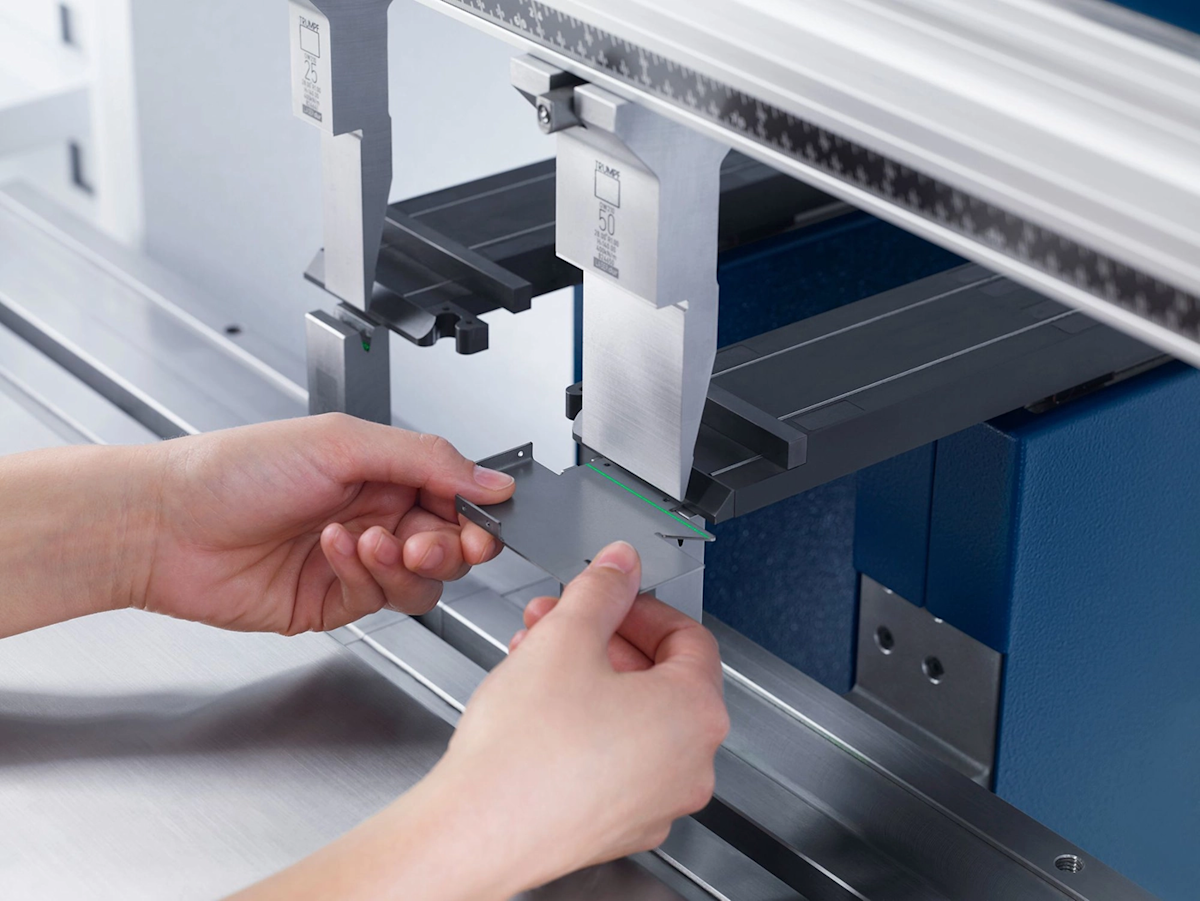
For achieving the precision and throughput required in high-volume stainless steel bending, Computer Numerical Control (CNC) press brakes are indispensable. Unlike older, manually operated machines, CNC press brakes offer:
- Unparalleled Precision: Advanced sensors and real-time feedback systems allow for minute adjustments to ram depth and back gauge position, ensuring bend angles are consistently held to within fractions of a degree.
- Repeatability: Once a program is established, CNC machines can execute identical bends thousands of times, crucial for batch consistency.
- Automation Capabilities: Integrated with automated material handling systems (e.g., robotic loaders and unloaders), CNC press brakes can operate with minimal human intervention, significantly boosting production rates.
- Tonnage Control: Modern CNC press brakes can deliver the substantial tonnage required for thicker stainless steel while precisely controlling the force applied to prevent over-bending or damaging the material.
Specialized Dies and Punches: Selection for Precision and Durability
The tooling itself is a critical component in high-volume stainless steel bending. Standard carbon steel dies will quickly wear down. Instead, manufacturers opt for:
- Hardened Tool Steel: Dies and punches made from through-hardened tool steel offer superior resistance to wear and abrasion from work-hardening stainless steel.
- Coated Tooling: Coatings such as Titanium Nitride (TiN), Titanium Carbonitride (TiCN), or proprietary surface treatments significantly reduce friction, prevent galling, and extend tooling life. For example, a specialized coating can reduce friction coefficients by 30-50%, leading to smoother bends and fewer surface defects.
- Polished Surfaces: Highly polished die and punch surfaces further minimize friction and prevent material transfer, crucial for maintaining the cosmetic appearance of stainless steel parts.
- Plastic or Urethane Inserts: For particularly sensitive finishes or to prevent scratching, plastic films or urethane inserts can be used between the tooling and the stainless steel, acting as a sacrificial barrier.
Evaluating Box Brakes vs. Press Brakes for Material Thickness
The choice between a box brake (or pan brake) and a press brake depends heavily on the material thickness and bend complexity. For very thin stainless steel (e.g., less than 0.035 inches or 0.9 mm), a box brake might suffice for simple, short bends. However, for thicker materials, such as 1/8 inch (3.175 mm) stainless steel, standard box brakes are generally inadequate. Their limited tonnage and smaller back gauges make it challenging to achieve precise angles and prevent exceeding the equipment's rated capacity. Press brakes, especially powerful CNC models, are necessary for thicker stainless steel to provide the required force and control for accurate, consistent bends.
Best Practices for Precision Bending
Beyond advanced machinery, implementing rigorous best practices is fundamental to achieving high-volume precision.
Strategic Material Selection and Surface Protection
The choice of stainless steel grade profoundly impacts its bendability. Annealed grades like 304 and 316 are preferred for their superior ductility compared to harder grades. For instance, 304 stainless steel is widely used due to its good formability and corrosion resistance. Ensuring the material is fully annealed before bending optimizes its ductility, significantly reducing the risk of cracking.
Surface protection is equally vital. For highly polished or cosmetically critical parts, applying protective films to the stainless steel sheet before bending can prevent scratches and scuffs from the tooling. Removing these films after bending preserves the pristine surface finish.
Calculating and Compensating for Springback: Utilizing Formulas
Accurate springback compensation is a cornerstone of precision bending. While "trial-and-error" is feasible for one-off projects, it's inefficient for high-volume production. Instead, advanced manufacturers leverage:
- Overbending Techniques: The most common approach is to overbend the material beyond the target angle, anticipating the elastic recovery. The precise degree of overbending is often determined through empirical data, finite element analysis (FEA) simulations, or sophisticated bending software integrated with CNC press brakes. These systems can predict springback based on material properties, thickness, bend radius, and tooling.
- Real-time Angle Measurement: Some advanced press brakes incorporate laser or optical angle measurement systems that measure the actual bend angle during the forming process and adjust the ram depth in real-time to achieve the exact target angle, effectively compensating for springback dynamically.
Optimizing Bend Radius, Speed, and Angle Accuracy
Optimizing bending parameters is crucial:
- Minimum Bend Radius: Adhering to the correct minimum bend radius for a given stainless steel grade and thickness is paramount to prevent cracking. General guidelines suggest a minimum inside bend radius of at least one material thickness (1T) for most stainless steel grades, though specific applications may require larger radii.
- Bending Speed: A slower bending speed can allow the material more time to flow, reducing internal stresses and the risk of cracking, especially with thicker or more challenging grades. However, for high-volume, there's a balance to be struck between speed and quality.
- Achieving Specific Angles: While 90-degree bends are common, achieving specific angles (e.g., 45 degrees, or acute angles) other than standard ones requires precise control. This can involve specialized die inserts or, more commonly, careful modulation of the press force by the CNC system to "air bend" the material to the desired angle without bottoming out the tooling. This method provides greater flexibility in achieving a wide range of angles with a single set of tooling.
Effective Lubrication and Post-Treatment for Flawless Finishes
Lubrication plays a vital role in high-volume stainless steel bending to combat friction and galling. Specialized bending lubricants, often based on synthetic polymers or waxes, are applied to the bending line to create a barrier between the tooling and the material. These lubricants reduce wear, prevent surface damage, and facilitate smoother material flow. After bending, parts may undergo post-treatment processes such as passivation or electropolishing to restore corrosion resistance, remove any residual contaminants, and enhance the final surface finish.
Addressing High-Volume Stainless Steel Bending Stress
The internal stresses generated during bending are a critical concern, especially in high-volume production where consistency is key. Overbending the material slightly can help distribute these stresses more evenly. For highly demanding applications, stress relief annealing after bending can be employed to minimize residual stresses and improve the part's long-term dimensional stability and performance. However, this adds a significant step to the production process and is typically reserved for critical components.
Advanced Techniques for Complex Geometries and High Throughput
Beyond conventional press brake operations, several advanced bending techniques offer solutions for highly complex geometries or specific high-throughput requirements.
Laser Bending for Intricate Shapes
Laser bending uses a precisely focused laser beam to induce thermal stresses, causing localized deformation without mechanical contact. This technique is particularly suitable for forming intricate shapes, delicate components, or parts where traditional tooling might be impractical. It offers exceptional control over bend angles and eliminates tooling marks, though it is typically slower than press brake bending and is often reserved for specialty parts rather than the highest volumes of simpler bends.
Roll Bending for Smooth, Large Radii
For applications requiring large, smooth radii (e.g., cylindrical or conical shapes), roll bending is the technique of choice. Material is fed through a series of rollers that progressively form the desired curve. This method is highly efficient for continuous production of curved parts and significantly reduces the risk of work hardening and localized stress concentrations associated with sharp, single-point bends. Roll bending machinery can be integrated into automated lines for continuous high-volume output.
Hydroforming: Precision with Reduced Tooling Marks
Hydroforming utilizes high-pressure hydraulic fluid to form metal sheets or tubes into complex shapes. By pressing the material against a single die, it can achieve intricate geometries with minimal tooling marks and excellent surface finish. While primarily a forming process rather than a pure bending one, hydroforming can create complex bends and contours with extreme precision. Its high initial setup costs often make it suitable only for very high-volume production where the complexity and quality requirements justify the investment.
Integrating Pre- and Post-Bending Treatments for Enhanced Quality
In high-volume scenarios, the integration of pre-treatment (like annealing or precise surface cleaning) and post-treatment (such as passivation, electropolishing, or stress relief) into the automated workflow is crucial. These steps, often performed in-line or with robotic transfer, ensure that every part meets not only the dimensional specifications but also the required material properties and surface quality, reducing rework and increasing overall throughput.
Future Innovations and Trends in Stainless Steel Bending (2026 Outlook)
The landscape of high-volume stainless steel bending is continuously evolving, driven by advancements in digital technology and material science.
The Rise of AI and Real-Time Monitoring in Bending Operations
Looking to 2026 and beyond, Artificial Intelligence (AI) and machine learning are increasingly integrated into bending operations. AI algorithms can analyze vast datasets of bending parameters, material properties, and historical results to predict optimal bending sequences, springback compensation, and even tool wear patterns with greater accuracy than ever before. Real-time monitoring systems, using vision and tactile sensors, feed data back to AI models, allowing for dynamic adjustments during the bending cycle to ensure every part meets specification, even with slight material variations.
Sustainable Practices and Energy Efficiency
The industry is also seeing a push towards more sustainable manufacturing. Newer press brake designs are incorporating energy-efficient servo-electric or hybrid-drive systems that consume significantly less power than traditional hydraulic models. Furthermore, optimizing tooling life through advanced coatings and predictive maintenance reduces waste, while sophisticated filtration systems for lubricants minimize environmental impact.
Robotics and Further Automation in Fabrication
Robotics continue to advance, moving beyond simple loading and unloading tasks to more complex, adaptive manipulation of parts during bending. Collaborative robots (cobots) are also emerging, working alongside human operators to handle parts or perform quality checks, further enhancing both safety and efficiency in high-volume settings. The goal is a fully integrated, lights-out manufacturing environment where stainless steel bending is an almost entirely automated, self-optimizing process.
New Material Science for Improved Bendability
Research into new stainless steel alloys with improved formability and reduced springback characteristics is ongoing. Developments in metallurgy aim to create materials that retain the desirable properties of stainless steel while being easier and more predictable to bend at high volumes, potentially simplifying current complex processes and reducing tooling wear.
Achieving high-volume precision in stainless steel bending is a complex endeavor that demands a deep understanding of material science, advanced machinery, and rigorous process control. By embracing sophisticated techniques, specialized tooling, and integrating cutting-edge automation and AI, manufacturers can overcome the inherent challenges of stainless steel, delivering consistent, high-quality products at the scale demanded by the modern industrial landscape. The journey towards ever-greater precision and efficiency continues, driven by innovation in every facet of the bending process.
