

Cost Considerations for Machining Specialized Materials: A Buyer's Guide (2026)
The realm of advanced manufacturing often requires components crafted from materials far beyond standard aluminum or steel. When designs call for high-performance alloys like titanium, Inconel, or specialized hardened steels, the initial sticker shock for machining these specialized materials can be significant. Understanding the true machining specialized materials cost requires looking beyond raw material prices and delving into a complex web of factors that dictate the final expense. Without a clear grasp of these underlying principles, buyers risk overpaying or encountering unexpected budget overruns. This guide aims to demystify the cost drivers, helping you make informed decisions when procuring parts from these challenging yet essential materials.
Navigating the Core Cost Drivers of CNC Machining
Every machining quote is an amalgamation of several distinct cost components, not merely the time a machine spends cutting. To effectively estimate the machining specialized materials cost, one must understand these fundamental elements: hourly machine rates, setup and programming time, material expenses, and any post-processing requirements.
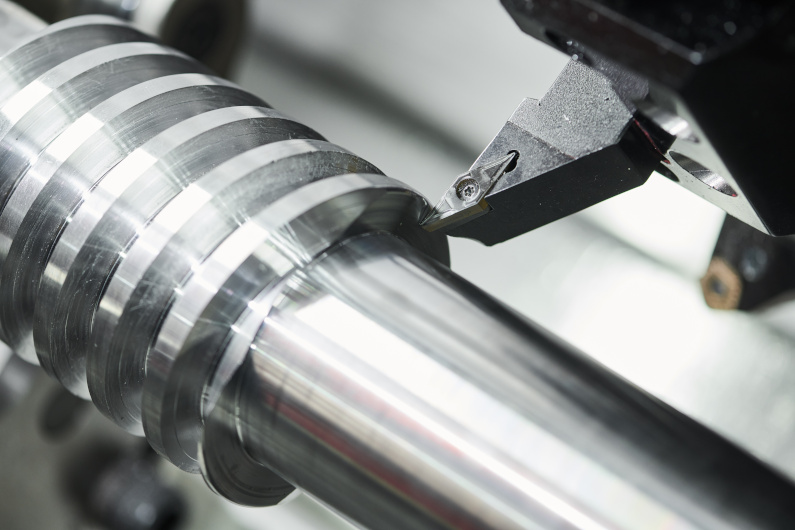
Hourly machine rates in the US, as of 2026, typically range from $75 to $250 per hour, varying significantly based on the machine's complexity and capability. For instance, simpler 3-axis CNC milling operations generally fall within $30–$75 per hour. As complexity increases, so does the rate; 4-axis milling can command $60–$110 per hour, while highly advanced 5-axis CNC milling operations, crucial for intricate geometries and harder materials, range from $75–$250 per hour. Similarly, CNC turning (lathe) services are often $35–$100 per hour, with specialized Swiss machines, known for high precision and intricate small parts, fetching rates between $120–$250 per hour. These rates cover not just the machine's operational cost but also labor, overhead, maintenance, and the significant capital investment in the equipment itself.
Setup and programming constitute a fixed cost for each job. This includes the time spent loading material, fixturing, programming the tool paths, and conducting initial test runs. These costs can range from tens to hundreds of dollars, but crucially, they are applied once per batch. This fixed nature means that as production volume increases, the setup cost is amortized over more units, drastically reducing the per-part cost. For instance, scaling from a prototype to a larger production run can cut per-part costs significantly by spreading these initial expenses.
To illustrate the differences in machine rates, consider the following approximate ranges observed in the US as of 2026:
| Machine Type | Approximate Hourly Rate (USD) | Common Applications |
|---|---|---|
| 3-axis CNC Milling | $30 – $75 | General purpose, less complex geometries |
| 4-axis CNC Milling | $60 – $110 | Under-cut features, continuous machining on multiple sides |
| 5-axis CNC Milling | $75 – $250 | Highly complex, intricate parts, hard materials, aerospace |
| CNC Turning (Lathe) | $35 – $100 | Cylindrical parts, shafts, bores |
| Swiss Machine | $120 – $250 | Small, high-precision components, often with intricate features |
While online calculators can provide initial estimates for machining costs, a detailed quote from a manufacturer based on your specific design files remains the most accurate way to understand your project's expenses. These quotes will meticulously break down the estimated machining hours, material usage, and any additional processes.
The Unique Impact of Specialized Materials on Machining Expenses
The very definition of "specialized materials" implies properties that challenge conventional machining. These materials—such as high-temperature superalloys, certain grades of tool steel, or refractory metals—are chosen for their exceptional performance characteristics: high strength-to-weight ratios, corrosion resistance, extreme temperature tolerance, or unique electrical properties. However, these same properties often translate directly into higher manufacturing costs.
One of the most immediate impacts is the raw material price itself. Exotic alloys typically cost substantially more per kilogram than commodity materials. For instance, while aluminum might be in the range of $5–$15/kg, specialized stainless steels could be $15–$25/kg, and superalloys like Inconel can exceed $60/kg. These figures are estimates as of 2025 and are subject to market fluctuations, but the relative cost difference remains significant. Material costs can constitute a substantial portion of the total project expense. You can learn more about various raw material options on our Materials page.
Beyond the initial purchase, the intrinsic properties of specialized materials directly dictate their machinability. Many are significantly harder, more abrasive, or have higher work-hardening tendencies than standard metals. This leads to:
- Slower Machining Speeds: To prevent tool breakage and ensure surface integrity, cutting parameters must often be dialed down, increasing the total time spent machining.
- Accelerated Tool Wear: Harder materials quickly dull and damage standard cutting tools. Specialized, more expensive tooling (e.g., carbide inserts with advanced coatings) becomes necessary, and even these tools wear out faster, requiring more frequent replacement. This constant need for new tools adds significantly to the overall machining specialized materials cost.
- Increased Process Control: Maintaining precise temperature control, managing chip evacuation, and ensuring proper coolant application become critical to avoid material deformation, residual stresses, or surface defects. This often necessitates more advanced CNC machines and skilled operators.
For example, when machining tough aerospace-grade titanium, the extreme heat generated at the cutting interface requires specialized flood cooling or even cryogenic cooling systems. The material's tendency to work-harden means that cutting too slowly or with insufficient rigidity can make subsequent cuts even more difficult, potentially leading to increased tool wear and longer cycle times.
Design Complexity and Tolerance Requirements: Balancing Performance and Budget
The geometry of a part and the precision with which it must be manufactured are two of the most influential factors driving machining specialized materials cost. Intricate designs with numerous features, thin walls, deep pockets, or complex contours inherently demand more machining time and often require advanced multi-axis machines.
Every curve, angle, and pocket requires specific tool paths, which translates to longer programming times and more machine cycles. Consider a simple bracket versus an aerospace manifold with internal channels and multiple critical interfaces. The latter requires significantly more sophisticated machining strategies. Design complexity, according to some reports, can increase costs substantially.
Similarly, tight tolerance requirements, such as maintaining dimensions within ±0.001 inches or even tighter, significantly escalate costs. Achieving such precision demands:
- More Machining Passes: Material is removed in smaller increments to prevent heat buildup and ensure accuracy.
- Specialized Tooling: Finer-tolerance tools are often more expensive and wear faster.
- Enhanced Metrology: Frequent in-process and post-process inspections using sophisticated measurement equipment (e.g., CMMs) are required to verify dimensions, adding to the labor and equipment costs.
- Controlled Environments: Extremely tight tolerances might necessitate machining in temperature-controlled environments to prevent thermal expansion/contraction from affecting part dimensions.
A key strategy to manage these costs is implementing Design for Manufacturability (DFM) principles. DFM involves proactively simplifying part geometry and loosening tolerances where they are not functionally critical. For instance, if a non-mating surface does not require micron-level accuracy, specifying a looser tolerance can dramatically reduce machining time and associated expenses without impacting performance. Collaborating with your machining partner early in the design phase can identify such opportunities for cost optimization, potentially leading to substantial savings by reducing complex setups and unnecessary precision.
Leveraging Quantity and Strategic Sourcing for Cost Reduction
The impact of production volume on per-part cost is profound, especially in CNC machining. As discussed, machine setup and programming are fixed costs incurred regardless of whether you produce one part or a thousand.
Per-Part Cost Differences (2026 Estimates):
| Production Volume | Approximate Per-Part Cost (USD) | Key Influencing Factor |
|---|---|---|
| Prototypes / Low-Volume (1-10 parts) | $30 – $300 | Setup and programming costs amortized over few units |
| Production Run (100s to 1000s) | $5 – $60 | Fixed costs spread across many units, economies of scale |
For prototypes and low-volume runs, the fixed costs of setup and programming dominate the per-part expense. For example, a single prototype requiring a specialized fixture and several hours of programming might cost hundreds of dollars. If you then produce 1000 identical parts, those same setup costs are spread over a much larger quantity, making the per-part cost significantly lower. This effect means that larger production volumes can dramatically reduce per-part costs, with some estimates suggesting a reduction of about 60% when scaling from prototypes to full production.
Strategic ordering, such as batching multiple designs or components with similar material requirements into a single order, can also yield savings. This reduces the number of separate setups and material changeovers, streamlining the process for the manufacturer and potentially leading to better pricing for you.
Furthermore, considering suppliers who offer integrated manufacturing services can provide significant value. These are typically shops that combine various processes like CNC machining, fabrication, and assembly under one roof. By eliminating vendor handoffs, streamlining workflows, and optimizing material and tool usage across different operations, these partners can sometimes offer lower effective rates and overall project savings. This vertical integration reduces logistical complexities and potential delays. For comprehensive services, exploring providers like those offering Cnc Machining Service can be beneficial.
Essential Strategies for Optimizing Value and Selecting a Machining Partner
Navigating the cost landscape for machining specialized materials requires a proactive approach centered on value optimization rather than simply seeking the lowest hourly rate. Here are essential strategies:
-
Prioritize Design for Manufacturability (DFM): As highlighted, DFM is paramount. Work closely with your design team and potential machinists to simplify part geometries where possible. Loosen non-critical tolerances; a ±0.005-inch tolerance is far less expensive to achieve than ±0.001 inch if the application doesn't strictly demand the latter. Even small design changes can lead to substantial reductions in machining time and setup complexity.
-
Select Appropriate Materials: While specialized materials are often non-negotiable for specific applications, evaluate if a slightly more machinable or less expensive alternative exists that still meets performance criteria. For example, while certain alloys offer extreme properties, a high-grade stainless steel like 17-4 PH might suffice in some demanding environments where a superalloy isn't strictly necessary. Understanding the properties of common materials like Steel 1018 versus exotic alloys can help in this evaluation.
-
Optimize Order Quantity: Understand the breakpoint where increasing volume significantly reduces your per-part cost. If you anticipate future demand, it may be more cost-effective to order a larger batch upfront, even if it exceeds immediate needs, to capitalize on economies of scale.
-
Vet Suppliers for Expertise and Transparency: When dealing with specialized materials, a machinist's experience is invaluable. Look for partners with proven expertise in your chosen material. They should be able to provide DFM feedback, discuss tooling strategies, and offer transparent breakdowns of their quotes. A good partner will ask questions about your part's function to understand where critical tolerances truly lie, rather than blindly quoting the print. Transparency in pricing, including setup fees, hourly rates, and material markups, is a strong indicator of a reliable partner.
-
Focus on Total Project Value, Not Just Hourly Rates: The cheapest hourly rate doesn't always translate to the lowest total cost. A highly skilled machinist with a higher hourly rate might complete the job faster, with less material waste, and fewer errors, ultimately delivering a higher quality part at a lower overall cost. Consider factors like lead times, quality control processes, and the ability to handle complex designs.
By adopting these strategies, you can gain a clearer understanding of the machining specialized materials cost and build more efficient and cost-effective relationships with your manufacturing partners.
Frequently Asked Questions
How can I estimate the cost of machining?
To estimate CNC machining costs, you need a comprehensive approach that considers several factors. This includes the hourly rate of the machine, the total estimated machining hours, fixed costs for setup and programming, material expenses, and any additional post-processing or finishing. A practical formula to begin with is: Total Cost = (Hourly Rate × Machining Hours) + Setup Costs + Material Costs + Finishing Costs. While online calculators offer initial ballparks, the most accurate estimates come from detailed quotes provided by manufacturers based on your specific design and material choices.
What factors most significantly influence CNC machining costs?
The most significant factors influencing CNC machining costs are the type and expense of the material chosen, the complexity of the part's design and geometry, the required tolerance levels, the specific type of CNC machine utilized (e.g., a simple 3-axis versus a complex 5-axis), the time and effort invested in machine setup and programming, and the overall production volume. Each of these elements can substantially impact the final price of a machined component.
How do specialized materials affect machining costs?
Specialized materials, such as titanium or high-temperature superalloys, significantly increase machining costs primarily due to their higher raw material expense. Their inherent properties (e.g., hardness, toughness, or tendency to work-harden) also necessitate slower cutting speeds, specialized and often more expensive cutting tools, and increased tool wear, all of which extend machining time and drive up expenses compared to standard materials.
Is CNC machining expensive for prototypes compared to production runs?
Yes, CNC machining is considerably more expensive on a per-part basis for prototypes and low-volume runs, often ranging from $30 to $300 each. This is because fixed costs such as machine setup and programming, which can be a significant initial investment, are amortized across a very small number of units. In contrast, higher-volume production spreads these fixed costs over many parts, substantially reducing the per-part cost, which can fall to $5 to $60 each.
What are the most cost-effective materials for CNC machining?
Generally, materials like aluminum, stainless steel, brass, and copper are considered among the more cost-effective options for CNC machining. Aluminum, in particular, is often favored for its affordability, excellent machinability, and high strength-to-weight ratio. These materials offer a favorable balance of reasonable raw material costs, ease of machining, and suitable mechanical properties for a broad spectrum of applications, making them efficient choices for many projects.
How can I reduce the cost of CNC machining?
To reduce CNC machining costs, several key strategies can be employed. These include adopting Design for Manufacturability (DFM) principles to simplify part geometry and loosen non-critical tolerances, selecting more machinable and affordable materials when appropriate, placing orders in larger batches to distribute fixed setup costs more efficiently, and considering suppliers who offer integrated manufacturing services to minimize vendor handoffs and streamline production.
Conclusion
Understanding the intricate layers of cost involved in machining specialized materials is paramount for any buyer seeking both performance and budgetary control. By dissecting the hourly rates, appreciating the unique challenges posed by exotic alloys, optimizing designs for manufacturability, and strategically leveraging production volume, you can navigate this complex landscape with greater confidence. The goal is not merely to find the cheapest quote, but to cultivate a partnership that offers transparency, expertise, and long-term value. Continued exploration into advanced manufacturing processes and material science will further refine your ability to make precise, cost-effective decisions in an ever-evolving industrial environment.
